12 March 2020

Will Cyclists Be Locked Down?

The news can hit close to home. Sometimes, too close.

By now, you've heard that the whole country of Italy is basically on lockdown, due to the coronavirus.  The prime minister has told people to stay home and that they need permission for "non-essential" travel.

Now an area of New Rochelle, about 35 kilometers from my apartment, is a "containment zone," where National Guard troops have been posted.  

I frequently cycle to or through New Rochelle.  My rides to Connecticut or northern Westchester County usually take me through one part of the city or another.  

Image result for cyclists stopped


Seeing how many Italian cities (and Seattle) have become "ghost towns", I have to wonder whether the New Rochelle quarantine will be extended--and to what degree will people's movements be restricted.  Will they stop us from riding our bikes?

11 March 2020

Cyclist Pays Price For Dollar Van

Some of my most harrowing encounters have been with "dollar vans."

For those of you who don't live here in New York City, dollar vans typically operate in "transportation deserts" that are far from subway and bus routes.  While they follow more or less set routes, their itineraries or schedules are not published; rather, people usually learn of them by word of mouth.


Dollar vans are said to have begun during the 1980 transit strike.  At that time, the New York City transit fare was 50 cents; after the strike, it climbed to 60 cents (and to 75 cents a year later, now it's $2.75). The vans operated all over the city, as they would during the 2005 transit workers' walkout. Between those labor actions, and since then, the  vans have served mainly the aforementioned "deserts".  


This might sound good, even though the ride now costs $2.00, but the problem is that these vans are not as regulated as taxis or even Uber-type car services are in New York.  So, if you take a dollar van, you run a greater risk of riding in an unsafe (not to mention unsanitary) vehicle.  Also, because there is so little regulation, drivers tend to be more aggressive and sometimes get into fights with each other over passengers and routes.  Plus, more than one accident investigation has revealed that the driver of a dollar van had a suspended drivers' license--or no drivers' license at all.  And no insurance.


Finally, at least in my experience, dollar van drivers' aggression toward each other is, too often, transferred to anyone and anything else they encounter on the road.  It's not uncommon for them to cut off other drivers, or to drive at pedestrians or cyclists who have the right of way.  I think the only reason dollar van drivers don't hit more cyclists than they do is that, well, there aren't as many cyclists in the neighborhoods where they operate as, ironically, in the more transportation-rich areas.


I was reminded of what I've just described yesterday, when I heard about a woman on a bicycle who was struck by a dollar van at Flatbush Avenue and Avenue U, in a decidedly un-hipster neighborhood of Brooklyn.   


The driver thought he was going to get away with it when he leapt from his car and began to run.  Fortunately, though, a bunch of people who just happened to be there tackled the guy.  


I hope the woman recovers.  Last I heard, she was in "serious but stable" condition and faces losing a leg.


10 March 2020

They Got A McCoy, But Not The Real Burglar

I'm almost never an "early adopter" when it comes to technology.  Two years after getting an iPhone, I'm still adapting to--and sometimes resisting--it.  Some features are nice, but there are some functions I rarely, if ever use.  In fact, I keep some of them turned off.

One of those features is the tracking device.  Sometimes I'll use it to help me find directions and, I suppose, if I were lost or in some sort of emergency, it might help me to find my way or for someone to find me.  But I think it's just creepy that my whereabouts could be known at all times.

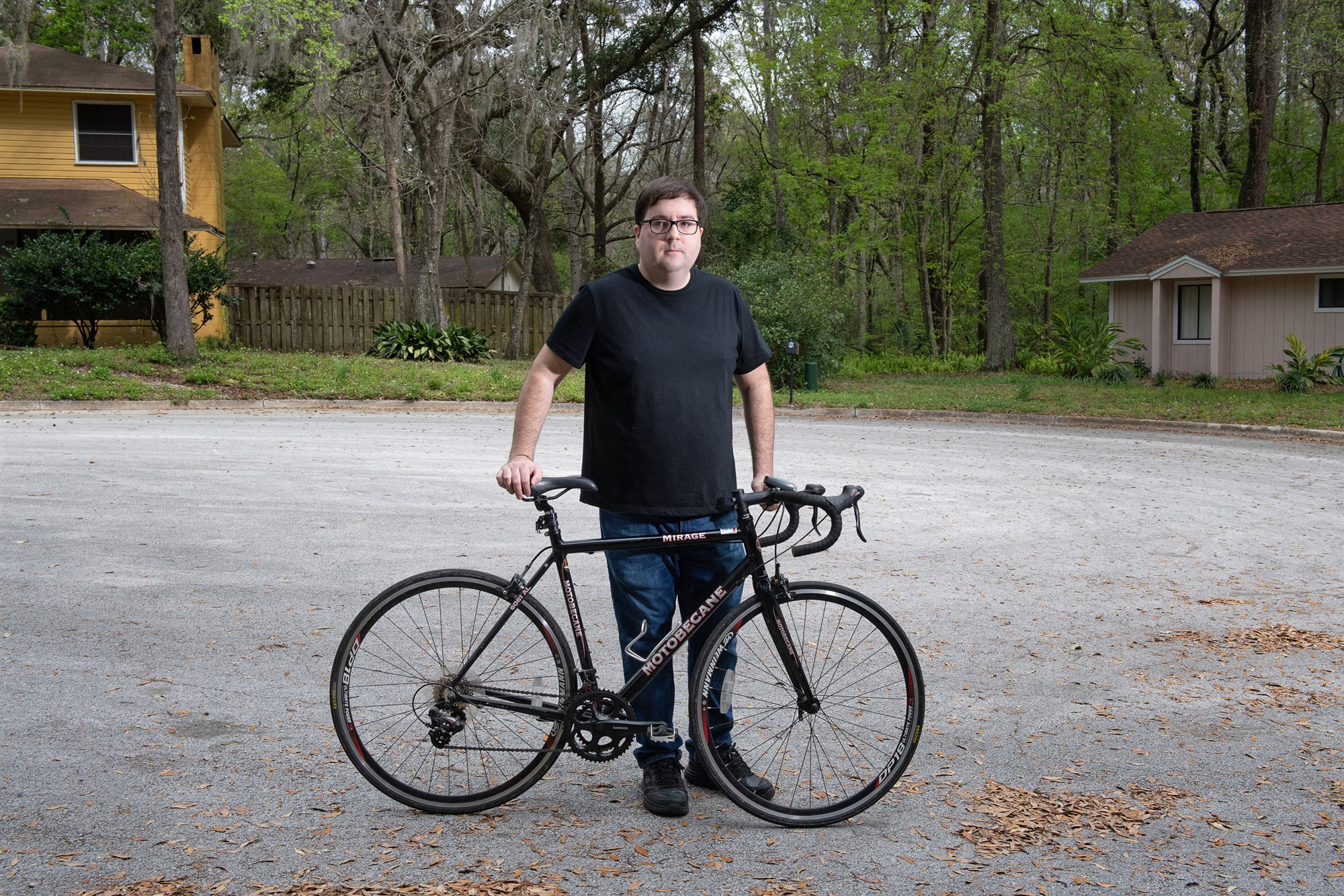
Actually, it's more than creepy.  It can be disruptive, even dangerous.  That's something Zachary McCoy of Gainesville, Florida learned the hard way.

Zachary McCoy


He'd been using RunKeeper to track his cycling as Google location services were activated on his Android phone.  During one ride nearly a year ago, he passed by the same house three times in the space of an hour.

It just happened that the house was the scene of a burglary.

Google shared this location data.  It wasn't enough for law enforcement officials to identify him personally, at least not immediately.  

But he would later receive an e-mail from Google's legal investigation team, notifying him that local police made a request for information from his account.  The company explained that it would release the data unless he went to court to block it--and that he had seven days to do so.  "I didn't know what it was about, but I knew the police wanted to get something from me," McCoy recalled in a recent interview. "I was afraid I was going to get charged with something, I don't know what."  

He had no previous record, and there police had no reason--other than the data from Google--to suspect him.  His lawyer, Caleb Kenyon, criticized the police for making their decision based on a hunch rather than traditional policing techniques. "This geoforce warrant effectively casts a blind net backwards in time, hoping to ensnare a burglar," Kenyon said.  "This concept is akin to the plotline in many a science fiction film featuring a dystopian, facist government."

Later, the police in Florida withdrew the original location request, claiming that new details emerged that led them to believe that McCoy was not the real culprit.  They would not, however, share what those details were.  

In any event, this incident shows us how far some law enforcement officials will go, and what methods--however flawed--they will use to track down a suspect, even if he or she is potentially innocent. It also begs the question of how things might have turned out for a guy who was riding his bike and minding his own business if he couldn't afford a lawyer and defend himself in court.

Oh, and it reaffirms my commitment to cycling without electronic devices.