On more than one occasion, I've railed against drivers who park in bike lanes--or even use them to pass when they think "the coast is clear".
I used to get annoyed with skateboarders, skaters and runners who use the lanes. Lately, though, I have had more sympathy for them, in part because of someone I talked to when I stopped for a red light a few weeks ago.
He was pushing his wheelchair in the lane I was pedaling. I suppose the sympathy I feel for someone in his situation is normal: After all, who grows up wanting to spend his or her life that way?
Anyway, he was apologized for using the lane. "Don't worry," I intoned. "Just be safe."
"Why do you think I do this?"
"What do you mean?"
He explained that he wheels himself along bike lanes because, in some places, the sidewalks are "impossible" to use. "They're broken, they have debris all over them." But,he said, "at least here"--meaning in New York--"we have sidewalks". In other places--"like Florida", he said--"there aren't any sidewalks". As often as not, it means he has to wait for people to drive him around because "it's just too dangerous to wheel a chair along those roads."
I was reminded of my encounter with that man when I came across an article from Connect Savannah. In the Georgia city's "New, Arts & Entertainment Weekly," John Bennett writes, "People who ride bikes on Lincoln Street are used to seeing other wheeled conveyances in the bike lane." He is "not talking about the cars that are regularly parked there." Rather, he observes, that "people who use wheelchairs, scooters, walkers and other mobility aids" rely on the bike lanes to "permit them to safely reach important destinations."
Bennett said that a tweet from Anders Swanson, a Winnipeg designer and the chairman of the Canada Bikes board of directors, included a video of a man in a motorized wheelchair to remind people that "It's far more than just cycling." His message to politicians is that unless they "never plan to grow old", bike infrastructure "should be their #1 priority."
As Bennett points out, having a good bicycle infrastructure is not just about separating cyclists from traffic. The lanes--when designed well--calm traffic, "improving safety and the comfort level for people who use mobility aids". The result, according to Swanson, is that people have choices in their mode of transportation. As Bennett so eloquently puts it, lanes "allow people like me to ride a bike to work instead of driving." And, he says, it "makes it possible for a person in a wheelchair to shop for groceries at Kroger's."
In places like Savannah, "when drivers argue against bike lanes, wider sidewalks and other traffic-calming measures," he explains,"what they are truly afraid of is losing their ability to speed," he explains. However, "the consequences of prioritizing convenience of motorists over safety are dire," he reminds us, "especially for seniors".
The reasons? A 30-year-old chance has a three percent chance of being killed if hit by a car travelling 20 miles per hour. At age 70, the mortality rate is 23 percent. And, as speeds increase, so does the death rate. It's not unusual, Bennett says, for motorists to drive at 45 MPH on Savannah streets. A 30 year-old has a 50/50 chance of surviving an encounter with a vehicle travelling at that speed. For 70-year-olds, the mortality rates increase to 83 percent.
So, in brief, creating good bicycle infrastructure (and I emphasize "good" here) is synonymous with making cities safer for people who use walkers, wheelchairs or motorized scooters--or for senior citizens generally. In addition to enticing more people like me to bike (rather than, say, drive) to work, it also gives senior citizens--and others who can't, or don't want to, drive-- the opportunity to live more active and satisfying lives.
I used to get annoyed with skateboarders, skaters and runners who use the lanes. Lately, though, I have had more sympathy for them, in part because of someone I talked to when I stopped for a red light a few weeks ago.
He was pushing his wheelchair in the lane I was pedaling. I suppose the sympathy I feel for someone in his situation is normal: After all, who grows up wanting to spend his or her life that way?
Anyway, he was apologized for using the lane. "Don't worry," I intoned. "Just be safe."
"Why do you think I do this?"
"What do you mean?"
He explained that he wheels himself along bike lanes because, in some places, the sidewalks are "impossible" to use. "They're broken, they have debris all over them." But,he said, "at least here"--meaning in New York--"we have sidewalks". In other places--"like Florida", he said--"there aren't any sidewalks". As often as not, it means he has to wait for people to drive him around because "it's just too dangerous to wheel a chair along those roads."
I was reminded of my encounter with that man when I came across an article from Connect Savannah. In the Georgia city's "New, Arts & Entertainment Weekly," John Bennett writes, "People who ride bikes on Lincoln Street are used to seeing other wheeled conveyances in the bike lane." He is "not talking about the cars that are regularly parked there." Rather, he observes, that "people who use wheelchairs, scooters, walkers and other mobility aids" rely on the bike lanes to "permit them to safely reach important destinations."
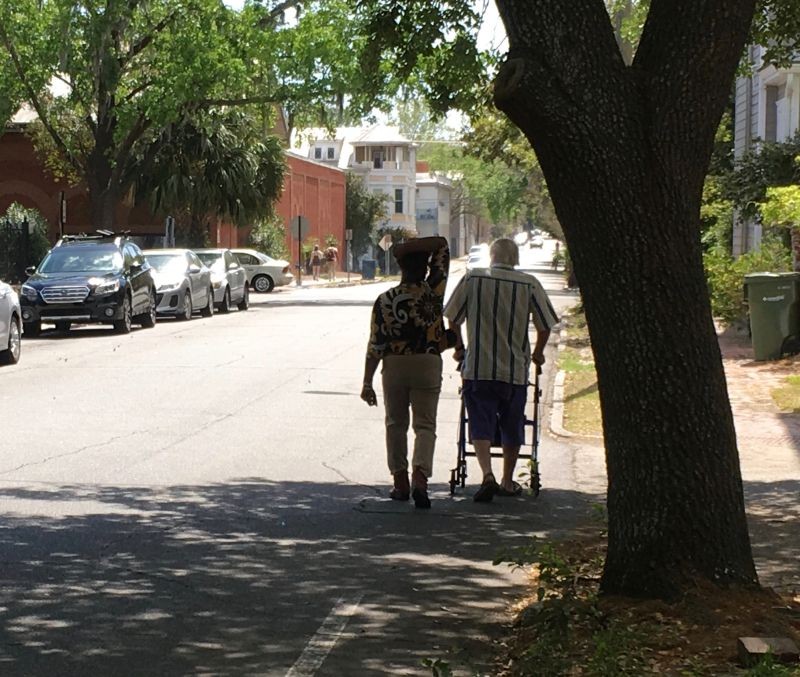 |
| From Connect Savannah |
Bennett said that a tweet from Anders Swanson, a Winnipeg designer and the chairman of the Canada Bikes board of directors, included a video of a man in a motorized wheelchair to remind people that "It's far more than just cycling." His message to politicians is that unless they "never plan to grow old", bike infrastructure "should be their #1 priority."
As Bennett points out, having a good bicycle infrastructure is not just about separating cyclists from traffic. The lanes--when designed well--calm traffic, "improving safety and the comfort level for people who use mobility aids". The result, according to Swanson, is that people have choices in their mode of transportation. As Bennett so eloquently puts it, lanes "allow people like me to ride a bike to work instead of driving." And, he says, it "makes it possible for a person in a wheelchair to shop for groceries at Kroger's."
In places like Savannah, "when drivers argue against bike lanes, wider sidewalks and other traffic-calming measures," he explains,"what they are truly afraid of is losing their ability to speed," he explains. However, "the consequences of prioritizing convenience of motorists over safety are dire," he reminds us, "especially for seniors".
The reasons? A 30-year-old chance has a three percent chance of being killed if hit by a car travelling 20 miles per hour. At age 70, the mortality rate is 23 percent. And, as speeds increase, so does the death rate. It's not unusual, Bennett says, for motorists to drive at 45 MPH on Savannah streets. A 30 year-old has a 50/50 chance of surviving an encounter with a vehicle travelling at that speed. For 70-year-olds, the mortality rates increase to 83 percent.
So, in brief, creating good bicycle infrastructure (and I emphasize "good" here) is synonymous with making cities safer for people who use walkers, wheelchairs or motorized scooters--or for senior citizens generally. In addition to enticing more people like me to bike (rather than, say, drive) to work, it also gives senior citizens--and others who can't, or don't want to, drive-- the opportunity to live more active and satisfying lives.


