25 September 2017

Para Esas Mujeres, Una Opportunidad Fantastica

More than 120 years ago, Susan B. Anthony said that the bicycle has done more than anything else in the world to emancipate women.  She certainly had a point:  Cycling itself gave women freedom and mobility we hadn't previously experienced.  It also led to less-restrictive clothing than women had previously worn which, of course, freed us in all sorts of other ways. I mean, I simply can't imagine living in a whalebone corset and petticoats.

Still, the bicycle's potential for emancipating women hasn't come close to being realized.  While I still wish that women's racing would get the attention it garnered, say, 30 to 35 years ago (in the days of Rebecca Twigg and Jeanne Longo), I think the real power of cycling for women lies elsewhere.

One example is in VeloCuba in Havana.  Three years ago, Nayvis Diaz left her job in the Ministry of Foreign Trade and sold her Peugeot car to finance the opening of this rental and repair shop.  All of its seven employees are women, including Dayli Carvo, who once raced for Cuba's national team. 

One of VeloCuba's employees works on a bike.


In addition to repairs and rentals, VeloCuba also conducts bicycle tours of the Cuban capital.  "We place great emphasis on knowing historical matters," Diaz says of her guides, who conduct tours in English, French and German as well as Spanish.  "We are very keen for our visitors to discover art, architecture, new places they can go at night, and learn about Cuban society," she explains.  

VeloCuba has, in its brief history, expanded to two locations--one in the central neighborhood of Vedado and the other in Old Havana.  It has not arrived at its success, however, without running through a couple of obstacles. 

One is something that even the expertise Diaz gained in her old job couldn't resolve:  how to get bicycles.  In spite of its relatively rich history of cycling, the island has no bike industry.  So, VeloCuba has had to buy bicycles from tourists visiting the island.  

The other is that for more than half a century, Cuba, like other Communist countries, had no advertising. Even today, there are few advertising venues. The shop's clientele, therefore, has been built mainly through word of mouth. At the risk of sounding sexist, I daresay that is something we, as women, rely on in so many areas of our lives.

In addition to bicycle rentals and repairs, VeloCuba repairs and maintains wheelchairs--for free.  Diaz sees it as a way to "offer some help to society."

The goodwill she is creating may help her to realize another dream she has:  that "one or two days a week, only cycling is allowed in the city."

I think Ms. Anthony would approve.

24 September 2017

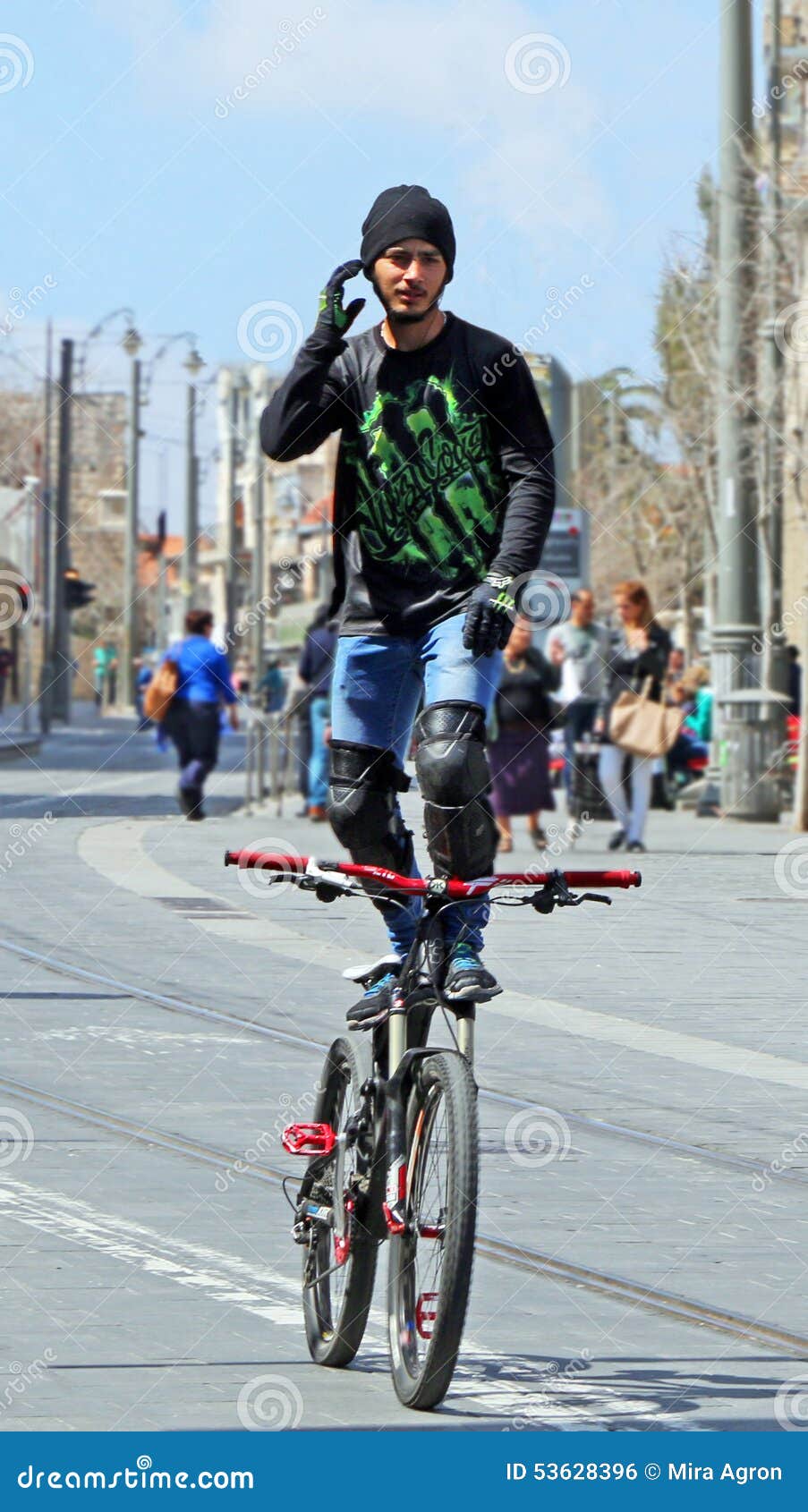
What Do You Have To Stand On?

There have been maybe a couple of times in my life when I was genuinely proud of myself.  

One of them was the first time I did a "track stand."

Back in those days, we didn't have cell phones.  It's a good thing, probably.  Then again, the NYPD doesn't enforce the ban on talking on your phone while driving.  Then again, it may not apply to cycling.

Image result for standing on bicycle
Add caption


I swear, I wasn't talking on a phone.  I was listening to an invisible sea shell!

23 September 2017

Would You Go To Summer School For That?

I am going to make what is possibly the most startling confession for an educator:  I wasn't the best of students.

I wasn't terrible, mind you:  I was one of those students who did just well enough: sort of like the Italian football squad in the opening round of the World Cup tournament.


Oh, I made dean's list a couple of times, but that was in spite of myself.  You see, I was (and still am) one of those kids who loves to read and write, but hates to do schoolwork.


I always figured that if I moved on to the next grade, if I went from being a sophomore to a junior or whatever without getting into too much trouble (which meant, at times, that I just didn't get caught--wink, wink) I was doing well enough.


Another rationale for my under-achievement was this:  I never had to go to summer school.  To most kids, that was like the death penalty.  And I survived.

But if they'd given out cool stuff for going to summer school, I just might've gone voluntarily.


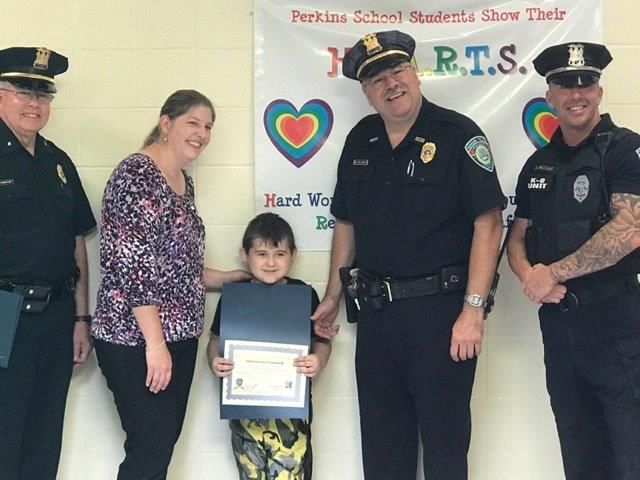
Apparently, a couple of folks up in the Finger Lakes region of central New York State realized there are other kids who feel the same way.  So they approached Newark Police Chief David Christler  to administer a fund, which they started, for "deserving young people who, for whatever reason, did not have a bike or performed service worthy of reward."

According to Christler, the couple realized that "bike ownership influenced their lives when they were young and now it seemed right for them to pass on their good fortune."  He added that establishing the fund was easy; the hard part was establishing criteria for deciding who should receive the bikes.

Newark PD pix
Jahmariyan Cornwell receives a certificate for a new bike for his attendance and particiaption at summers school. Neark (NY)  Police Chief Dave Christler is at the left; next to him is summer school principal Kari Hamelinck.  To Cornwell's left are Newark detective Gary VerStraete and K-9 Officer Dan Weegar.


School superintendent Matt Cook and summer school principal Kari Hamelinck decided, with input from teachers, that the bikes should be awarded on the basis of "attitude, citizenship and summer school attendance."  On those bases, one student from each summer school class--18 in all-- received a certificate redeemable at the local Wal-Mart for a new bike, helmet and lock.

OK, so it's Wal-Mart. Still, getting a bike when you didn't have one is something.  And, if it keeps kids in school--and performing better than they would have otherwise--it sounds good.

Hey, I might've even gone to summer school for that!

22 September 2017

To Fall!

Today the autumnal equinox arrives at 4:02 pm EDT.

I'll be on my bike by then.  In fact, I might have even finished my ride.

I haven't decided where I'm riding.  Then again, apart from the usual changes (Is that phrase an oxymoron?)--you know, the shorter days and the changing colors of the leaves--we never really know what a new season will bring, do we?

Equinox
From Treehugger

For that matter, you or I can take a ride we've taken dozens or even hundreds of times before.  We know the way; we know the terrain and the road conditions.  But we don't always know what lies ahead on any given day, on any given ride.

Out for a ride. On to a new season.

21 September 2017

Against The Wind, Into A Passion

In 1972 or thereabouts, he pedaled from Buffalo, New York to Erie, Pennsylvania.  "My butt has never been the same since then, honest to God," he says.

He doesn't mention what saddle he rode.  My guess is that it was broken-down, rather than broken-in.

More than likely, it's the saddle that came with the bike when he bought it. That is what most people ride, at least until they realize they can replace seats that are uncomfortable for them.  In this case, however, it may not have been possible for the Buffalo-to-Erie cyclist to swap out his bum-buster.

You see, that saddle came on a Columbia bicycle--but not one you might have ridden when you were a kid (or, perhaps, are still riding now!).  Rather, it's one of the Columbias made by Albert Pope's company in 1886.

Jim Sandoro bought that bike in 1970 at a flea market just outside of Cleveland.  A couple of years later, he took his fateful ride. "Like idiots, we didn't think about the wind," he recalls.  "In the old days, they used to pedal from Erie to Buffalo"--in the direction opposite from the one Sandoro rode--"because they knew better."  His ride into the wind, he says, took "16 grueling hours."

Jim Sandoro with a Maid of the Mist bicycle from his collection


Since I have never ridden a high-wheeler, I can only imagine what that ride was like.  The bike, however, helped to form a collection of vintage bicycles and rare bike memorabilia Sandoro and his wife, Mary Ann, have amassed over the past half-century.   They have concentrated their efforts on bikes and related items made from the 1860s through the 1920s, especially models related to their native Western New York State.

On Saturday, that collection will be displayed for the public for the first time in the Buffalo Transportation/ Pierce-Arrow Museum, which they founded and built.  The museum has been devoted mainly to automobiles and, more recently, the Frank Lloyd Wright Filling Station.  But now the Sandoro's collection, which has been augmented by bikes they purchased from the former Pealing History Museum in nearby Orchard Park, will take a prominent place in their museum.

And, if you plan to ride there, you might want to pay attention to the wind!


20 September 2017

A "Fancy Ladies" Bike Tour

Am I a "fancy lady"?

If I am, I can join others like me on a ride made for us.

Yes, it's called the "Fancy Ladies Bicycle Tour".  Best of all, it's being held in 50 different locations this Sunday.

There's just one problem, and it's a logistical one:  None of those locations are near me.  So it might be a bit difficult (not to mention expensive!) to book an airline ticket and hotel reservations.  Oh, and I have to be at work on Monday!


Oh, well.  The starting points for the "Fancy Ladies Bicycle Tour" are in a country I would gladly visit again:  Turkey.  I once spent nearly a month there.  Of all the countries I have visited, it's my favorite. (I don't count France as a country I've visited, as I've lived there.  So, for me, France is in a special category.)  It offers a great combination of artistic and cultural treasures with natural beauty.  The food is great. And the people are lovely:  I mean, they ones I met were warm and hospital and, very often, physically attractive!  My only regret was that I didn't get to do any bike riding when I was there.

The Tour has no admission fee.  The only requirements for the Fancy Ladies Bicycle Tour seem to be, in addition to being a woman, dressing up one's self and one's bike.  I think I can do those things.  

This is the Tour's fifth year.  The first version was held in 2013 in the coastal city of Izmir (formerly Smyrna) with the objective of promoting bike riding among women, while marking World Car-Free Day.  What's really interesting is that the Tour is not sponsored:  it formed and spread entirely by cyclists showing up for it.  Now, that's definitely my kind of ride!

19 September 2017

Could The Insurance Capital Help Cycling Bloom In The Rosebud City?

Bicycling is good for business.

Cities large and small are discovering how this is true, and not just for bike shop owners.  Obviously, we are good for coffee shops, bakeries and such.  But we--cyclists--use most of the same products and services as everybody else.  Thus, we will patronize the same sorts of businesses.

But we are also good for business, especially in urban downtown areas and on Main Street-type shopping strips in smaller towns, in the same way that pedestrians are.  Stores in such environs--whether they sell books or craft supplies or serve babkas or craft beer--are more likely to find customers among those who walk or pedal in front of them than from drivers who pass by because they can't find a parking spot.

That, I believe, is a reason why more cities here in the US are trying to make themselves "bike friendly"--or, at least, are doing the things they believe, rightly or wrongly, will make them so.  Chambers of Commerce or Business Improvement Districts will install bike racks (good) and nudge their cities into painting bicycle lanes on the streets (sometimes not so good).  They perceive that making their shopping areas more attractive and convenient for cyclists will do more to help business than squeezing more cars into already-crowded streets could.

Apparently, some folks in Hartford, Connecticut had the same idea.

Now, when most people think of Hartford, the insurance industry comes to mind.  It still is known as "The Insurance Capital of the World", with good reason.  Those with a sense of history might recall Connecticut's state capital was also a major industrial center.  In 1850, a native named Samuel Colt invented a precision manufacturing process that enabled the mass production of revolvers--which, of course, bore his name--with interchangeable parts.  His method would be adopted by a couple of guys named Richard Gatling and John Browning who made their own firearms, and the Weed Sewing Machine company, which dominated the market at the time.

Weed would also produce the first bicycles manufactured in the United States.  Albert Pope, another Hartford native, saw British high-wheeled velocipedes at the 1876 Philadelphia Centennial Exposition and bought the patent rights to produce them in the US.  Since he had no manufacturing facility, he contracted Weed, who would produce everything but the tires.  Soon, production of bicycles--Columbias-- overshadowed that of sewing machines, and Hartford became one of the leading centers of bicycle-making in the US.

Lest you think that the city's energies have been devoted entirely to commerce and industry, some very creative individuals in the arts have called Hartford home.  In fact, a couple of books you may have read--A Connecticut Yankee In King Arthur's Court and The Adventures of Huckleberry Finn were written in a house that is today a museum dedicated to their author. (I was there once, years ago, and thought it was interesting.)  And one of America's most innovative poets, Wallace Stevens, was an executive with the Hartford Accident and Indemnity Company!

Anyway, it seems that creative thinking lives on in Hartford. For years, the city's Business Improvement District has run a "safety ambassador" program.  The "ambassadors" patrol downtown streets, acting as security escorts, providing free help to stranded motorists and acting as additional sets of eyes and ears for the police.  In May, the BID added bicycle maintenance and repair to the work done by the "ambassadors" in order to encourage bicycle commuting and assuaging some of the fears associated with it, according Jordan Polon, the BID's executive director.

Eddie Zayas, a Hartford "safety ambassador",


Ambassadors give their phone numbers to people who ask for them.  Maureen Hart was one of those people. Just a few days after getting that number, she was riding home from a concert when she got a flat.  She called that number and became one of 42 cyclists who have received roadside assistance since the program started. 

"It's such a cool service," she said.  "I know people who live in Portland and that's a really bicycle-friendly city.  They don't have anything like this.  This is amazing."

Well, you can't have bicycle-friendly cities without bicycles.  And Hartford was making them long before most people ever heard of Portland.  Now the capital of the Nutmeg State looks ready to teach The City of Roses how to make it even easier to ride in their city.

(Here's another fun fact about Hartford:  It's also home to the oldest continuously-published daily newspaper in the US.  The Hartford Courant has been in print since 1764, making it 87 years older than the New York Times--and 12 years older than the United States itself!)

18 September 2017

Lady Godiva He Ain't

When I was writing for a local newspaper, I was talking to a police officer when a call about a robbery came in.  The caller had gotten a glimpse of the suspect, so the officer asked for a description.

"He was wearing a T-shirt, blue jeans and sneakers."  As the officer wrote it down, he repeated it to the caller, just to be sure--and asked for more detail which, apparently, the caller couldn't (or wouldn't?) provide.

He hung up the phone.  He saw that I was just barely suppressing a laugh; his knowing smirk was a signal that I could release it.  "How many other guys fit that description?," he wondered aloud.

I'm recalling that incident after seeing a news story out of Fort Worth, Texas.  Apparently, at around 5:45pm on Saturday, a man on a bicycle chased down a female jogger and assaulted her.  


Now, my heart goes out to that woman and I hope the guy is caught.  He, however, might be as difficult to spot as the perp in jeans, T-shirt and sneakers, although his apparel was entirely different.

The difference was, well, that he had no apparel at all.  That's right:  He rode his bike naked. According to a witness, he'd been sitting on a park bench before he took off his shorts, hopped on a bicycle and pedaled westbound on Rogers Road.

Police say that the suspect is a white male who's about 5'10" tall with a slender, athletic build and short brown hair on his head but none on his body.

The woman, thankfully, escaped his clutches.

I hope he's caught.  If he's riding around naked, he probably will be, very soon.  Somehow, though, I doubt that he is:  For all we know, he might be wearing jeans, a T-shirt and sneakers at this very moment!

17 September 2017

How Many Tubes?

Almost everybody loves the look of a twin top-tube mixte frame.  I own two. (You're going to hear about them very soon.)  They are practical and stylish, and in the days when Reynolds, Columbus, Ishiwata and other tube manufacturers made the skinny top tubes, could be made with the same quality as the best diamond-frame bikes.

They can be a lot of fun, too:


I have to admit: At first glance, I thought it was one of the stranger-looking mixtes I've seen.  But I love it!  I think if there were no limit (due to space limitations and finances) to the number of bikes I could own, I'd want it!

16 September 2017

What Does This Shop Have In Common With The Packers?

In My Big Fat Greek Wedding, Toula (played by Nia Vardalos) falls in love with a non-Greek American, Ian Miller (played by John Corbett). When he has dinner with her family, he mentions that he's a vegetarian.  The entire family stops and gasps.  Toula's Aunt Voula says, "That's OK. I make lamb."

A former co-worker of mine told me that was pretty much the definition of "vegetarian", a term of derision or approbation in her hometown of Green Bay, Wisconsin.  She insisted she wasn't joking when she told me that Jell-O with mini-marshmallows and Reddi-whip is considered a "salad" in "cheeseland."


She also affirmed another stereotype:  People in her native city live for football (the American version).  As it happens, Green Bay is the smallest city in North America with a major-league sports team.  (Between 1972 and 1995, that distinction belonged to Quebec City, where the Nordiques of the World Hockey Association and, later, the National Hockey League played.)  The object of Green Bay denizens' affection is, of course, the National Football League team known as the Packers.


Interestingly, the Green Bay Packers hold another distinction:  They are the only North American major league sports team that is publicly owned.  As I understand it, the Packers are, in this sense, no different from a public utility like an electric or water company.  


Or the city's newest public enterprise:  The Green Bay Bicycle Collective's new Community Bicycle Shop, which has just opened in a city-owned garage at 418 4th Street.  This shop will hold bicycle maintenance classes and allow people to come in and work on their bikes for free.  "If the garage door's open, anyone can come in," explains Heather Gentry, the Collective's president.  She says the Collective also plans to launch an "earn a bike" program, in which students and other young people can learn volunteer at the shop in exchange for a bike, in the spring.


Rebecca Nyberg of  Brown County Public Health describes this new venture as one more piece of her organization's effort, begun in 2004, to get more people, especially students and the young, to cycle and walk for transportation as well as recreation.  Part of the effort, she says, has involved making bicycles more readily available and easier to access, and cycling safer and more practical.  "We realized that if we don't make the right thing easier to do, we won't get anywhere with people," she explained.


And so her organization and the Collective have worked together to create a public good in a city that has a surprisingly (at least, to those who aren't familiar with it) rich history of communal effort and community ownership.