27 June 2022

The Monday After The Overturn

Last week, I wrote a post on the 50th anniversary of Title IX becoming enshrined in U.S. law.

The following day, the Supreme Court struck down Roe v Wade.

I am writing about that now because I fear that so much of what Title IX made possible can be reversed--or, at least, the law could be rendered all but meaningless.

One thing enslavers know is that keep people servile, all they have to do is restrict the movements of the people they want to keep in bondage and take their bodily sovereignty from them.  The Taliban understands that lesson quite well:  They didn't have to close schools or bar women from opening businesses or practicing professions.  All they had to do was make them wear clothing that inhibited their movements and make it all but impossible to leave their homes without a related male escort.  In a matter of months, they reversed all of the gains Afghan women and girls made during the previous two decades.  Until recently, a similar situation prevailed in Saudi Arabia (enforced by a royal family that, ahem, the United States props up) until women were allowed some elementary rights like riding bicycles and driving cars.

One result of the restrictions in Afghanistan and Saudi  Arabia is that women's health deteriorated.  Women's bodies were seen, as they are in all fundamentalist and orthodox religions, as incubators:  Their health care is seen as important only to the extent that it allows them to bear and rear children.  Because women could not go anywhere without a related male escort, they could be denied care because their husbands didn't want them to take off their clothes in the presence of a male doctor (never mind that a female doctor may not be available) or simply decided the women didn't really need care.
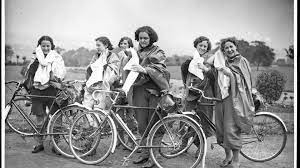


So how does this affect us, in a country where we don't have to wear burkas and can come and go as we please? (Well, OK, there are some areas where  we don't go alone.) As a transgender woman, I often think about bodily autonomy:  What if I'd been told I couldn't take hormones or have surgery?  Or what if there wasn't a therapist and social worker available who understood my situation and could guide me into my transition?  If abortion can be denied, what else can a government--whether national, state or local--tell us we need or don't need, or can or can't have?

For that matter, could politicians and judges tell us what we can and can't do in our free time--or as a profession?  Think about it.  In some states, women have been arrested for having miscarriages or stillbirths.  Why?  Those miscarriages and stillbirths were considered as manslaughter or even homicide on the grounds that some behavior--drug use, drinking, smoking or even diet or activities--induced them.  What if some accident or injury in cycling--or some other sport--were considered as "causes" or "contributing factors?"

You might say that I'm being hysterical or alarmist.  In the days before Roe v Wade, girls were discouraged from sports with this admonition: "It'll tip your uterus."  Or our other "tender parts" would be irrevocably damaged, or the effort of pedaling or running or jumping or whatever would contort our pretty little faces. (They obviously never saw mine!)

And I fear that women's health care--which is still nowhere near the level it should be--will revert to its pre-Roe state.  Of course, I'm not talking about the technology.  Rather, I mean that an attitude Roe engendered--that women, as sentient beings, are worthy of health care in their own right--could revert.  If it's harder to obtain care, and care for ourselves, it will be more difficult to not only particiapate in sports, even recreationally, but also to determine our careers and other areas of life.

Our journeys take many unexpected turns.  I know mine has.  I just hope ours don't go off a cliff with the Supreme Court overturning Roe v Wade.


26 June 2022

The Way To Go

Whether you are straight or gay, trans or cis, or any other gender or sexual orientation, 

here is my advice to you:


25 June 2022

A Bike Lane Network: The Community Wants It. Can The City Get It Right?

Sometimes, when I don't have all day, or even morning or afternoon, to ride, I'll take a spin out to the eastern Queens, the New York City borough where I live (in its western end).  The routes between my Astoria apartment and Fort Totten or Alley Pond include some charming residential streets, cute shops and some lovely parks.  

But as the urban-but-not-claustrophobic character of my neighborhood also gives way to more spacious yards, the neighborhoods also become more suburban--and auto-centric.  While some residents of those areas ride for fitness or simply fun, they ride to and in parks and cycling isn't seen as a means of transportation.  Also, the city's mass transit lines don't reach into those neighborhoods.  So, for most people, going to work, school or shop means driving or being driven.

That is why on at least some of the area's streets, cycling can be just as hazardous as it is in more densely-populated neighborhoods.  Too often, drivers simply aren't accustomed to seeing cyclists on the streets.  Or, they have been inculcated with the notion that the drivers rule and cyclists, pedestrians and everyone else are supposed to get out of their way. Thus, so-called "shared" roadways--which consist of nothing more than lines and bike symbols painted on pavement--do nothing to promote safety.

Also, eastern Queens is laced and ringed with major highways.  The off-ramps from those by-ways merge into the neighborhood's main streets like Northern Boulevard.  One problem with the bike lane on the Boulevard is the difficulty in crossing one of those exit ramps, where there is no traffic light or even a "stop," "slow" or "yield" sign.


The problems I mentioned were cited by members of Community Board 11 when they sent back a proposal the City's Department of Transportation presented to them.  The proposal called for a series of bike lanes in a five square-mile area.  While the Board is in favor of establishing a network of lanes, the DoT's initial proposal called for fewer miles of them, none of which would have been protected.  Worst of all, at least in my view, this "network" would have the same problem I've encountered in too many bike lane "networks":  It's not a network.  Lanes weren't connected to each other; they are the "bike lanes to nowhere" I've complained about in other posts.  One board member pointed out that the lack of connection between segments actually puts cyclists in more danger than simply riding on the road.

As I often ride out that way, I am interested to see what the DoT does in response.  I am just happy that in an auto-centric area, community board members see the value in having a network of protected bike lanes. I hope the DoT gets it right. 

24 June 2022

On A Cloud, Even If I'm Not Riding Through It

The other day, rain fell in starts and stops, stopping late in the day.  I took Tosca, my Mercian fixed-gear, for a spin through neighborhood streets and a couple of times around Roosevelt Island.

Some parts of the island, especially the area around the lighthouse and "Girl Puzzle," feel rather bucolic, in and of themselves and in contrast to the skyline and bridge views less than a mile across the water.  


Those views also highlight certain weather conditions.  Low clouds seem even closer to the streets when they enshroud the spires and upper floors of skyscrapers.


I've pedaled up and downmountains similarly cocooned, through  clouds thick enough that I couldn't see more than a few feet in front of me.  It may have been the most Zen-like riding I've ever done:  When all of the normal cues, including color and sound, are gone, I could only ride, in that space, in that moment.  For a time, I couldn't even see my bike under me: I felt only my rear on the saddle, my hands gripping the handlebars so my arms could prop me up and my feet spinning the pedals.  I didn't even know which gear I was riding. 


Of course, no ride on Roosevelt Island, or anyplace in the city, will take me into the clouds.  But I can feel, if for a moment, that I am on a cloud!


23 June 2022

Title IX, Fifty Years Later

 On this date in 1972–fifty years ago—Title IX became law in the United States.

It’s commonly associated with its most visible manifestation:  women’s sports in educational institutions.  It is, however, a broad piece of legislation (Do I sound like a lawyer or politician?) stating that no educational institution that receives Federal funding—as most, even private colleges and schools do—can discriminate on the basis of sex.

The title of this blog is “Midlife Cycling.”  I am, however, old enough to have grown up with a girl much smarter than I am and possessing talents I can only wish for but whose parents did everything they could to keep her from going to college (or art school, her dream) because “she’ll get married, stop working and it will all be wasted.”

That rationale was used to impose strict quotas on—or ban outright—women in graduate schools, medical and law schools and even undergraduate programs like engineering. Those schools and programs just happened to offer access to some of the highest-paying jobs which, in the minds of decision-makers (nearly all men) “men need more” because they were going to support those women who were denied access to those programs and jobs—and the children those men and women would have.

Such attitudes were also used to discourage or bar girls and women from participating in sports. It was a kind of circular argument:  Girls’ and women’s participation in sports was pointless because once they graduated from school or aged out of whatever program they were in, there were no more opportunities for them, professionally or otherwise. That women and girls didn’t participate in sports was the rationale for not creating such opportunities! 

In addition to being circular, such an argument was hypocritical and nakedly sexist:  To my knowledge, no boy or man (including me, in my previous life) was ever discouraged from participating in sports because he had little or no chance of getting a scholarship or making a living from it.

One irony of Title IX is that sports is not mentioned anywhere in it.  Only subsequent revelations that women’s and girls’ sports budgets were as little as 1% of those for men’s and boy’s teams caused the law to be applied to sports programs.


While female participation in sports is undoubtedly much greater than it was half a century ago, it—and, perhaps more importantly, the budgets for it—are still much lower than those for males, and not nearly in proportion to student enrollment. Women make up nearly 60 percent of college and university enrollments but only 44 percent of varsity athletes.

What’s even more revealing is that budgets for women’s sports teams are not even in proportion to their level of participation.

Much of that has to do with priorities. In most colleges and universities, most of the revenue comes from football (American-style) and basketball.  While there are many women’s basketball programs, they, with few exceptions, don’t garner the attention devoted to men’s teams.

I think the reason for that is also the reason why, even sports in which women’s participation is greater, men’s abilities are prized over women’s.  Because, on average, they are taller and stronger, men can jump higher, hit harder and run faster.  Those abilities translate into dunks, tackles and sprints:  the sorts of things used to promote football, men’s basketball and other men’s sports.

If there were as much respect accorded to the qualities of female athletes—such as flexibility, resilience and endurance—there would be more respect for, and professional opportunities in, not only women’s basketball, but also in other sports like volleyball, gymnastics and, yes, cycling.

Speaking of which:  About 200 post-secondary educational institutions sponsor club-level cycling teams, which compete against other schools but are usually funded by the students themselves.  As of 2020,  21 colleges and universities have what are known as “varsity” cycling teams.  They are funded by the schools, just like (but not at the level of) football, basketball and other “major” teams.  All 21 of those schools have both men’s and women’s teams. In a few, the dollar value of the average woman’s scholarship is greater than the average men’s; in others, it’s less or equal.

So, while intercollegiate cycling might be doing a little better in gender equity than other intercollegiate sports are doing, as researchers might say, the sample size is small.  But, given what I’ve said about the differences between male and female athletes, and the fact that some overall cycling records have been held by women, I think the potential of women’s cycling, whether collegiate, Olympic or professional, has yet to be realized.

22 June 2022

Held To Different Standards

What is your name?  What is today's date?  Who is the President?

I passed the test: I answered all three questions correctly, as much as it pained me to utter Donald Trump's name in response to the third.  

So who administered that exam?  A doctor in Westchester Medical Center, after the worst crash I've suffered in half a century (!) of cycling.  My mishap, which "totaled" Arielle, my first Mercian bike, also included a face-plant.  So that doctor was testing my cognition as a first step to determining whether I'd suffered any brain damage.  

I thought about that after hearing that President Joe Biden fell off his bike while speding the weekend at his family's retreat in Delaware.  According to reports, the President when he came to a stop, his foot got caught in a toe clip, which caused him to tumble.  


President Biden, after falling off his bike.  Photo by Sarah Silbiger, for the New York Times.

He didn't appear to suffer any injuries or require medical attention.  Instead of doctors and nurses, reporters surrounded him as he picked himself up.  So, their "test" was a bit different from the one I "passed."  Before continuing his ride, he answered questions about--are you ready for this?--tariffs on Chinese goods and gun control legislation.

Hmm...If my doctor had asked those questions, I wonder how he would've assessed my condition.

21 June 2022

The Ride: A Constant In The City

Yesterday I answered my own question by taking a ride.  As I often do, I zigzagged through some neighborhoods in Queens and Brooklyn before ending up in Coney Island. As the day was warm and sunny, and the wind of the past few days had all but died down, people were out: cycling, walking with themselves, canes, strollers, dogs and their friends, lovers, spouses and children.  And although yesterday was officially a holiday, there was, on some streets, nearly as much traffic as on a normal weekday.  People who didn't have to go to work simply wanted to get out, and I couldn't blame them.

It seemed, somehow, that the bike I chose to ride influenced the ride itself.  Because the wind was nearly calm, in contrast to the previous few days, I felt like taking a spin on Tosca, my Mercian fixed-gear bike.  And, while I didn't plan my route beforehand--in fact, I thought no further ahead than the next traffic light throughout my ride--I think I stuck to a flat route in part because I couldn't shift gears.

My ride--about 70 kilometers in total--was very nice, except for one thing:


At Prospect Park, I took a detour (if you can call anything on a ride like the one I took yesterday a detour) onto some streets I know but hadn't seen in a while. Hal Ruzal, the former partner and mecahnic/wheelbuilder par excellence of Bicycle Habitat--and the one who introduced me to Mercians and a few interesting bands--moved out of the house in the photo two and a half years ago.  I've joked that he "got out of Dodge": the pandemic struck just a couple of months after he left.  He's now living in another part of the country that, while affected by COVID (where wasn't?), didn't suffer from lockdowns or other ravages were we experienced here in New York.


When I texted that photo, and a couple of others, to Hal, he seemed more saddened by the generic townhouse-like building constructed across the street from his old house, and by the fact that the house next door is vacant and up for sale.  "I hope the lady who owned it didn't die," he said.

My message was more evidence, to him, that the city of our youth no longer exists.  I would agree, and sometimes I mourn the loss of it, but there is still much I enjoy--like the bike ride I took yesterday.

20 June 2022

Solitude And A Holiday

 The other day I rode to Point Lookout.  I began my ride under bright, sunny skies. As I pedaled through the Rockaways, however, clouds gathered, layer upon layer, shade over shade, blues and grays refracting the light of the sea and sky but posing no real threat of rain.

But, although it was Saturday, the scene along the Rockaway and Long Beach boardwalks bore more resemblance to mid-week—and early April rather than mid-June.  


The high temperature—around 19C or 66F—was indeed more like early Spring than early Summer.  What kept people from taking seaside strolls was, I believe, the wind, which at times gusted to 60KPH (about 38MPH). Some of the folks I saw were clad in fleece parkas!

I’ll admit that I like the relative solitude of rides like the one I took the other day:  I feel my being expanding across the expanse of sea and sky.

After I finish my cup of coffee, I will ride.  This afternoon will be a bit warmer, with less wind.  And it’s the official commemoration of Juneteenth. Government offices and many businesses are closed, so people have the day off.  I wonder whether I’ll see more people—and traffic—than I saw the other day.

19 June 2022

Freedom Rides

Although the holiday will be commemorated tomorrow, today Juneteenth. On this date in 1865, the slaves of Texas got word that they were finally free, some two years after Abraham Lincoln delivered the Emancipation Proclamation and two months after the Civil War ended.

This date was first declared a Federal holiday last year.  The law making it a Federal holiday stipulates that if it falls on a weekend, it will be observed on the Friday before or Monday following, whichever is closer.  So, the first two observances of Juneteenth have resulted in three-day weekends!

In any event, there are a number of "Freedom Rides."  I plan to ride, possibly with others who are observing the holiday--and to attend a dinner with some friends.


From BikePortland


18 June 2022

Don't Try This At Home--Or On The Interstate

Baron Georges-Eugene Haussmann has been as revered as Nehemiah and reviled as Robert Moses.  However you see him, you can't deny that he is as responsible as anyone for the kind of city Paris is, and has been for the past century-plus.

One of the things he did was to introduce a street grid. Previously, much of Paris--especially the old districts like Le Marais--were laced with streets narrow streets that zigged, zagged and curved.  If you've been in the medieval sections of some European cities--or a few small districts of New York and Boston--you have an idea of what the City of Light was like before Baron Haussmann came along.

In re-doing Paris' streets, he also made them wider.  While they still seem charmingly or claustrophobically narrow, depending on your point of view, compared to American thoroughfares, the newly-made streets were still a good bit wider.  They allowed for Paris' new infrastructure, including sewers and the very thing that gave the city its nicknames:  gas-powered streetlights. 

While most people agree that widening and straightening the streets modernized the city and made it more habitable for many people, others accused Haussmann of being a tool of the powers-that-be.  Up to that time, Parisians were noted for insurrecting on the drop of a chapeau, and instigators who knew the streets could evade soldiers and guardsmen, who often came from other parts of the country and therefore weren't familiar with the twists and turns of those byways.  But the new, arrow-straight streets made pursuits easier because, well, they made it easier to keep perpetrators in their pursuers' sights.

I mention all of this because, while I hope (and assume, dear reader) that you will never steal a bike, I can offer this bit of advice:  If you try to make your escape on wheels you wrested from their rightful owners, don't try to make your escape on a road that stretches straight ahead of you for miles and miles (or kilometers and kilometers).

And, especially, don't try to make your getaway on an Interstate highway.  It will almost certainly result in your getting caught and hurt, or worse.

A 31-year-old man in Seattle learned that lesson the hard way.  At around 7pm on Wednesday, a bicycle was reported stolen on NE 45th Street near Interstate 5. Police were alerted and Washington State Troopers stopped him on the highway.  When he fought, they tasered him.  He ended up in a local hospital with non-life-threatening injuries.


It will be interesting, to say the least, to find out more about this alleged thief--and what prompted him to try to get away on the main north-south highway of the US West Coast.