In the middle of the journey of my life, I am--as always--a woman on a bike. Although I do not know where this road will lead, the way is not lost, for I have arrived here. And I am on my bicycle, again.
I am Justine Valinotti.
17 February 2022
A Cyclist In Kay-Cee
16 February 2022
Money And Memories, Transportation And Treasure
Last month, I wrote about a British judge who did something few in the criminal-justice or law-enforcement systems do: He took bike theft seriously. That magistrate, in sentencing thieves, said the monetary value of each the defendants stole is as great as a typical car.
That perception, however incomplete, at least helped the judge understand that stealing those bikes was as serious an offense as other kinds of theft that are, usually, more severely punished.
There are, however, other reasons why bike theft should be as high a priority as other kinds of pilferage. One, which I mentioned in last month’s post, is that our bicycles are, for some of us, an important or primary means of transportation, just as autos are for some other people. And, of course, many of us also ride for recreation and fitness, which are as important as anything else to our individual and collective well-being.
And a broken heart is as deleterious to our overall health as any number of conditions mentioned in the DSM or medical journals. That is what some people suffer with the loss of a bike. Sure, a pair of wheels with a frame and pedals is replaceable—in a material sense, anyway. I could, in the same sense, replace a blanket I own. Monetarily, it’s probably not worth much. But in another sense, it’s priceless, at least to me: My grandmother started, and my mother finished, it.
For some people, a bike can have a similar value, which is often called, dismissively (especially if the one holding the value is female), “sentimental.”
I would bet that many of the bikes on eBay once held “sentimental “ value for someone: The seller’s parent or someone else may have ridden it across a campus, city or country before it was hung in a garage or barn. Or it may have been passed down from a parent to a child.
The latter was the story behind a bicycle stolen from a woman in Millvale, Pennsylvania. She has spent “countless hours” restoring the “priceless family heirloom” to which she attached a baby carrier.
Fortunately for her, she has been reunited with her very practical treasure. Police, however, are looking for the man suspected of taking the bike. They found him with the bicycle and, upon questioning, he claimed he owned the bike “forever.”
Of course, no one can make such a claim. But nobody could have come closer to having the right to make it—at least in reference to her “family heirloom”—than its rightful owner.
15 February 2022
Is “Bulled” Worse Than “Doored?”
The October before last, I suffered the worst nightmare of anyone who cycles in traffic: I was “doored.”
I ended up with 30 stitches and a lot of aches and pains. Still, it could have been worse.
At least, I imagine getting “bulled” could be even more painful. And the driver who doored me didn’t run from the scene!
14 February 2022
Beach Walkers, Sheep Dogs, Marc Anthony And The Prince
Mornings fill with one commitment or another. So, for me, it's a good thing the days are getting longer: On an afternoon ride, I can look forward to more hours of daylight. I don't avoid riding in the dark altogether, but I really prefer to ride in daylight, especially in heavily-trafficked or unfamiliar areas.
On Friday, I started another 120 km Point Lookout ride after midday--at 1:45 pm, to be exact. That meant my last hour or so of riding was in darkness. But I was treated to some light and vivid or stark, depending on your point of view, colors by the sea.
The public beach and playground area of Point Lookout are closed to repair erosion and prevent more of the same. But I ventured on to a nearby side-street where, surprisingly, the gate was open to an area normally restricted to residents. A couple of people--one a man walking an English Sheepdog, another an elderly woman--passed me on their way out. Both greeted me warmly and didn't seem to care (or know) that I don't live in the area.
I think people who are out walking the beach on a chilly, windy day have respect for anyone else who's doing the same.
On Saturday, I got on, La-Viande, my King of Mercia, with no particular destination in mind. I found myself wandering along the North Shore from the Malcolm X Promenade (Flushing Bay Marina) to Fort Totten, where I took a turn down to Cunningham Park and Nassau County, where I pedaled down to Hewlett (part of the Five Towns and up through the town of Hempstead, which contains more contrasts in wealth and poverty, and residential grandeur and squalor, than any place in the area besides New York City itself.
As I saw the blue sky tinge with orange, I started toward home--or so I thought. Instead, I found myself wandering through suburban developments that gave way to the SUNY-Old Westbury campus and long lanes lined with mansions and horse farms. I saw a sign announcing that I'd entered Brookville--which, it turns out, is home to Marc Anthony and Prince Felix of Luxembourg.
I didn't take any photos on my Saturday ride because my battery had less power than I thought and I wanted to save it for an emergency that, thankfully, didn't happen. But I had forgotten, until that ride, how such a rural setting could be found only 50 kilometers from my apartment!
And I ended my day with that ride--and the day before with a ride to an "exclusive" beach.
13 February 2022
12 February 2022
Bike Across "Bago
Eight years ago, the Winter Olympics were held in Sochi--which has a climate more like that of the coastal Carolinas or Georgia than what one might associate with Russia. And this year's games are in Beijing, which receives little, if any, snow in any given year.
You almost have to wonder whether or not some winter sports will continue, what with climate change. I mean, if glaciers are melting in polar regions and the world's highest mountain ranges, how long will folks in places l wonder how long people in the more temperate regions will be able to enjoy skiing, skating, ice fishing and the like.
Some folks in Wisconsin say as much. They worry that shorter, warmer winters could result in less snow and thinner ice covers on the area's lakes. But they also seem intent on enjoying as much as they can for as long as they can, and adapting wherever necessary.
Case in point: Bob Dohr and Keith Uhlig, participants in "Bike Across 'Bago," an "informal, mostly-annual" event organized through Fox Cities Cycling Association. Actually, as Uhlig writes, "organized isn't quite the right word." On its Facebook page, the FCCA tells cyclists that the safest route across the lake has been scouted and marked. (Ice on any lake is never completely safe. But the folks who mark the route ensure that it's as safe as it can be.)
| Photo by Bob Dohr, for USA Today Network-Wisconsin |
So what is it like? Keith writes that the scene on Lake Winnebago was "otherworldly." He "couldn't tell where the ice ended and the sky began." It warps your perspective because "there is no color out there." But "like an excellent black and white movie, the grays take on a beautiful nuance of their own, and you begin to revel in that weird desolation."
From what he says, it seems that slipping and falling is an all-but-inevitable part of the ride. But there is the inevitable "feeling of victory" when "the dark line of a distant shore appears."
I've never biked on ice, but I hope that, for their sake (and, perhaps, mine--some day!) that the winter doesn't completely disappear!
11 February 2022
What Are They Really Trying To Stop?
Is it really a public-safety issue?
Nithya Raman thinks not. She joined three fellow Los Angeles City Council members in voting against a motion to draft a law that would prohibit the repair or sale of bicycles on city sidewalks.
But ten other councilmembers, including mayoral candidate Joe Buscaino, out-voted them. One of their reasons, they claim, is that the folks who fix or sell bikes create hazards by blocking the sidewalks. While that is a legitimate concern, Raman thinks it's not the real reason for the motion. After all, as she points out, there is already an ordinance against unnecessary obstruction of sidewalks.
Those "no" voters also don't believe another stated reason for the motion, voiced by Busciano: It would be a way of combating bike theft.
That claim is specious at best and simply dishonest bigoted at worst.
While some of the bikes might well be stolen, that is usually impossible to prove because, for one thing, many thefts go unreported. Perhaps more important, most stolen bikes are never seen or heard from again by their owners or anyone else. Part of the reason for that is that bikes are often end up in "chop shops." But another, and possibly more important reason, is that most law enforcement agencies simply don't take bike theft seriously.
I think the real reason anyone is calling for a law against repairing or selling bikes on sidewalks is that many who engage in such activities are un-housed*--and people of color. The bikes are usually fixed and sold where those people live--under bridge and highway underpasses, for example. One of those denizens, Denise Johnson, points out that many of those bikes--like the ones her husband assembles and she sells--are built and fixed from salvaged bikes and parts.
| Denise Johnson, with bike frame and parts her husband will assemble. Photo by Genaro Molina, for the Los Angeles Times. |
She might've echoed what Pete White, the executive director of Los Angeles Community Action Network, said about the proposed ban. He believes it's "a facial attempt to declutter 'targeted sidewalks' but whose real goal is to banish homeless people from their community." In other words, it's a version of the now-discredited "broken windows" philosophy of crime-fighting.
The most obvious explanation for the motion is political: It's hard not to think that Buscaimo is using it to score points in his mayoral campaign. The cynic in me says that it's another way for the police to avoid actually dealing with bike theft as the serious crime it is. (The monetary value of some bikes alone should merit attention; more important is that, for many owners, our bikes are as important as cars and other vehicles are to their owners.) Also, I can't help but to think that it's a way for law-enforcement to go after the "low-hanging fruit" of cyclists and un-housed people: It's easier to demand proof that someone owns the bike on which they're fixing a flat, or to chase people who sleep in bus shelters, than it is to go after a motor-scooter or car driver who runs red lights or hedge funds that operate "dark stores."
*--Herein, I will no longer refer to people who live on streets or in other public places as "homeless." The bridge, highway and trestle underpasses, bus shelters and other places where they sleep and keep their stuff are, in essence, their homes. It can thus be argued that many such people have formed communities of one kind or another.
10 February 2022
Great Chain Robbery
Just after Hurricane Katrina, I talked with Bill Laine, the now-retired owner of New Orleans-based Wallingford Bikes.
Katrina devastated the city, prompting an unprecedented total evacuation. Some folks defied the order and took advantage of the desolation by looting homes, stores and warehouses.
Bill explained that his business was spared because, he thought, thieves probably were looking for bikes but found saddles (The biggest part of their trade was in Brooks), bags and other parts and accessories.
These days, thieves know better. COVID-19 pandemic-induced shortages have affected bike parts as well as complete bikes. One result has been a spike in bike thefts as well as burglaries and robberies of bike shops.
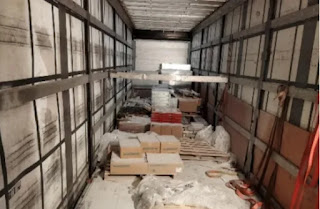
Some seemingly-professional thieves in Germany have moved up the food chain, if you will. As a truck driver took a break at a rest stop, a well-organized gang released sleeping gas into the vehicle’s cab and raided the trailer filled with Shimano parts destined for BFI, the Czech Republic’s largest bike producer.
One particularly disturbing aspect of this crime, as a BFI spokesperson explained, is that it seemed to be intricately pre-planned to the point that “in all likelihood, the truck had been followed from the time it was loaded.” Also alarming is that the thieves knew what they were looking for: They left nine boxes of low-end parts but took the more expensive components.
This story reminds me of something I reported when I was writing for local Queens and Brooklyn newspapers: Car thieves were turning their attention away from luxury vehicles in affluent neighborhoods to good, solid everyday cars like the Toyota Camry in middle- and working-class neighborhoods. Those cars were targeted because they proved more lucrative when sold to “chop shops” for parts.
09 February 2022
A Guide Against The Wind
Yesterday afternoon I had some time. There were things that had to be done, but as long as they got done when they needed to be done, it wouldn't matter when I started working on them. I guess that's a definition of having, if not free, then flexible time.
Since you're reading this blog, you know what I did. Of course. This time, though, an hour or two in early-to-mid-afternoon stretched into, well, very late afternoon. That may have had to do with having the wind at my back and mild (at least in comparison to the past week or so) temperatures as I pedaled down through Queens to Rockaway Beach.
Of course, when I'm riding with the wind, I know that I'll have to pedal against it to get home. But I was feeling so good that I just wanted to keep on going. Which I did---to Point Lookout.
I hadn't planned to go swimming. Still, it was a bit of a surprise to see the beach closed, even if it was for work to ensure that the beach is still there in the future.
So I hung out for a bit by the bocce court. In contrast to the boardwalks of the Rockaways, Atlantic Beach and Long Beach, where I saw more people than I expected, I had the court and playground all to myself.
By the court, there are stones commemorating family messages and with messages of hope. I couldn't help but to notice the juxtaposition of these stones:
The one on the left reads, "Mangia bene, Ridi spesso, Ama molto"--Eat well, laugh often, love much. Will those things lead to, or result from, the top-notch lawn care in the slate on the right.
Even though I was pedaling along a route I've ridden many times before, I felt as if I were being guided to, or through, something--the wind that had grown stiffer, perhaps--along the Rockaway Boardwalk.
As I photographed sun rays coruscating through clouds, I chanted some lines from the Sardinian writer Salvatore Quasimodo:
M'illumno
d'immenso.
Maybe that should be engraved in one of those stones by the bocce court on Point Lookout.
08 February 2022
Ride Noir?
Most of yesterday moved through cycles of rain and freezing rain. I had a class and other commitments, so I didn’t mind. Fortunately, the rain stopped near the end of the day and the temperature seemed to rise a bit. So I decided to take a short ride.
Mist rising from the river to the bridge made Astoria Park feel a bit like the setting for a noir film. So I wasn’t surprised to see a film or television crew. (I didn’t ask; they looked focused on task.)
I’m curious to see how they use those vistas—and whether they took a shot of a latter-day Weegee on a Mercian fixie!