When I first became a dedicated cyclist, as a teenager, I discovered the mail-order catalogues. They had all sorts of exotic bikes and parts, most of which I couldn't afford and weren't found in the local bike shops. I pored over those catalogues the way other kids devoured comic books or teen magazines--or the way some young person in a remote village might indulge him or her self in magazines filled with images of the latest fashions from New York or Paris.
Before the '70's Bike Boom, there was Gene Porteusi's Cyclopedia, that printed cornucopia of, seemingly, all things bike-related. He was one of the old-timers who kept the flame flickering during the Dark Ages of cycling in the US.
Somehow I don't think much of anything changed in his catalogues during their history. For most of his career, he was dealing with a small audience--few American adults were cycling during the quarter-century or so after World War II--and a limited selection of goods. Actually, in the later years of Cyclopedia's run, he limited his selection: He didn't offer any Japanese parts, not even a SunTour derailleur, even after people started to choose them for custom-built frames.
For making those wonderful V-series and Cyclone derailleurs, and other great stuff from the Land of the Rising Sun, widely available, much of the credit goes to the mail-order companies that launched in the wake of the Bike Boom. I am thinking now of Bike Warehouse, which later became Bike Nashbar; Bikecology, renamed Supergo; and, possibly the 800-pound gorilla among them: Performance Bike.
Well, it looks like Nashbar is the last catalogue standing. Well, not exactly: Nashbar still exists, but I reckon that hardly anybody shops from its catalogue anymore. For all I know, they might not even have a printed catalogue these days: I'd guess that, save for their outlet store, all of their sales are on the web.
And the web, ironically, is one of the things that destroyed the other two. Actually, Performance took over Supergo. But now it looks like Performance is nigh: Its parent company filed for bankruptcy protection last fall, and all of its retail stores will close next month. In addition, over 100 staff members have been laid off at Performance's Chapel Hill, North Carolina headquarters.
Although you could buy stuff from Performance's website, it never seemed to generate business in the same way that other retailers' websites did for them. Plus, the web made it easier to order from overseas retailers when they offered better prices or the exchange rate was favorable. As an example, during the past few years, it's often been cheaper to buy Shimano components--Performance's bread-and-butter, if you will--from UK retailers like Ribble or Chain Reaction because, in addition to the favorable exchange rates, US customers benefited from not having to pay the value-added tax (VAT) levied on purchases made by native or European Union customers.
The coup de grace for Performance, though, might have been tariffs the Trump administration imposed last year on bikes, e-bikes and products related to them. An already-reeling Performance was hit with higher overhead costs and, from what I've read, had no choice but to raise prices. That, of course, would drive away an already-dwindling customer base that was attracted mainly by the company's low prices.
So, for better or worse, we may be witnessing the end of an era: the one of the mail-order catalogue, in the bicycle industry as well as in other businesses.
Before the '70's Bike Boom, there was Gene Porteusi's Cyclopedia, that printed cornucopia of, seemingly, all things bike-related. He was one of the old-timers who kept the flame flickering during the Dark Ages of cycling in the US.
Somehow I don't think much of anything changed in his catalogues during their history. For most of his career, he was dealing with a small audience--few American adults were cycling during the quarter-century or so after World War II--and a limited selection of goods. Actually, in the later years of Cyclopedia's run, he limited his selection: He didn't offer any Japanese parts, not even a SunTour derailleur, even after people started to choose them for custom-built frames.
For making those wonderful V-series and Cyclone derailleurs, and other great stuff from the Land of the Rising Sun, widely available, much of the credit goes to the mail-order companies that launched in the wake of the Bike Boom. I am thinking now of Bike Warehouse, which later became Bike Nashbar; Bikecology, renamed Supergo; and, possibly the 800-pound gorilla among them: Performance Bike.
Well, it looks like Nashbar is the last catalogue standing. Well, not exactly: Nashbar still exists, but I reckon that hardly anybody shops from its catalogue anymore. For all I know, they might not even have a printed catalogue these days: I'd guess that, save for their outlet store, all of their sales are on the web.
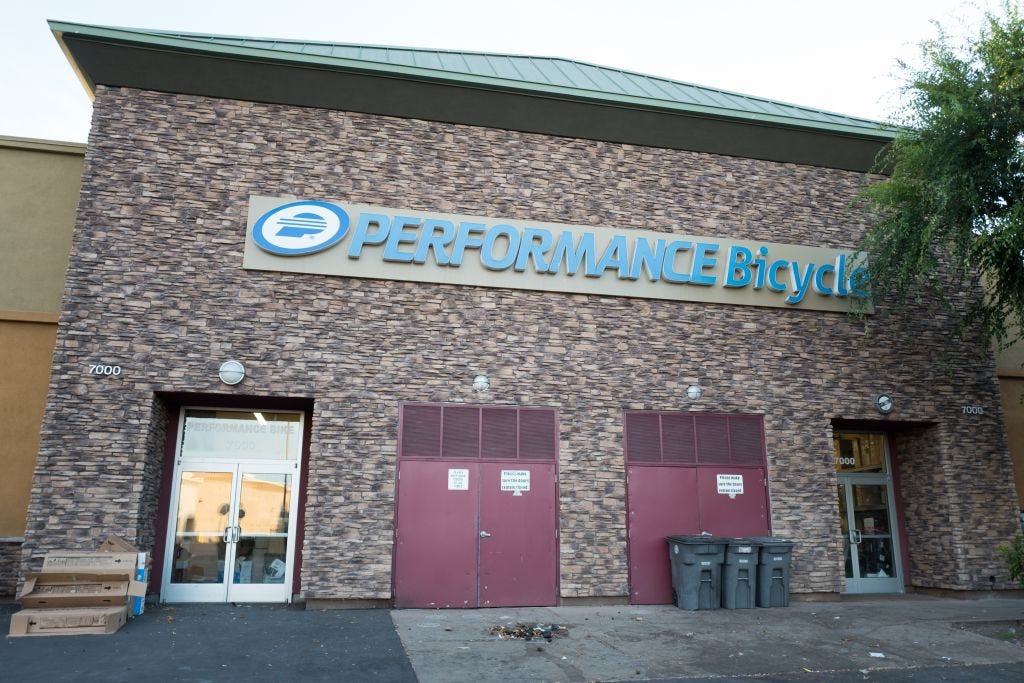
And the web, ironically, is one of the things that destroyed the other two. Actually, Performance took over Supergo. But now it looks like Performance is nigh: Its parent company filed for bankruptcy protection last fall, and all of its retail stores will close next month. In addition, over 100 staff members have been laid off at Performance's Chapel Hill, North Carolina headquarters.
 |
| Add caption |
Although you could buy stuff from Performance's website, it never seemed to generate business in the same way that other retailers' websites did for them. Plus, the web made it easier to order from overseas retailers when they offered better prices or the exchange rate was favorable. As an example, during the past few years, it's often been cheaper to buy Shimano components--Performance's bread-and-butter, if you will--from UK retailers like Ribble or Chain Reaction because, in addition to the favorable exchange rates, US customers benefited from not having to pay the value-added tax (VAT) levied on purchases made by native or European Union customers.
The coup de grace for Performance, though, might have been tariffs the Trump administration imposed last year on bikes, e-bikes and products related to them. An already-reeling Performance was hit with higher overhead costs and, from what I've read, had no choice but to raise prices. That, of course, would drive away an already-dwindling customer base that was attracted mainly by the company's low prices.
So, for better or worse, we may be witnessing the end of an era: the one of the mail-order catalogue, in the bicycle industry as well as in other businesses.


