14 February 2026

He Carries Roses. I See…

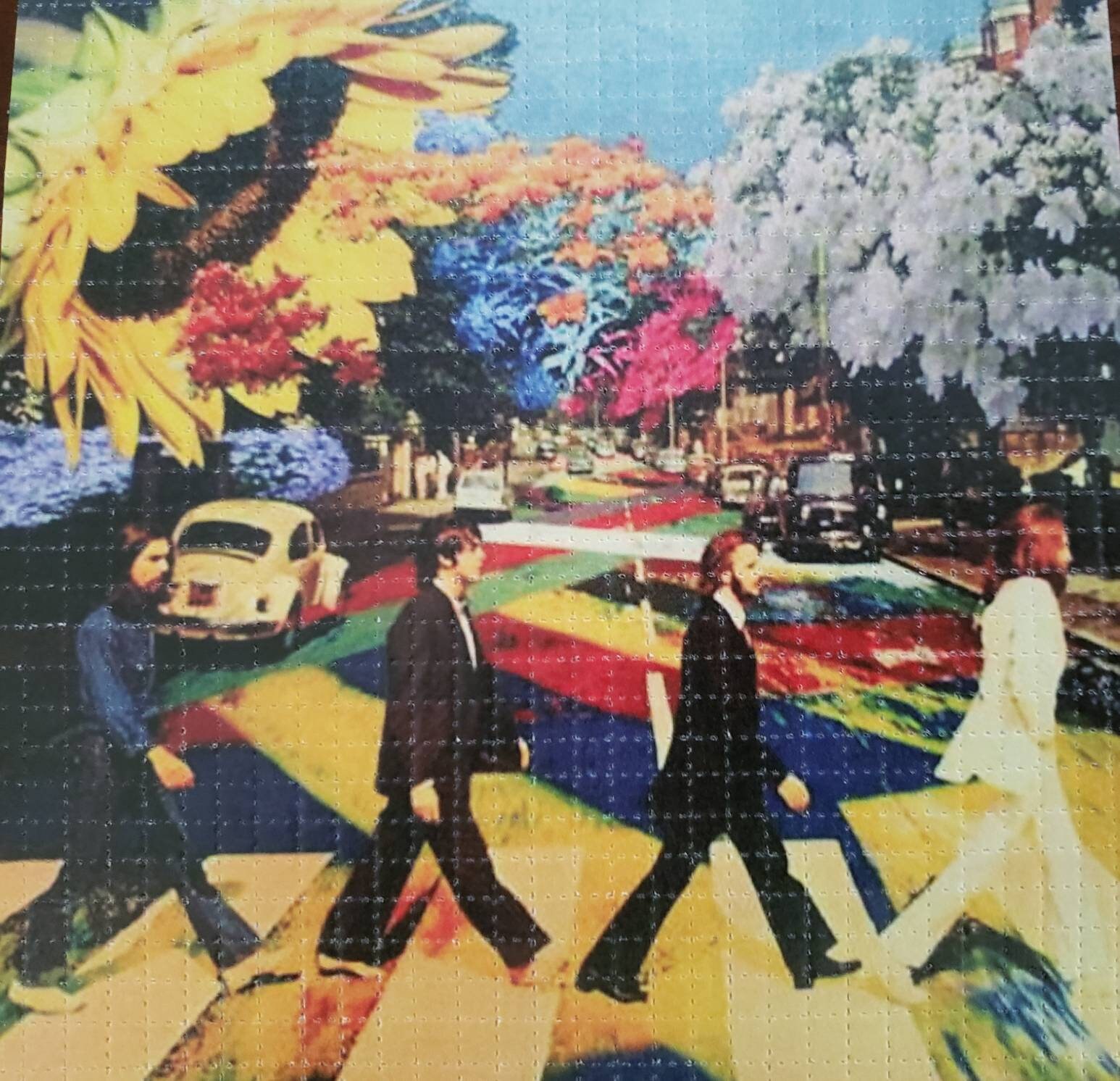
 Today is, of course, Valentine’s Day. 

Like many holidays that have been co-opted by capitalism, current celebrations seem to have little or no apparent relation to whom the day was originally dedicated. At least, almost no one is thinking of that person while sharing a romantic dinner or buying or giving cuddle toys, chocolates and roses.

(Call me sick or whatever you like, but when I see a dude walking down the street with a bouquet of roses, I can’t help but to think that within an hour and a half, a woman will be flat on her back.)

Anyway, St. Valentine was, according to at least one story, a priest or bishop who secretly married soldiers, in defiance of Emperor Claudius II, and aided persecuted Christians.  While imprisoned, he was said to have restored the sight of his jailer’s daughter and wrote her a letter signed, “From Your Valentine.”

That deed and others were deemed miracles, and were among the reasons why he was beatified. But his continued defiance of the emperor led to his execution in 270 CE, which the church saw as martyrdom and another factor in his canonization.

Now, I can understand making him the patron saint of lovers because he married those soldiers and showed his love (which some have speculated as, umm, not entirely Platonic) for the jailer’s daughter. But what any of that has to do with candy and flowers or candlelight dinners is beyond me.

In case you were wondering, I took a ride today—solo.  It was great.


12 February 2026

Riding With Abe

 On this date in 1809, Abraham Lincoln, the 16th US President, was born. Even if biographies portray him as a better President or person than he actually was, I can imagine him spinning in his grave if he could see the current occupant* of the office and residence he graced.

When I was in elementary school, Lincoln’s birthday was a national holiday, as George Washington’s (22 February) was.  Now we have “Presidents’ Day,**” which will be observed on Monday.  

Given that he was assassinated in 1865, it’s unlikely that he mounted anything we would today recognize as a bicycle.  But it’s fun to speculate on what it might’ve looked like if he had:


* —I refuse to put the name of the White House squatter current occupant in the same sentence with Lincoln.  Abe doesn’t deserve that.

**—I hate the term because it implies that we are honoring all of them, including Andrew Jackson, James Buchanan,  James Polk, Millard Fillmore, Andrew Johnson, William McKinley, Warren G. Harding, Richard Nixon, Ronald Reagan, George W. Bush and you-know-who.

11 February 2026

Call Tnem What You Will, They Were First

 As I’ve lived deeper into midlife, I care less about genres of cycling. Turns out, I’ve practiced most of them, consciously or not, sometimes even before they were named as such. For example, I rode on trails and other non-paved surfaces years before I heard about “mountain biking” or “gravel riding,” let alone saw bikes made specifically for them.

I say that not to boast, but to say that I’ve simply loved mounting my saddle and spinning my pedals. In a similar vein, I feel fulfilled when I write and have stopped thinking about whether the words I set to a paper or screen are blogging, journalism, poetry or something else. Those labels, like, those for bicycle  journeys (which is what they all are, whether they bring you to the office or someplace “exotic”) are as arbitrary as the distinctions between races and nations.

I mention all of that because of something that reminds how I came to the attitudes I’ve just expressed from looking down on people with bicycles (I didn’t even call them “cyclists!”) who didn’t ride as long, hard or often as I did, on bikes that weren’t as nice as mine. Calling me a “recreational cyclist” (which no one did in those days, at least when I was in earshot 😉)was, to my mind, akin to branding me a dilettante.

These days, I’m simply glad to see people on bikes. I don’t even look down on e-bikes anymore, at least the pedal-assist models, because they keep many older riders (of which, ahem, I am not one ☺️) and people with disabilities on two wheels.

For that reason, I believe there’s an anniversary worth celebrating today.  On this date in 1878, the Boston Bicycle Club—believed to be the first organization in the US, if not the world, devoted to recreational cycling, was founded in the city for which it was named.  


BBC promoted cycling, organized community rides and established some of the first safety standards.  The latter was no small consideration, as cyclists were still on high-wheelers and “ safety” bicycles with two wheels of equal or nearly equal size were several years in the future.

Call them whatever kind of cyclists you will, but they sound like my kind.c

10 February 2026

Watch Out For This Bill In The Hawkeye State

 Call me a paranoid conspiracy theorist.  But whenever I hear about any proposed bicycle-related legislation, especially in a “red” state, I translate “public safety” as “anti-bike.” 

At least, that was my reaction when I learned about HB 637, introduced two weeks ago in the Iowa State Legislature. If passed, it would effectively ban cycling on the country roads—one of the most appealing features of The Buckeyes State.

The bill includes this:  “a person shall not use a device on a roadway with a speed limit above 25 miles per hour.”  The bill’s definition of devices includes electric personal mobility devices, along with pedestrian conveyances such as wheelchairs, scooters and skateboards. And bicycles.


Given that most rural roads have speed limits greater than 25 MPH, the bill, if passed, would effectively make a ride in the countryside illegal. 

But it seems that whoever wrote the bill also wants to put a stranglehold on urban couriers and delivery workers:  “While using a device, a person shall not carry a package, bundle or article that prevents the person from keeping the person’s handlebars at all times.”

If what I have mentioned so far doesn’t sound ominous enough, consider that the bill also would require that all devices brake in a way that allows skidding.  Whoever wrote that part of the bill has never been on one of the mentioned “devices,” for anyone who has knows that safe stops don’t include skidding.  All modern bicycle braking systems—caliper or disc—are therefore designed for controlled stopping power.

The worst thing about the bill is that it mandates a criminal record for anyone who violates the ban on “devices” on roads with 25MPH+ speed limits. An infraction would result in a “simple misdemeanor” charge that carries a sentence of up to 30 days in jail and fines of nearly $900.

Fortunately, the bill’s passage has stalled, at least for now. The Legislature Public Safety Chair said it “needs more work” but offered no other insight into its possible future.


08 February 2026

No More Ice Puns, Just Cold,

 Early this morning the temperature dropped to -2F (-18.9C) in my corner of the world. And the wind gusted to 30 MPH (50 KPH).


07 February 2026

What Does He Call It?

 Why do some of us name our bicycles? Well, for some of us—for me, anyway—bicycles are companions in our journeys.  Thus, our bicycles have stories, and it only seems fitting that anything with a narrative, or narratives, should also have a name.

Our bicycles’ sagas include epic rides and errands, life-changing events and daily routines. Also, our bikes have, if you will, their origin stories, whether with robots in a Southeast Asian factory or a craft shop in Portland.  Or, in the case of one machine, specifically a “skyscraper” bike, its conception, if you will, took place in a Midwestern university’s engineering class.

Wynn Grame “saw an image” of a double-decker bike like the one he built “and it just stuck in my head.” Once friends donated bikes, he recalled, he “just had to do it.” And so his class project, and current mode of transportation, began.

From cutting up the frames to taking his first ride, Grame’s build took six weeks during which he squeezed in shop time while working on his summer internship and on weekends.

Sometimes, our bike stories include learning something new, whether about a custom in some place where we take a ride or a skill which may or not be related to the bike.  In Grame’s case, it was something essential to the origin of his bike:  Before he started building it, he had never welded.  Not even once.

I have seen “crane” or “giraffe” bikes like his, but have never ridden one.  So it was very interesting to learn that, aside from the “cool” factor, there are benefits to riding his creation. It “offers excellent visibility on the road,” he explained, “because cars can see you immediately” and are “very cautious around you.”  Hmm…Does that make “blinkies” and reflective clothing unnecessary?

I’ll take his word for it and give him “props” for building a bike.  But with so many interesting stories already part of its identity, I wonder whether Wynn Grame has given his bike a name.


06 February 2026

Are All E-Bikes Created Equal?

 This year, New Jersey passed a law requiring all e-bike users to have a driver’s license, register their bikes and haven insurance by 1 July.  It may well be the most restrictive legislation regarding e-bikes in the United States:  Unlike tiered systems in other jurisdictions, in which e-bikes are regulated according to their speed, power or whether or not they have a throttle or pedal assist, the Garden State’s regulation says, in essence, that all e-bikes are created equal.

Now some folks are saying that it violates one of the Declaration of Independence’s most basic tenets:  that all men are created equal.

No, the state hasn’t declared that e-bikes are people. Rather, immigrants’-rights groups are saying that the law will unfairly burden some of the people who most depend on e-bikes: delivery workers, nearly all of whom are immigrants, and people who live in areas without mass transit but who can’t afford a car or registration—some of whom are immigrants. And most of those couriers and people who commute are riding pedal-assisted machines that have lower top speeds than the ones that are basically just electric motorcycles.


Photo by Seth Wenig


Admittedly, some of those workers and residents are undocumented.  But given the current political and social climate, even those who are here legally and people who were born here to parents who are citizens (including yours truly) would rather minimize their interactions with government authorities.  I can understand their fears; I see ICE agents during rides or while running errands and worry that even someone like me is at risk of becoming the next Alex Pretti or Renee Good if one of those agents is hung over or otherwise having a bad day.  

05 February 2026

The Other Ice

 Yesterday I wrote about my participation in a memorial ride for Alex Pretti, the intensive care unit nurse—and cyclist—murdered by Immigration and Customs Enforcement (ICE) in Minneapolis.

Say what you will about my mental state, but I have a difficult time using the word “ice,” even in reference to a frozen liquid: the way it’s been used for its entire history in the English language.

But today I will break the ice (pun intended) and talk about what I’ve seeing during the (admittedly little) cycling I’ve done during the past two weeks: the longest spell of below-freezing temperatures we’ve had in a long time. I don’t mind the cold so much, but the freeze also included a snowstorm last week and plowing of streets has been, shall we say, episodic. And snow has turned to ice, especially in the bike lanes.

Anyway, on Monday I noticed something I hadn’t seen in years:


Technically, the Hudson River isn’t a river where it separates Manhattan from New Jersey:  the water is brackish, in contrast to the fresh flow further upstream. So the Hudson’s New York City stretch, like the misnamed East River, which is really an inlet of the ocean, rarely glazes over (unlike many of my students’ eyes).

On the other hand, I suspect this body of water freezes more frequently:


Paine Lake stands next to the Paine House, where the author of “Common Sense,” an inspirational for American Revolutionaries, lived.  How we need him now, when the political climate is even more inhospitable than this winter’s weather!


04 February 2026

Riding Against a Tide of ICE

 “The sharks are circling.”

On Saturday, a fellow cyclist made that comment in reference to Immigration and Customs Enforcement, a.k.a. ICE, during the Alex Pretti memorial ride. She has family in the Minneapolis-St.Paul area, where residents, many of whom had not previously participated in a demonstration, are resisting vigorously and visibly. But the now-most-hated government agents in the USA are also accosting and arresting “suspicious” people all over the nation. My friendly acquaintance believes “it’s just a matter of time” before a “surge” comes to my hometown,  New York City.

Quite understandably, she and other riders didn’t want to be photographed.  While we want to show our solidarity, some fear—rightly—negative consequences given the current political climate and the industries in which some work. 

And some might become targets for looking “suspicious.” Given this Administration’s hostility to cyclists, spinning two pedals to propel two wheels instead of pressing one pedal to propel four wheels could be seen as a subversive act.

Perhaps it is. But if I am resisting anything, I am riding against the tyranny of automobiles and fossil fuels—which contributes to climate change and economic disparities that fuel (pun not intended) the desperate traffic that ICE is tasked with stopping.

02 February 2026

Beyond The Shadow

 Punxsutawney Phil saw his shadow.  So did Staten Island Chuck. That supposedly means we’re getting six more weeks of winter.


I wouldn’t mind the more cold weather, even if we’ve had more of it, for longer, than any time I can remember in the past few decades.  I just wish we didn’t have to deal with icy patches, sand and salt.

Now I remember why I have a “beater” bike!

31 January 2026

Riding For Them

 Here in NYC, it’s the coldest it’s been in years (2F, -16.7C this morning) but those of you in places like Minnesota probably think this is April weather.


Speaking of Minnesota:  Alex Pretti, a fellow cyclist was executed (let’s call it what it is) by ICE agents.  One of the many memorial rides in his honor is, as best as I can tell, still scheduled to roll in Manhattan.  I plan to be there.

As I am pedaling, I will also be thinking of another cyclist I’ve never met who was also senselessly killed.  Last Thursday, a truck struck Patrick Franklin Sr, a longtime member of Florida’s Village Idiots cycling club and beloved member of the cycling, and Bradenton, community.  He was 67 years old and riding alone on a non-club ride.


Sadly, Franklin’s fate is less shocking, but not for the difference (28 years) in age between them.  Rather, as one club member said, “Florida is a death trap.”  The so-callled Sunshine State has been, by far, the deadliest for cyclists for years.

He was 67.  Alex was 39.  But they both were cut down in the middle of their lives; so much of their journeys could have been ahead of them.  I will ride for both of them.

28 January 2026

I Will Ride For Him

Nearly two weeks ago, a sports columnist lamented,  “I dunno how to write about the Knicks when the government is killing people.” I substituted “cycling or midlife” for “the Knicks.”

Now, barely two weeks after Renee Good’s murder, ICE thugs killed another person who was protesting peacefully: Alex Pretti.

Ms. Good was a mother of three.  Mr. Pretti cared for other vulnerable people: He was an ICU nurse in a Veterans’ Administration hospital. No doubt many of his patients were suffering from PTSD and related conditions. Moreover, he was protecting a woman from harm when he was murdered.  

Of course, the Fake Tan Fūhrer’s paid liars have found isolated facts—Renee’s sexual orientation and pronouns, Alex’s gun—and used them to portray the victims as existential threats to the nation who “had it coming to them.” (Ironic, isn’t it, that MAGA folk and Trump himself—supposed guardians of the Second Amendment—point to Pretti’s legally-acquired firearm, which he didn’t touch, as evidence that he meant harm?) 

The smear campaigns against Good and Pretti disturb and anger me almost as much as their actual deaths.  It’s as if the Administration is determined to destroy them completely by assassinating their characters.  But even the National Rifle Association and prominent conservatives have denounced Pretti’s murder.  Perhaps people won’t become inured to their government—funded by their taxes—committing wanton violence the way too many seemed to go numb to school shootings a few years ago.


Oh, I should mention an aspect of Alex Pretti’s life that Trump and his minions would hate—and makes him a kindred spirit:  He was an avid cyclist.  Angry Catfish, the shop he regularly patronized, is organizing a memorial ride for him.  I understand other memorial rides will be held this Saturday.  I intend to ride, snow and ice be damned.  If there isn’t an organized ride near me, I intend to memorialize him in some way on a ride of my own—perhaps to a VA hospital.

He was 37 years old:  cut down in midlife, like too many heroes.

24 January 2026

Which City Is The Worst For Cyclists?

  I feel more or less the same way about bicycling in New York City as I did more than four decades ago:  It could be better, it could be worse.

Perhaps that is normal, given that the Big Apple has been my hometown for all of that time (and perhaps even when I lived away from it.) I have encountered better-designed and -executed bike lanes—and, more important drivers and other non-cyclists who don’t treat us as “the enemy”—in other places, mainly in Europe and Japan.  On the other hand, I have seen even worse bike infrastructure, or none at all, along with chaps who believe that their Jimmy Dean breakfast links will become chorizos if they intimidate, harass or even endanger cyclists—mainly in other parts of the US.


So, I suppose it’s no surprise that New York sometimes comes up in lists of the best US cities for cycling but not the worst, at least in recent years.  Possibly the worst place for cycling in the New York City Metro area is Jersey City, and it’s not even as bad as some places that made the National Highway Traffic Safety “worst” list for pedestrians and cyclists.

Interestingly, one city often cited as the worst, according to Momentum magazine, didn’t make the list:  Houston.  I was there for a few days, decades ago and, to this day, I can hardly imagine a more hostile or dangerous place.  Momentum readers reported streets that were all but impossible to cross—one visitor to H-town reported wanting to go to a restaurant across the street from their hotel but couldn’t find a legal, safe crossing after half an hour of searching. Finally, that vexed visitor gave up and drove!

That story, and others, remind us of a point the Momentum article made:  While most of the cities on the NHTS list are indeed inhospitable to cyclists and pedestrians, there is a flaw in the way it ranks those cities: mainly according to the number of fatalities per capita. While those cities indeed had unenviable (unless you believe someone isn’t fully human if they don’t drive) statistics, in cities like Houston, the numbers are spread out among a larger population (Houston is #4 in the US) and geographic area.  So while a city like Houston appears to have a lower death rate, its lack of cycling and pedestrian infrastructure (and relatively poor mass transit system) along with hostile drivers on seemingly endless highways and “stroads” makes it a non-favorite.

21 January 2026

Standing Against The Current

How did it get there?  

People have asked that question about Stonehenge, the Easter Island Moai and the Newport Tower for ages. The answer(s) seem as elusive as ever, even with the technology and research methods that have developed over the years.

Turns out, a structure or object doesn’t have to stay in one place for as long as the aforementioned monuments in order for its origins to be forgotten—or never known in the first place.

Such is the case with the “bicycle log” in the Missouri River near Great Falls, Montana.


KRTV reporter Quentin Shores (You can’t make this stuff up!) tried to unravel the mystery. First he went to the police.  Then he looked at Facebook and asked around town. After all of his sleuthing, he has no more an answers than I have.

A few people, naturally, suggested aliens. (Trained linguists and anthropologists have offered a similar explanation for Basque language and culture, which are completely unrelated to those around them.) Others have suggested it might be an art installation.  I could believe that, but I wonder why no one has taken credit (or blame) for it.

As he mentioned, it could simplify have been a prank. Perhaps someone put it there just to keep people guessing, just as James Joyce admitted that he filled Finnegan’s Wake with so many enigmas and puzzles to “keep the professors busy for centuries arguing over what I meant.”

Whatever the story behind the “bicycle log,” it’s fair to wonder how long it will be there. After all, the river’s current could erode or sweep it away. Or some official could deem it a hazard and order it removed. Personally, I hope it stays there a long time to confound and inspire generations.


19 January 2026

In The Middle Of His Life

 Today is Martin Luther King Jr. Day.

In honor of a hero who was killed in the middle of his life (he lives through his legacy), I am reposting what I wrote five years ago:


Today Martin Luther King Jr. Day is observed in the United States.  If I had Napoleon's prerogative of re-inventing the calendar, there are some holidays I'd do away with. But I'd keep this one.  Perhaps I'd restore it to his actual birthday, 15 January.  But I understand why it was moved to the third Monday in January:  It's easier to keep government offices, schools, banks and the like closed for three consecutive days than it is to close for a day in the middle of the week.  Also, who doesn't like a three-day weekend?

Seriously, though, there aren't many other people more deserving of their own holidays.  He truly was a martyr for a just cause.  But for all of his seriousness of purpose, he seemed to really enjoy himself sometimes.  At least, he looks that way in the photos I've seen of him on a bicycle--and there are more such photos than I ever expected to find.


Martin Luther King Jr rides bicycle with William Wachtel (the son of King's lawyer, Harry Wachtel) on Fire Island, NY, 3 September 1967,  Photo from Hofstra University collection.


I get the sense that riding a bike was, for him, a release from the rigors of touring, speaking and preaching--and the tension from FBI spies and CIA snipers lurking allies who became rivals when, among other things, he announced his opposition to the Vietnam War.

Also, from the photo, and others I've seen, riding a bicycle was a way for King to show that he was one of the common people.  When he was assassinated, in 1968, the dawn of the North American Bike Boom was just starting to flicker.  American adults  were, for the first time in half a century, mounting bikes and taking early-morning or after-work rides--or, in a few cases, riding to work or school.  Bicycles were still ridden mainly by those who were too young--or poor--to drive.  

I can't help but to think that those bike rides were at least one reason why he gave speeches that instructors (including yours truly) have used as models of good writing and effective communication for their students.  As lofty as his rhetoric could be, it reached all kinds of people:  Anyone could understand it.  In the above photo, he's on level with a young boy; when he rode a bicycle, he experienced the places where people lived in a way he wouldn't have if he were in a limousine.  And people saw him eye-to-eye--as, I suspected, he wanted to see them. 

Which, I believe, is a reason why he would call the the devastation wrought by the COVID-19 pandemic--or, more precisely, the President's inept or callous (depending on what you believe) response--as the racial, economic and social injustice that it is. He had an acute moral compass honed by, among other things, his bike rides.


18 January 2026

Don’t Try This At Home—Or On the Road

 After yesterday’s weighty post, here’s something that will lighten up your Sunday:


I used to joke that after “this won’t hurt” and “one size fits all,” the biggest lie is that you can walk in cycling shoes—at least the ones we were riding.

17 January 2026

How Do I Write About Cycling Or Midlife After Renee Good’s Murder?

 In some of my earlier posts, I invoked my “Howard Cosell Rule.” It gives me the latitude to, if not the right, to write about something not related to bicycles, bicycling or even being in midlife. 

The rule’s namesake, along with Don Meredith and Frank Gifford, was calling a game when New England Patriots kicker took to the field to boot a potential game-winning field goal against the Miami Dolphins. 

Instead of helping to build suspense, he announced “an unspeakable tragedy” that came to him from ABC News: the murder of John Lennon.  “Remember, this is just a football game, no matter who wins or loses,” he intoned.

While some praised him, many more criticized him. A similar scenario ensued a dozen years earlier when he used his “Speaking of Sports” radio program to talk about another “unspeakable tragedy” from the previous night:  the assassination of Robert F. Kennedy, just two months after Martin Luther King Jr. was gunned down.

Now, I have never received similar backlash for discussing, for example, bell hooks, mainly because I am not the public figure Cosell was.  Also, I suspect, most of my readers are at least sympathetic to my interests and proclivities even if we do not share them. On the other hand, many sports fans do not share Cosell’s views about society or culture or simply don’t want to hear about them when they tuned in for a football game.

All of this makes me wonder how readers responded to Matthew Miranda’s article. I suspect more than a few didn’t get past the byline: “I dunno how to write about the Knicks when the government is killing people.”

My guess is that Howard would have approved.  Certainly, I do.  


Jonathan Ross murdered Renee Good. Full stop.  In spite of what Trump administration officials are saying, she did nothing to endanger him or anyone else. Moreover, said officials have given no plausible reason for sending Ross and fellow ICE agents to Minnesota, where Good met her demise.  Oh, wait a minute, the Land of 10000 Lakes has welcomed more—wait for it—Somalis—than any place else.  Dark-skinned people in a land of Vikings. Oh, the horror! (sarcasm)

That folks like Ross can kill innocent people with impunity is hardly unique in history. What makes it, and the killing of alleged drug traffickers in the Caribbean and eastern Pacific, especially chilling—and why comparing ICE to the Gestapo is only partly accurate—is that Ross and his colleagues voluntarily signed up for their jobs. Hitler’s agents were recruited, sometimes forcibly, from police and military units, the latter of which were conscripted.

Oh, and agents of the Gestapo (and the SS, its umbrella organization) didn’t wear masks.


15 January 2026

Another Legend Passes

 When George H.W. Bush was Ronald Reagan’s vice president, some press wag nicknamed him “You Die, I Fly” because his chief duty seemed to be attending state funerals.

Now, I hope nobody starts calling  me “You Die, I Write” after reading this post.

A few days ago, I reported the death of Cannondale founder Joe Montgomery. Now I’m going to tell you about the passing of another titan of the bicycle industry.

If you were embarking upon a fully-loaded bicycle tour at the dawn of the 1970s North American Bike Boom, and you needed something stronger and stabler than a Pletscher “rat trap,” you had to beg a shop to order an English or French rack made from steel rods—or order it yourself.  Then you had to hope you could fit it to your bike, especially your frame didn’t have brazed-on fittings.

A young industrial designer saw one of those racks and thought, “I can do better.”  

He then created a rear carrier from welded aluminum rods that could be fitted to braze-ons, clamped to the seat stays or secured with an adjustable stainless steel “tongue” that attached to the brake bolt.

He would introduce his new rack on the night “Saturday Night Live” premiered.  OK, that’s not quite true, but you have to admit it’s a good story.  But his creation first appeared in shops and mail order catalogs around the same time, in 1975.

The timing was fortuitous.  The following year, thousands of cyclists participated in Bikecentennial. They needed to carry panniers and sleeping bags (in some cases,  both from Cannondale) across mountain passes and prairies to the ocean white with foam.

The creator of that rack would use the same design basis to make sturdy water bottle cages.  In the meantime, he studied the ways French randonneurs and other long-distance touring cyclists carried their loads and used his training to determine the best ways to balance weight.  He used that information to design front pannier carriers that lowered the center of gravity, which made for a more stable ride without sacrificing handling.

You know that front carrier as the “Lowrider.”  And if you are using a rear rack, its design and construction is influenced, at least in part,  his rear rack—if you aren’t riding the “real thing.”

The man responsible for those bike luggage supports, and many other fine bike accessories, was none other than Jim Blackburn, who passed away on Monday.  He was 86 years old.  


You might say that seeing that English steel rack was his midlife “crisis.” And the cycling world is better for it.

(I never met him but it seemed that everyone who did, liked him.)

Photo of Jim Blackburn by Greg Hine

13 January 2026

Do They Get Old Before Midlife?

 When does ‘midlife’ begin?

I have asked, and been asked, this question.  For more years than I care to admit, I’ve identified myself as being in ‘midlife.’ As long as I don’t know when my life will end, I am in the middle of it.

In certain milieux, however, people a good bit younger than I am are considered “old.” Top-level professional sports are a prime example. In most team sports, athletes are considered to be at their peak around 30 years old; most are out of the game by their late 30s.  Eddy Merckx, widely considered the greatest cyclist of all time, rode his final race at 33 years old. The only five-time Tour de France winner before him, Jacques Anquetil, rode his last at age 35 and the next “fiver;” Bernard Hinault, retired on his 32nd birthday. And some athletes, like gymnasts, rarely compete after their mid-20’s:

Knowing what is considered “old” in sports made this all the more impressive:


11 January 2026

Prove It!

 Sometimes, no matter what we say or do, people just won’t believe us!


54? He’s not even in midlife yet! Wait’ll he gets to be my age!

10 January 2026

Joe Montgomery R.I.P.


What did Joe Montgomery and Steve Jobs have in common?

They founded iconic companies and created products that changed their industries and markets. And each of them took risks that led to losing their companies, though one got his back.

So much has been said and written about Jobs that, really, I could add only the comparison I’ve just made.  I am writing this post on an iPad and use an iPhone. Need I say more about his effect on my, and many other people’s, lives?

On the other hand, you’re not likely to know about Joe unless you’re (ahem!) a cyclist of a certain age. But even if you’re not an avid cyclist, you probably have heard of his company simply from seeing cyclists on their bikes.

Unlike Steve, he didn’t return to the business he started. That makes sense when you realize that Mr. Montgomery saw himself first and foremost as a problem-solver who relished a challenge.

Cannondale’s 2003 bankruptcy was a result of one of those challenges:  the company’s ill-fated foray into motocross. Perhaps his successes in the company’s other ventures, most notably in cycling, imbued him with more confidence than he should’ve had.  Whatever the explanation, another difficulty in his life—with joint pain—led him to create a product and start an enterprise related to it.

When he co-founded Cannondale in 1971, he had no training or experience as an engineer or a designer and while he described himself as an outdoor enthusiast, he didn’t claim to be an “avid” cyclist .

But the product for which Cannondale gained notice—the “Bugger” (I can hear my British readers snickering!)—was borne of his penchant for asking, “How can this be better?” As he recalled, he saw a cyclist struggling up a hill with a heavy backpack.    

The “Bugger” is believed to be, if not the first bicycle trailer, then at least the first commercially available. It’s essentially a backpack on wheels. While it was produced for only a few years, it was influential:  Not only have other bicycle trailers have been made, current cargo bikes and wheeled luggage are arguably its descendants.

During its early years, Cannondale was known mainly for bicycle accessories and other outdoor gear.  My first handlebar bag, which I used on my first multiday trip and European bike tour, may well have been one of Joe’s attempts to solve a problem:  Good front bag supports, and quality bicycle accessories in general, weren’t widely available in the US.  My handlebar bag was constructed something like an internally-framed backpack and mounted with looped aluminum bars on the bottom of a dropped handlebar. Although it bounced a bit on rough roads, I never had any problem hauling my Honeywell Pentax with multiple lenses, a snack or two and something for impromptu encounters. (I was young; I’ll leave that to your imagination!)

And for years, my off-bike luggage was a practical and very distinctive-looking backpack and my off-bike winter outerwear was a parka, both made in the USA by Cannondale. By the time they gave out, I had been using both for nearly half of my life!

Oh, and I wore those amazing leather-and-cotton cycling gloves Cannondale made in Pennsylvania. Like Brooks saddles, they were stiff at first but a few rides broke them in.  To this day, I haven’t worn any other cycling gloves as comfortable, or that lasted nearly as long.

As for the bikes: A year after they were introduced, I bought one of their racing bikes. While I was impressed with its speed and responsiveness, its ride proved harsh even for my young (at the time) bones.  I understand the designs have evolved; perhaps I will try one again some day.

A few years ago, I acquired one of the company’s 1990s mountain bikes. I briefly used it as a commuter/townie. It served the purpose well. But the COVID lockdown came, which eliminated my commute.  I gave that bike to someone who worked at Mount Sinai-Queens and had a two-hour walk to get his job when the subway shut down.

Whatever I thought of the racing bike’s ride, I never doubted the quality of Cannondale’s products.  And while I’m mostly a traditionalist when it comes to bikes (All of my frames are steel!), I think Cannondale spurred, directly or indirectly, positive developments in componentry as well as bikes.

For them, and other reasons (I met him once:  Nice guy!), I note the passing—and offer my condolences to the friends and family—of Joe Montgomery.

08 January 2026

Filling The Gap

 About three weeks ago, I left for the last time. I’d been working at the college for just over four years.  I started there after going a year without teaching for the first time in nearly three decades, having lost my old job in the pandemic.

For the first five and a half semesters I worked there, I lived in Astoria.  My commute included crossing the Williamsburg Bridge.  I really enjoyed it—well, most of it anyway.

Until the Brooklyn Bridge opened its dedicated bike lane a couple of years ago, the Williamsburg’s bike lane was easily the best among New York City’s major crossings: It’s wide and has better sight lines than the Manhattan, RFK/Triboro, Queensborough/59th Street or George Washington Bridges.  And I loved that, like Manhattan’s lane, it runs alongside subway tracks. You could tell which passengers were tourists:  They were gazing at the urban panoramas that unfolded before them.  Some waved to me and other cyclists; a few even blew kisses my way. 

As with any major bridge crossing, you climb until you reach the apex.  That means, of course, you descend on the other side.Whee! 

Well, it’s fun until you reach Delancey Street on the Manhattan side.  You’re barreling down at about 40 or 50 MPH (65 to 80 KPH) when you encounter a passage not much wider than you, even if you’re young and skinny. Concrete blocks about your height flank it on either side.

Oh, and right before that strait, the surface drops about half a meter—as if you’re going off a high curb.  At 40-50 MPH (65-80 KPH).


Photo by Lloyd Mitchell


And you have to navigate all of that as people are crossing Delancey, a busy commercial thoroughfare.

Well, say what you will about our new mayor, but Zohran Mamdani, himself a cyclist, did what previous mayors didn’t:  He had the gap filled.  Better yet, he doesn’t plan to stop there:  He’s proposed a rebuild.

06 January 2026

Five Years— Or Five Minutes—Ago?i

 Time flies.  How often have you heard—or said—that?

The hours, the years seem to go by more quickly as we reach midlife.  Years ago, I came across a simple explanation: A day, a decade or any other amount of time seems to pass faster because it’s a smaller portion of our lives than it was when we were younger. When you’re four, next Christmas feels like a lifetime away; when you’re forty, last Christmas could have been yesterday—on Christmas Eve.

I’ve heard and read people saying that the pandemic further compressed the time that’s elapsed since. “I think something happened two weeks ago, then I realize it was in 2022,” one commenter related.  That remark particularly resonated with me when I returned from a late afternoon ride. I felt a sense of déjá vu, but it had nothing to do with my familiarity with the route I’d taken to Randall’s Island and back.  Rather, some part of my psyche was replaying an emotion I’d felt at the end of some other episode ride.  After dinner—Taco Tuesday from Webster Diner and Café—I remembered which ride etched the emotion that reflected in my mind’s eye this evening.

From the Astoria apartment where I lived, I pedaled briskly but aimlessly through Queens and Brooklyn  streets.  When I got home, I got the news everyone was hearing: A mob of Donald Trump supporters stormed the Capitol, believing they could overturn the election that denied their guy four more years in the White House—for four years, anyway.


Photo by Ben Stirton


That was five years ago today.  But, to borrow a cliché, it feels like five days ago, if that, even if this country— and the world—and so many of our lives—seem to have five centuries of change. But I have no idea of when any of it, including my life will end. So I am still in the middle, in midlife, with more—of what?—to come, five minutes or five decades from now.

04 January 2026

Saturday Solitude

 How does one find peace and solitude without going to a retreat in the mountains?

That’s what I did yesterday.  What’s more, I did it without leaving New York City, at least not technically.

Fort Totten, near the border with Nassau County, is further from Times Square—or my apartment in  Bedford Park. Nestled by Long Island Sound on the eastern edge of Queens, it the former military base offers expansive vistas and has long been one of my favorite ride destinations.

After pedaling out there, I didn’t see a single visitor. That’s unusual for a Saturday, even if the weather was on the cool side for this time of year. Perhaps even more striking was how little traffic I encountered along the way.  

But what struck me even more, though, was the absence of bicycles, e-bikes or even motorized bikes anywhere I rode, from my apartment through the Bronx River Greenway, Randall’s Island and Queens neighborhoods from Astoria to Bayside. Not only did I not see bicyclists on training or simply “fun” rides; I didn’t encounter anyone on an e-bike or motorized bikes:  not even delivery workers.


On one hand, I enjoyed having Fort Totten, Randall’s Island and the Bronx River trail to myself.  On the other, it was a little weird to be the only one on the road or trail in New York City.

In a way, it reminded me, in my midlife, of some rides I took when I first moved back to New York City. In the mid-1980s, I could pedal from Manhattan, where I was living, to working- and middle-class Brooklyn neighborhoods like the one in which I grew up (some of which have “gentrified” or changed in other ways) without encountering another adult cyclist.

Hmm…am I “cycling back” in midlife? I used to enjoy the solitude in those days, especially when I knew it would precede a night out.   But I didn’t go out last night: I spent time with Marlee and “Cora,” the girlfriend of “Sam,” my neighbor and sometime cycling buddy.

03 January 2026

Trains of Joy


Little riding  yesterday.   But I went to the New York Botanic Garden’s Holiday Train Show.

The electric locomotives and cars snaked their way through scale models of  New York buildings and landmarks, all made from tree and other plant materials.


02 January 2026

Day 2

 So what was Day 2 of 2026 like?

Cold, gray, windy.  A day of housekeeping. (Gotta start the new year right, right?) And a few very low-intensity miles, doing errands, on my bike.


I was the only cyclist I saw on a non-electric, non-motorized bike.  Was that a result of the weather? Or,  perhaps, many people are still away for the holidays: I didn’t see much traffic, even in normally- busy areas like Fordham Plaza. I hope it’s not part of a longer trend.  I’m not against assisted bikes, per se, but I believe they need to be better-regulated.

And most of the riders I saw are younger than I am.  People normally don’t switch from electric or motorized machines to pedal-only bicycles as they age.  Also, people who ride delivery bikes of any kind tend not to ride them for any other reason and stop riding if they get a job that doesn’t require it.

Then again, they might have a midlife “crisis” and return to, or stay on, two wheels and two pedals.  I can hope.

01 January 2026

Happy New Year—And A Reflection On The Past Year


Happy New Year!

What was 2025 like for you?

For me, it was strange. Perhaps it has to do with the twinges of guilt I feel when things are going well for me, but not for others or when the world (or at least my native country) is going to hell in a handbasket.

Of course, the main highlight of the year, for me, was my trip to Japan.  I didn’t do a day-by -day posting of it because I wanted to get out early and make the most of every day and, at the end of every day, I was tired, from seeing so much—and the heat.  Although the places I visited were roughly at the same latitude as Virginia, it seemed that Tokyo, Osaka and Kyoto were even hotter than Cambodia and Laos, two countries well within the tropical zone, when I visited them in 2018.

Going to Japan may also be a reason why I’ve been posting less often. (Another is that I am working on another writing project.) Posting every day became a kind of addiction for me.  Of course, addictions aren’t always bad, as I believe that one wasn’t.  But for some reason, going to the Land of the Rising Sun taught me,  more than any other trip I’ve taken, that what’s comforting, as daily posting had become, can be a trap.

Also, cycling there changed the way I see bicycles and myself as a cyclist. I didn’t do any high-mileage rides, but the bikes I rented became my vehicles to temples and other sites—and to shop and simply get around.  Of course, many Europeans ride the same way, but I felt that bikes were more integral, and people seemed less self-conscious about them, than anywhere else I’ve been.  Now, for all I know, there might be forums on Japanese Reddit (or whatever they have) where people who, I suspect, post more than they ride verbally bludgeon each other over whether a 1971 Campagnolo Nuovo Record rear derailleur can handle rear cogs larger than 26 teeth or triple chainrings in front. But as I rode to Nijo Castle and parked the bike without locking it—and realized that I’d been leaving bikes unsecured in front of other sites, stores and the hotels where I’d stayed, much as people leave their shoes at the door when entering a home—those arguments seemed silly.  Just ride it.  If it doesn’t work, fix it.

Finally, since returning from my trip, I’ve felt the focus of this blog shifting more toward the “Midlife” part of its title. As I am becoming less obsessed with equipment, I also feel less of a need to report on bicycle stories that have been covered in other fora.  While I probably will continue to write about bicycle transportation and safety issues (and express outrage at drivers, especially those who are intoxicated—whether with substances or misplaced rage—killing or maiming cyclists who are following the rules) and how bicycles and cycling relate to history, art and culture, I want to focus more on what it’s like to be a cyclist and human being of, shall we say, a certain age in a society (and cycling world) obsessed with youth,

So what might 2026 hold for me?  Well, I hope lots of cycling and writing , time with friends and a trip somewhere.  Whatever I do might be influenced by a decision I made towards the end of 2025:  I will be semi-retired. As I mentioned in an earlier post, I have left the teaching job I’ve had since 2021.  But it looks like I’ll be teaching part-time (as an adjunct) in another institution, where the commute will be shorter. Income is just one reason:  I also figure that being engaged with other people, even if for less time, is probably better for me and my writing than having nothing but free time.  Whenever I visited my parents in Florida, I saw too many people dying slow deaths—whether physically or mentally—in their retirements.

And what else do I hope for 2026? Health and happiness, for me and you. And that the Fake Tan Führer and his cohorts don’t do more damage. Isn’t hope what a New Year is about, after all?