11 April 2014

Myths About Women And Cycling

Given my life experiences, it would surprise few people to know that I think about some of the differences between female and male cyclists, and the experiences each of us has.

I have also become more aware of just how male-centered the cycling world--in everything from the social contexts of rides to equipment design to the attitudes of some bike shop employees.  Also, I am shocked at how much of that male-centeredness--as well as some out-and-out misogyny--I helped to perpetrate.

So I guess it's not surprising that some old myths about women and cycling still persist.  I was aware of some, and learned of a few others from this infographic that recently came my way:


From Biking Toronto

10 April 2014

Two Writers And Their Bikes

I've assigned my students to read a group of poems from a diverse cross-section of poets classical and modern.  Those poems form a sort of cycle of the seasons.

Yesterday they read Neutral Tones by Thomas Hardy.

I read somewhere that he was an enthusisastic cyclist until late in his long life.  Somehow that doesn't surprise me:


Now doesn't he look so completely English with that bike?


On the subject of writer/cyclists, here's a photo of Arthur Conan Doyle and his wife on an early tandem in 1892:


Both photos came from Flavorwire.

09 April 2014

Something I Feared


I was looking through an old notebook (the paper kind) recently.  Some of the things I found, I was happy to see again.  Other things were depressing; still others, interesting.  Then there was this:

Bicycling a County Road on the Plains

My feet turn slow circles.

Twenty-six teeth behind me
I spin like this wind
                      skipping beyond birds

my reflection in silver rims
              pedalling

                       this wind
                                I once feared.


                                       21 jan 97

08 April 2014

Abandoned In The Big City

About a year ago, I wrote about the "pretzels" that can be found along the streets of New York.  They're not sold from hot dog carts or in delis.  Instead, they're the twisted wheels--and, sometimes, bikes--one finds parked along the Big Apple's byways.


Then there are those bikes that, even if they don't become twisted wrecks, are relegated to lives of rust and misery.  I'm referring to the bikes that are abandoned, or that seem to have been.


I always find myself wondering how they got that way. Did their owners lose their keys or forget the combinations to their locks?  Did some sudden emergency take them away from New York, never to return?  Perhaps they witnessed some terrible crime and had to enter the Witness Protection Program.


Or, could it be that they simply forgot they owned their bicycles?  I don't understand how one can do that, but I also understand it's a possibility.


Anyway, I've found out I'm not the only one who's pondered such questions.  None other than Joe Schumacher, a photographer, has had similar thoughts, which led to a series of photos on a website.

07 April 2014

Yearning For A New Journey

I am itching to go to France, to Europe, again.  Actually, I really want to do what I did as recently as 2001, just before 9/11:  Buy the cheapest round-trip ticket to Paris I can find, bring my bike with me and decide where I’m going to ride once I get there.

The first time I did that, I didn’t come back for a long, long time.  (Actually, I bought an open-ended round-trip ticket to London.  Are such things still available?) I rode through the English countryside to Dover and took the ferry to Calais, from which I rode through Belgium, the Netherlands and back into France, where I stayed for as long as I could.  Other times, I pedaled to Italy, Spain, Germany, Switzerland or the Netherlands and back. 


When I took such trips—even the first, my first outside North America—I never felt like a tourist.  Even though my French—or, for that matter, English-- wasn’t nearly as good as I thought it was after the classes I took, I felt (with much justification, I believe) I was experiencing the countries, the cultures and all of the architecture and art I’d seen in books and classrooms in ways that those who followed trails emblazoned with American Express signs never could.

On the other hand, when I went to Prague three years ago, I knew I was a tourist.  It didn’t have anything to do with the way people treated me; for that matter, it didn’t even have to do with the fact that I knew nothing of the Czech language.  Many residents of Prague speak German—of which I know a little-- nearly as well as they speak their own language, which is not a surprise when you consider that the area’s history.  And I found it surprisingly easy to find people who spoke English, or even French.  But I stayed in a hotel and rented a bike which while, enjoyable enough to ride, was nothing like the ones I brought with me on previous trips.  In contrast, in all of my other trips, I usually stayed in hostels.  Sometimes I’d camp, and once in a while I’d stay in a pension or inexpensive hotel if the other options weren’t available or I was too tired or lost to find them—or I simply wanted to treat myself.

During the first years of my gender transition, I wasn’t thinking about taking a trip like the ones I took every other year or so.  Then, for a few years, I told myself I didn’t want to take such trips—or so I told myself—because I saw them as part of my life as a male being, which I was leaving in my past.  I also figured that I couldn’t take such trips, which I usually did alone, because I believed that travelling solo as a woman would not be safe.

But I realize that other women have taken bike or other trips by themselves.  More important, I think I still have the same ability to function on my own that I had when I was younger, and male. If anything, I can function better on my own, in part because I have a better sense of when I need to ask for help, or when I want to do things with other people.

Now I see two barriers to doing a trip like the ones I did in my youth.  One is cost.  The past few years have been more difficult for me, financially, than those years of my 20’s, 30’s and early 40’s.   Even if my income were keeping pace with the kind of money I made in those days—or if I came upon the serendipities that sometimes came my way—it would be harder to take such a trip because it’s much more expensive.  Back in the day, my biggest expense was the plane fare:  Once I got to Europe, I could live cheaply and relatively well, even when exchange rates weren’t so favorable to the dollar.  But, since the introduction of the Euro, everything has gotten much more expensive.  Europeans I know say as much.

The other is that I wasn’t in the kind of physical condition I was in those days.  Some people have told me it’s to be expected, simply because my age.  Also, more than a decade of taking hormones and my surgery left me with less physical strength and endurance than I had in those days.  Plus, as much as I love cycling, I don’t do as much of it as I did in those days. That, of course, may have something to do with my physical changes.

Still, I would love to take the sort of trip I used to take, and to experience it as the person I am now.  Some might say that’s an unrealistic hope.  But, until someone can show me that it’s empirically impossible, I’ll continue to hold out such a hope—and to do what I can to prepare for such a trip.


06 April 2014

Into The Season, Late: Into The Wind

In this part of the world, winter has been longer, colder and grayer than in recent years past.

That means, among other things, that the transition to Spring has been later--by about a month--than it normally is.  So, we've been getting the proverbial March winds in April.

Under normal circumstances, riding in it would be invigorating, even bracing. But since I've done less cycling than I normally do, riding into the wind has been arduous.


 But at least we had blue skies and sunshine yesterday.  Life is good, cycling is great.

05 April 2014

Quelle Coincidence!

Wouldn't you know it?  The other day I wrote, among other things, about aluminum frames of the recent and distant past.  So, on my way out of work last night, what should I chance to see but this?:


It is, of course, one of the most iconic aluminum frames of all:  the Vitus 979, from France.


Vitus aluminum frames were somewhat-more-refined versions of what is commonly regarded as the first modern aluminum frame:  the ALAN, from Italy.  (Alan is short for "alluminio anodizzato," Italian for "anodized aluminum.) 

While the ALAN consisted of aluminum alloy tubes bolted and bonded into thicker aluminum lugs, Vitus skipped the bolting and simply glued the frame together.  Company engineers claimed--with justification, I believe--that the bonding material Vitus used was stronger than what was found in Alan frames.  Whatever the case, I have never heard of either frame coming apart at the joints.

The ALAN was introduced in 1972; the Vitus came seven years later.  While the Italian frame gained a small if loyal following among time trialists and others who wanted to build the lightest possible bike, its French counterpart was ridden by club cyclists as well as racers.  Also, being one of the most expensive frames available at the time, it had a certain amount of snob appeal in the '80's, when it reached its peak of popularity.

Like the ALAN, the Vitus was often kitted out with the lightest or most "trick" componentry available.  For the ALAN, that meant Campagnolo Super Record gear with titanium bits.  On the other hand, Vituses were often seen with Mavic hubs and GEL-280 rims (Mavic had yet to produce a pre-built wheelset), Stronglight 106 cranks with the company's titanium bottom bracket, CLB or Speidel brakes and Huret Jubilee derailleurs.  


The Vitus set-up I described is what Jeannie Longo, whom many regard as the greatest female racer of all time, rode to victory in the Tour de France Feminin and her first Olympic win.  

The example I saw parked on the street looks like a model from around that time.  When new, the top and down tubes were anodized in a magenta-ish shade of pink, while the seat tube had more of a purplish hue.  Anodizing, especially in brighter and bolder colors, tends to fade over time; the bike in the photos doesn't have much of its original tint left.

When I see bikes like that--or a classic steel frame--I always wonder whether it's being ridden by the original owner, or whether it was inherited.  (A young man I met on the Staten Island Ferry about a year ago told me his father raced the Simoncini he was riding.)  In the case of the Vitus, or an Alan, I also wonder how much it was ridden over the years.  You see, those frames had aluminum tubes in the same diameter as Reynolds, Columbus or other steel tubes including the ones Vitus were still making at the time they produced their aluminum frames. That made for a very light, though flexy bike.  (On the other hand, it also made for a very comfortable ride over long distances and hours.)  Those factors probably explain why Longo and other female--as well as smaller male--racers rode them.

In 1992, Vitus superceded the 979 with a new model, the 992.  It featured ovoid aluminum tubes in an attempt to make the bike stiffer without resorting to large-diameter tubing, as Klein and Cannondale were employing.  Even so, the 992 was never as popular as the 979, in part because it came along just as titanium frames were becoming popular. And, of course, within a few years carbon--which Vitus helped to re-introduce during the 1980's--would take much of the market share enjoyed by tituanium and Vitus aluminum frames.

Still, whoever rides the bike I saw last night is enjoying an interesting bit of cycling history.  Somehow it's nice to know that Vitus is still making aluminum and carbon frames though, apparently, it's discontinued its maganese-molybdenum steel tubing.  However, I couldn't find information on whether or not the frames were still being made in France.  After all, Look and Time, the most venerable French carbon-fiber bikes, are now being manufactured in Asia.

04 April 2014

A Year In Martin Luther King Jr.'s Life

I know it's Spring.  And it's time to ride. But I think there's something else that bears mentioning.

On this date in 1968, Martin Luther King Jr. was assasinated in Memphis.  I was a child at the time and, until that day, knew nothing about him. However, I think I understood, for the first time, what the word "tragedy" means and that it isn't the same as mere sadness or grief.

He was cut down one year to the day after making what might have been the most important speech of his life--and one of the most important in American history.

Before an audience of 3000 in New York's Riverside Memorial Church, the greatest leader this country has ever had declared, "My conscience leaves me no other choice."  Then he described the terrible effects of the Vietnam War on this country's poor as well as Vietnamese peasants.  Thus, he concluded, he could not continue to fight for civil rights and address the myriad injustices--all of which had to do with race, class and gender--that existed (and still exist) in the United States without opposing the war his country was waging in the former French Indochina.

Here is a video of that speech:


03 April 2014

Is The Old New? Or Is The New Old?

The book of Ecclesiastes tells us "there is nothing new under the sun".

That is no doubt true of the bicycle world, especially when it comes to "innovations".

I many not be very old. (At least, that's what I tell myself.) But when younger cyclists during the '80's treated newfangled aluminum frames with awe, as their counterparts would for titanium and carbon fiber frames a decade later, I could say "Been there, done that!"

When I was first becoming an active cyclist--and learning about different kinds of bikes--during the 1970's, frames were being made from all of those materials. Now, they weren't mass market:  In constant dollars, they were far more expensive, and even more exotic, than the ones made today.  !"

But aluminum frames were of the "screwed and glued" variety made by ALAN in Italy and, later, by Vitus in France.  Carbon fiber frames were similarly constructed:  the tubes were bolted and bonded into aluminum lugs.  And titanium frames, like those from Speedwell in England, were constructed in much the same manner as fillet-brazed steel frames.

Speedwell's construction, similar to those employed by rival titanium bike-maker Teledyne, were meticulous and sound.  However, the metal used was almost pure titanuium, which resulted in a bike that was neither stiff nor strudy.  No one realized that titanium had to be alloyed.

As for aluminum, everyone involved in building bikes knew enough not to use the metal in its pure form, mainly becuse aluminum alloy components had been in use for decades.  What they didn't realize, until the Klein bicycle was designed, was that they had to increase the diameter of the tubes to get anything like the stiffness of a good steel bike.

And there was even more to learn about using carbon fiber, and the molding technologies used now were two decades away.

Although I had witnessed earlier incarnations of those kinds of bikes during my youth, I didn't realize then that aluminum and titanium frames were built during the 1890's.  They weren't as widely-used as those of iron or steel--or even wood.  But it's still instructive to note that the technologies, in their rudimentary forms, existed then.

It was also interesting to find out--as I did, just recently--that two other "innovations" associated with the last quarter-century or so actually have as long a history as that of frames made from "exotic" materials.


Believe it or not, there were patents for suspension systems and aerodynamic bars in the 1880's and 1890's.  Any attempt to cushion the ride was bound to get a reception from somebody, as the high-wheelers and "boneshakers" of the time gave even harsher rides than modern time-trial bikes with the most extreme geometries.  Also, most roads of the time were unpaved.


But it seems that less effort was put into developing suspension systems once Dr. Dunlop invented the pneumatic tire.  It not only made bikes faster than they were before, it also gave a "floating on air" sensation, as at least one rider reported.  


As for aero bars:  Well, this pair was developed more for comfort:  It gave riders an extra hand position as well as a place to rest their arms.  A few riders have told me they rode aero bars for that reason alone, and it was one of the benefits of the "cowhorn" bars I rode on my old (Italian) Bianchi track bike.


There was another reason why aerodynamic bars were developed.  To be precise, there's a reason why two men in particular--brothers--came up with their version of them.


You might have guessed that the fraternal pair were Orville and Wilbur Wright.  Yes, they used their bars in attempts to measure air drag and wind resistance, two very important considerations in their development of their gossamer-winged wonder.

All of the above illustrations came from Roads Were Not Built for Cars.

02 April 2014

Do The Ball And The Wheel Meet?

The Mets, one of this city's local Major League Baseball teams, opened their season.  The city's other local side, the Yankees, did likewise yesterday.

Bicycles parked at Target Field, home of the Minnesota Twins


While I don't watch baseball (or other team sports) games nearly as much as I once did, I'll confess that I still get excited over the start of the MLB season.  In part, it has to do with my enthusiasm for the game itself:  No other team sport, save perhaps for the one the rest of the world calls football, rewards strategic thinking and pure-and-simple intelligence.

But much of my excitement also has to do with the fact that those first regular season games are as much a sign of spring as the blooming crocuses.  And, of course, spring means more and better cycling--in most years, anyway.

One thing I've noticed is that, in adults, there's very little, if any, correlation between participation in, or being a fan of, cycling and playing or following baseball--or, for that matter, any of the other major team sports (basketball, hockey and American football).  A committed cyclist, whether or not professional, is more likely to be a runner, swimmer, ice skater (speed or figure) or skier than an infielder, linebacker or point guard.  

Perhaps even more interestingly, the realms of cycling and what the rest of the world calls football (soccer) almost never meet, even in those countries that are powerhouses in both sports.  

Belgium is one of the best examples I can think of.  Perhaps no other country has turned out more cycling champions in proportion to its population.  And, having been there, I can tell you that almost everywhere in the country, at almost any time, there is some cycling event or another taking place, whether a race, randonnee, audax, tour or commemorative ride of some sort.  

And, although it has not won the World Cup or the Olympics, Belgium has given the world as many fine footballers per capita as any nation.  That country's best are found on team rosters in the world's elite leagues, including the British Premiership, the German Bundesliga and the top Italian and Spanish leagues.

Still, I cannot come up with the name of any Belgian--or, for that matter, any other European or any South American--who excelled at both sports, or who even excelled at one and was better-than-average at the other.  

Now, it may well be that to excel in countries with such strong competiton in any sport requires complete commitment, leaving little or no time for others.  It may also have to do with the timing of the seasons:  After all, cycling and soccer seasons are on roughly the same timelines, while there is little overlap between ski or skate and bike seasons.  And some sports, like swimming and track-and-field, are more-or-less year-round, so athletes from other sports can compete during their off-seasons.

Somehow, though, I suspect there's another reason.  It may have to do with the fact that cycling is mainly an individual sport.  Even when a rider is on a team, he or she still is competing for individual honors--or to help the team's leader do the same--in ways that athletes in team sports do not.  Also, riding, whether as a member of a team or in a tour, is still a more solitary experience than, say, being a quarterback or shortstop.

01 April 2014

In Suspension, In The '90's

According to Justine's Law of Retrospectivity, you can't have nostalgia for a decade in the decade that immediately follows it.

So, for example, the mania for the Fifties had to wait until the early '70's--1973, to be exact--when American Graffiti showed up in theatres.

In the past year or so, I've seen '90's-themed concerts, dances and other events cropping up in local venues.  It's one thing to have a Lisa Loeb concert.  But, seriously, do you really want to see anyone do the macarena again?  For that matter, can you say the word "indie" without rolling up your eyes?

You've got to admit, though, there were some really good bikes and some really cool stuff being made for them.  I mean, a cyclist's life is not complete unless he or she has ridden something with elastomers in it.  And nothing will strengthen your legs more than detaching your foot from an Onza pedal on a sub-freezing day.

But my favorite '90's mountain bike part is one that I haven't seen in ages:  the Softride suspension stem.


Yes, believe it or not, there was a time when grown men and women actually believed that flexible stems were a better idea than telescopic forks.  They're certainly less expensive.  And, hey, if you get one today, you'll be the coolest kid on the block.

I hear that those stems are going to be made again.  In the old Murray bicycle factory.  By unionized American workers.

31 March 2014

A Bicycle Table For Your Coffee Books

Many, if not most, of us own at least one coffee-table book about bicycles or bicycling.  We even open them now and again; perhaps our non-cycling friends peek into them out of curiosity.

But I'll bet none of you has a proper coffee table for such a book.  (OK, I don't, either!):


From Sweety Design
 

30 March 2014

If Speed Doesn't Kill

Today I'm going to talk about one of those topics about which none of us wants to think:  accidents.

Specifically, I'm thinking about motorists hitting or, worse, running down cyclists.

One reason it's on my mind is that last night, I had one of the closest calls I've had in a while.  

I had just traversed the Pulaski Bridge from McGuiness Boulevard in Greeenpoint, Brooklyn to Jackson Avenue in Long Island City, Queens--a crossing I've made hundreds of times.  On Jackson, I turned left and followed it to 50th Avenue.  Then I turned right on Vernon Boulevard, which skirts the East River and takes me within a few blocks of my apartment.

Daylight, such as it was, fell into night.  Showers were turning into a downpour.  Even that, in itself, is not so unusual, especially at this time of year.  I exercised my usual caution:  I rode a little bit slower and gave myself extra time and distance to brake.  I expected nothing more inconvenient than wet clothes (I was riding Vera, which has full fenders and a flap, but I had not brought any rain gear.) on the rest of my trip home.  

But as I approached the "Y" shaped intersection of Vernon with 45th Avenue and 10th Street, a car shot out from behind me and seemed to miss my front wheel by inches.  A quick turn of my handlebars saved me.

The intersection was well-lit, so my "blinky" lights and reflective vest should have been sufficient for the driver to see me.  There was no light or "stop" sign in the intersection, and I proceeded as far to the right as I could without making a turn.  

However, that driver had to be going at least twice the speed limit for that street.  And, given that it was early on Saturday night, I wouldn't be surprised to learn that his blood-alcohol level was over the legal limit.


In thinking about the incident, I realize that in every one of my close encounters with automobiles in which road conditions or inadequate signals or signage weren't the cause, the driver was speeding.  And, I would suspect that there was a better-than-even chance that the driver was drinking.

Then, just a little while ago, in doing some research (i.e., surfing the web), I came across this account of a 70-year-old cyclist in India who was mowed down by a speeding mini-bus. As it turns out, the driver has a record of speeding and recklessness.

That got me to wondering whether speeding is the main cause of accidents between cars and bikes in which the motorist is at fault. 

29 March 2014

A Holy Text From The Patron Saint


Look at the picture, but don't look at the little box in the lower left hand corner.  (Yeah, right!)  This photo is the cover of a magazine. What kind of magazine? (Remember, you're not supposed to look at the box! ;-))

The same magazine featured this on the cover of another issue:


Lest you think they were concerned only with the French countryside, at least as a cyclist might experience it, take a look at this cover.


OK, so it's from 1970.  I think even Kirkus Reviews had a psychedelic edition around then.  Paul de Vivie might not have approved, but they can be forgiven.

Some of you may know that Le Cycliste, which was published from 1887 until 1973, was founded by someone who wrote under the name of "Velocio."  What you may not have known is that he was none other than Paul de Vivie, also known as "the patron saint of cycling."

If he isn't so recognized by Rome or anyone else, he should be known as the progenitor of a genre of cycling and the godfather, as it were, of a development in bicycle technology that most of us take for granted but wasn't allowed in the Tour de France during his lifetime.

That piece of machinery is, of course, the derailleur.  Whether or not he invented it, or even came up with the idea for it, is disputed.  What is generally beyond doubt is that he did more to make it a part of nearly all high-mileage (and some not-so-high mileage) cyclists' steeds. 

If there is any other person who did as much to popularize the derailleur--as well as other pieces of equipment that are included in every cyclotourist's (and racer's) kit--it's someone whose drawings regularly graced the magazine's pages.


You guessed:  Daniel Rebour.

Now to the kind of riding Velocio inspired, through his writing as well as his own riding:  It's what you all know as randonneuring.  And, of course, there are variations on it, such as the Audax and Gran Fondo.


Now, of course, when he was doing those 800-kilometer rides in five days through the mountains, Velocio did not have to stop at any check points or get a booklet stamped. However, in every other way, his rides are prototypes of randonnees and audax rides:  They were not races, but he always attempted (and usually succeeded) in covering a certain number of kilometers, to a particular destination and back, with as few and infrequent rest stops as possible.

He was not, as some of his critics charged, "hypnotized by speed"or "intoxicated by distance".  Rather, he was enamored of the ways in which such long hours of riding opened his senses to details no one could notice from a car or train (or plane).  A passage Dr. Clifford Graves quotes in an early issue of Bicycling! magazine is evidence of that.

Velocio/de Vivie (With a name like that, why did he need a nom de plume?) died in 1930.  The magazine continued for more than four decades after.  I haven't been able to find out why it ceased publication.  Perhaps the reason is that the number of serious randonneurs and cyclotourists declined in France, as it did in the rest of Europe, after the devastation of World War II was replaced, rebuilt or simply abandoned.  About a decade or so after the war, relatively large numbers of people could afford automobiles and drive them on the newly-created autoroutes.


Now, with  a resurgent bicycle touring community in the Old World as well as in America, Le Cycliste would probably do well--especially given that cyclists tend to appreciate tasteful, crafted work as well as nature.  Le Cycliste combined them beautifully. Thankfully, a current cycle publication seems to be doing something very similar:  Jan Heine's Bicycle Quarterly.


28 March 2014

As Crocuses Open

In this part of the world, this winter has been brutal and seemed endless--at least in comparison with the past few.

On the other hand, much of Europe has experienced one of the mildest winters in some years.  So, cyclists are enjoying the weather and the budding flora.

Many European cities are lovely in the spring.  But seeing this photo made me want to be in Leiden right now, astride my wheels:

From Bicycle Dutch
  
Now I'm going to ask a silly question:  Is the plural of crocus "croci"?  Or is it "crocuses"?

27 March 2014

Making New And Wider Tracks

Back when I was an active off-road rider,  a lot of ski resorts became mountain-biking meccas during the summer.  I rode (and hopped and jumped!) a  few in upstate New York, Vermont, Canada, France and Switzerland.  

During the mid- and late-90's, much of eastern North America  experienced a string of unusually mild winters.  So, from what I understand, mountain biking kept some of those upstate and Green Mountain havens in business.

Fast-forward a decade and a half.  Now it seems some of those same ski areas aren't waiting for summer to cater to cyclists. Or is it that mountain bikers aren't waiting for summer to make tracks in their favorite trails?


Actually, the new breed of snowbikers is making their mark (pun intended) in Washington state, Oregon and other areas of western North America.  However, it wouldn't surprise me to see it come east.

Those riders are sort of like Gary Fisher, Keith Bontrager, Joe Breeze and the other mountain bike pioneers of Marin County four decades ago.  Like those early intrepid off-roaders, snowbikers were, until recently, cutting, welding and bolting their super-wide-tired machines together from disused and discarded bikes. 

In another paralell with early mountain bike history, a few small custom makers are starting to offer ready-made bikes for the purpose.

And the fat-tired flyers might be the salvation of some of the ski areas in question, particularly those that are the provinces of cross-country skiers.  After all, the number of cross-country skiers has never been very large in the US, especially compared to the number of mountain bikers.

Could moonmobiles with 5" wide tires be coming to a bike shop near you?

26 March 2014

Without A "Q"

When I started this blog, I promised myself that I wouldn't let it get hijacked by arguments that are, in the end, about personal preferences.  So, for example, while my bikes have Brooks saddles, and will I attest to their quality, beauty and comfort, I won't use this blog as a bully pulpit to convert the heathens ;-) who ride plastic saddles.  

That's one reason I've never brought up the "Q factor", a.k.a. "tread".  For whatever reasons, I have never found it to be an issue for me.  However, I can understand that some people whose anatomies and riding styles are different from mine might find the need to get the smallest "Q factor" possible on their bikes.

Is it possible to ride with no "Q factor" at all--in other words, with your feet together?  If so, what would it be like?

If any bike can answer those questions, it's this one:


From Charlie Kelly's Website


To my knowledge, the "Swingbike"  was never marketed--or, if it was, only a few were ever sold.  

25 March 2014

Do Helmets Attract Cars?

I'll be the first to admit that my skills at scientific reasoning and statistical analysis aren't the best.  Still, I had to wonder when I came across a study claiming that bicycle helmets attract cars.

All right, that last statement is an exaggeration.  What the study really concluded is that drivers give less room to cyclists wearing helmets than to bare-pated ones, or those wearing other kinds of headgear.

That same study also implied that whatever protection a helmet affords is cancelled out by the narrower berths drivers give to helmeted cyclists and an alleged tendency of cyclists to take more risks when they have armor on their domes.

It leads me to wonder whether some study concluded that wearing seat belts encourages drivers to speed, take tight turns or even drive after drinking.  After all, wouldn't a seat belt lull a driver into a false sense of safety?

Wouldn't it also cause trucks to pull closer, or for planes to fly lower over the driver who wears one?

24 March 2014

Sleepless As What's Under Them

The other day I got out for a bit of a ride.  On my way home, I passed through the Brooklyn Heights and Cobble Hill neighborhoods of Brooklyn.  

The Heights abuts the waterfront and the Hill is next door.  Both neighborhoods have been the home of a number of writers, especially poets--including the ones everyone's heard of like Walt Whitman, Hart Crane and Marianne Moore and ones only readers of this blog have heard of, like yours truly.

Anyway, much of the Heights gentrified decades ago--in fact, one of the first landmarked districts in the United States lies within the neighborhood.  Cobble Hill is also turning into an enclave of young professionals and families.  

One result of those demographic changes--and shifts in the city's, nation's and world's economy--is that much of the city's maritime history is disappearing.  I know about those developments firsthand:  Two of my uncles were maritime workers and their union headquarters once occupied an entire square block, and a good part of another, in South Brooklyn.  One of my early birthdays was celebrated in its reception hall; so were milestones in the lives of other family members of longshoremen and other workers.  Now that square-block sized building is occupied by the largest Muslim elementary school in America and the maritime workers are relegated only to a couple of offices in the other building.

One of the last remaining vestiges of the work those men (almost all of them were male) did is seen on this building I passed on Atlantic Avenue, near Clinton Street:


The former headquarters and workshop of John Curtin's sail-making operation is now condominums, with a restaurant and Urban Outfitters store in its street-level studios. 

Riding through the neighborhood made me think of this passage from Hart Crane's masterwork The Bridge:

 Sleepless as the river under thee,
Vaulting the sea, the prairies’ dreaming sod,
Unto us lowliest sometime sweep, descend
And of the curveship lend a myth to God.

23 March 2014

Space Saver

Say "Munster" to most Americans and they'll think of that tangy semi-soft cheese with an orange rind.  They may have had it with their eggs this morning or on a turkey, chicken or ham sandwich for lunch.

That cheese is named for a city in the Alsace region of Eastern France, in a valley of the Vosges mountains.  The city and mountains are quite lovely, especially in the autumn.  And they can be a bit melancholy in their beauty,
in almost a New England-ish sort of way. 

There's also another city with the same name (but an umlat over the "u") in the Westphalia region of Germany--actually, not very far from the Vosgean ville.  It was in this German city that the Treaty of Westphalia, which ceded the Alsace and Lorraine regions--which, ironically, include the now-French Munster-- to France for the next two centuries, was signed.  

(France lost those territories in the Franco-Prussian War of 1870-71 but regained them with the Versailles Treaty after World War !.)

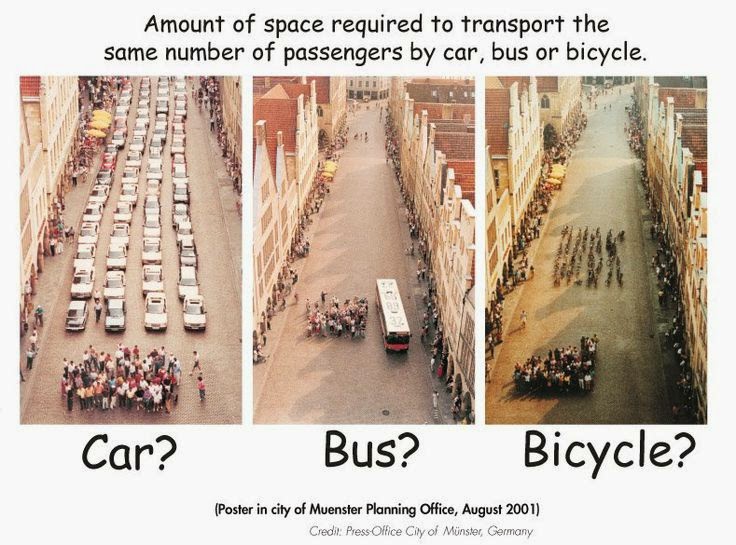
Anyway, Munster, like many other cities in Europe, has been trying to get people to forsake their cars for bicycles.  While many ride to work or for recreation, many (sometimes the same people) depend on their motor vehicles for shopping and transport.

One reason for the campaign is that Munster, like many older European cities, has narrow streets.  So, city officials realize that they can't (or don't want to) squeeze any more automobiles into the ancient lanes.

So, to spread the message, the city planning office distributed this poster (which is translated):


22 March 2014

Where Did I Leave It?

New York City is one of the few places in this country where large numbers of people don't own, or even drive, cars.  I am among them.

It's pretty easy to tell those who drive from those who do: The latter complain about the lack of parking.  Someone with whom I used to work said that in his vision of Hell, he is doomed to forever roam the streets of Brooklyn in search of a legal parking space.

(Hmm...Would Dante have included that if he were writing The Inferno today?  If so, which circle of Hell would it be?)

That got me to wondering whether cyclists have the same problem in places where almost everybody rides.  After all, I have had to park my wheels a block or even more from my destination because there wasn't an unoccupied sign post or parking meter--let alone a bike station--where I could lock up my machine.

What do they do in Amsterdam?

From Danasaurus

Hmm...Now where did I park?