05 October 2017

What If They Took Out The Traffic Lights?

Here's an experience that's in the "Don't Try This At Home" category:

Once, years ago, a NYPD officer pulled me over for riding through a red light on Broadway, just north of 23rd Street, in Manhattan.  He lectured me about how traffic lights are for everyone, and that I could endanger myself or others by not heeding them.  

At that time, I, as a cyclist, was even more of a minority than I am now.  Moreover, I was a messenger on duty that day, which made me even more of an outcast.  So I was not expecting that officer to understand what it was like to ride on city streets, let alone have any sympathy for me.

But I pointed out that I went through the red light ahead of two trucks that turned right when the light turned green.  Had I waited for the light, I could very well have ended up underneath one of those vehicles.

He put his pen down and looked at me.  I had the feeling he didn't trust me; after all, he'd probably heard all sorts of things from people who were trying to talk their way out of traffic summonses.  After what seemed like an endless silence, he said, "OK.  Just be careful."

"Good day, officer."

Now urban planners are starting, however slowly, something that cyclists have long known:  Following traffic signals doesn't always ensure a cyclist's, or a pedestrian's safety. If anything, at times--such as the situation I described--it can actually endanger us.  

Part of the reason for that is that, according to at least one study, signals can actually make drivers less attentive to their surroundings.  According to proponents of this idea, having fewer demarcations such as traffic lights, kerbs/curbs, traffic signs, road surface markings and regulations actually encourages cyclists, pedestrians and motorists to negotiate their movements with each other, usually through eye contact or hand signals.


The late Dutch traffic engineer Hans Monderman was one of the chief proponents of this urban planning concept, commonly known as "shared space".  His studies found that traffic safety and efficiency increased for all when public spaces were redesigned so that cyclists, motorists and pedestrians had to negotiate their movements with each other.  He went so far to say that the safest roads are those with the fewest marking, signs and traffic lights.

Meredith Glaser probably had his work in mind.  She's a researcher at the University of Amsterdam's Urban Cycling Institute (Can you imagine such a thing in the US?), which did a study of cycling in Alexanderplein, a busy intersection near the center of Amsterdam.  According to the study, about 40,000 cyclists ride through it every day--6000 an hour during peak times.  In addition, many pedestrians, automobiles and streetcars tranverse the crossroads every day.  

Institute researchers then asked 200 cyclists what they thought of the intersection.  "Chaotic" and "messy" were the most common responses.  Most said more traffic lights were necessary.

However, the researchers knew the city had a different plan:  The lights were shut off in May of last year.

While the lights were off,the researchers returned and asked another 150 cyclists for their thoughts.  About 60 percent said the intersection worked better without the signals.    The city's technical study found similar positive results, and no increase in the number of accidents.  In September, the city decided to remove the lights altogether, citing the fact that trams were not delayed and motor delays were cut in half.  In addition, bicycle traffic jams, usually caused by signals, were all but eliminated.

In the intervening year, the city has done similar things in other spots, with success.  Glaser thinks this could be a model for other cities in the world.  So does Dongho Chang, the Chief Traffic Engineer for the City of Seattle. "In an urban environment, you don't want a driver to be zoning out," he explains.  "You need them paying attention and looking for the unexpected."  He points out that only 8 percent of his city's intersections have traffic lights, but they account for 51 percent of accidents over the past 13 years.

Now, one obvious explanation is that the signalled intersections are the most heavily-trafficked and tend to have the most complex or complicated configurations.   Chang concedes as much, but also says that in such intersections, signals lead to dangerous behaviors such as speeding through a yellow light or accelerating quickly from a green.

Chang's, Glaser's and Monderman's points are well-taken.  However, they (perhaps surprisingly, in the case of Chang) fail to take into consideration something I, and other cyclists, know from experience:  Few American drivers have the level of awareness of cyclists most Dutch--or, for that matter, European--drivers have.  Seattle's drivers might be among the exceptions (I don't know:  I've never cycled there) but it's hard to imagine that even they have that level of awareness I found even in Montreal, less than an hour from the US, let alone cities in France, Belgium or the Netherlands.

Still, the work of the researchers and planners I've mentioned helps to indicate a greater truth:  Most cycling infrastructure, as it's currently planned, constructed and maintain doesn't make cycling--or walking or driving--safer.


04 October 2017

What Will They Accomplish By Cracking Down On The "Chop Shops"?

At least a few of my rides have included stops at flea markets.  

So why are they called "flea markets"?

Well, it's a translation of "marche aux puces", the name given to an outdoor bazaar at the Porte de Clignancourt, on Paris' northern edge.  It's been operating there since some time around 1880.

So why is it called the "marche aux puces"?  It was often said--sometimes, with justification--that items, particularly upholstery, sold there were infested with fleas.  

Not long before the market began to operate, the straight, wide boulevards lined with sandstone-colored buildings one sees all over the City of Light were first constructed.  To make way for them, old buildings on narrow, winding streets were demolished.  This left a residue of old furniture and other items out in the open, where they could have been infested with vermin.

There is another reason why people might have thought those items were infested with fleas:  The folks who salvaged them were, as often as not, themselves infested.  Not surprisingly, when Georges-Eugene, Baron Haussmann, executed Napoleon III's vision for modernising Paris, it left many Parisians homeless or simply destitute.*  During the city's transitional period, many such people had few, if any, other ways to generate income.

Homeless people all over the world continue to "pick up the pieces", if you will, all over the world.  In my hometown of New York, I have seen them selling everything from corsets to computers, from books to barbed wire.  And, of course, many pick up soda and beer bottles and cans, which they can recycle for 5 cents each, from trash bins.


In San Francisco, that city of entrepreneurs, it seems that some of the homeless have become small-time operators in the bike business:  They operate what detractors call "chop shops" from underneath bridge and highway overpasses and other semi-enclosed public spaces.  

While even homeless advocates admit that some of the bikes are stolen, the majority are the fruits of dumpster-diving, scavenging on the streets or barter.  Usually, the homeless or poor people who operate these pop-up bike shops fix up the bikes they sell or trade, or assemble bikes from parts found in various places or stripped from other bikes. 

Most of the complaints the city receives regarding these operations are not about the shops, per se:  Most people don't have a problem with people doing whatever they have to do to put food in their mouths.  Rather, many residents say that these vagabond mechanics spread their wares across sidewalks, bike paths and sometimes even into streets, making it impossible or simply dangerous to navigate.   

With that in mind, the city's Board of Supervisors is expected to pass a bill that would prohibit anyone from storing or selling the following on any public street, sidewalk or right-of-way:

  • five or more complete bicycles
  • a bicycle frame with its gear or brake cables cut
  • three or more bicycles with missing parts
  • five or more bicycle parts.
The prohibition would not apply to anyone who has a commercial license (which, of course, includes almost no homeless person) or a permit for an event like a bike rally or clinic.  The bill gives the Public Works Department authority to seize items deemed to be in violation of the code. If the owner of the items doesn't allow the PWD to seize the items, police officers can be called in.  And, the owner can appeal to have the items returned 30 days after the seizure and notice of violation.

Not surprisingly, small business associations support this bill, mainly because the "chop shops" often impede access to stores, cafes and other establishments.  Bike shops are among such small businesses, and support the bill for the same reason.  Interestingly, though, none seems to have made an argument that these shops are taking business away from them because of their lower prices, probably because people who would buy (or barter for) bikes from "chop shops" weren't going to buy their bikes in a bike shop anyway.

Also not surprisingly, this bill is adamantly opposed by homeless advocates, civil liberties organizations and the Democratic Socialist party.  Most interesting of all, though, is a letter of opposition penned by Jeremy Pollock. He writes as a ten-year member of the San Francisco Bicycle Coalition who, as he says, has had bikes and parts stolen and recovered a "ghost bike" from a homeless encampment.  

He effectively makes a point that the bill, should it become law, could violate the Fourth Amendment of the US Constitution.  He also decries the lack of collaboration between the city government and its citizens (especially cyclists) in drafting and voting on the bill.  

Pollock also expresses concern that enforcing such a mandate could make the already-challenging  jobs of DPW workers who clear homeless encampments even more difficult by making already-strained relationships between those workers and the residents of homeless encampments even more tense and hostile.  This will put a further strain on the DPW's resources, and will stretch the police department and criminal justice system even thinner than it already is.

Oh, and if the San Francisco Police Department is stretched thinner, it will dedicate even less manpower and fewer resources than it does to combat bike theft.  As it is, the Department--like others across the country--simply doesn't regard bike theft as a priority.  And, if it wants to combat bike theft, according to Pollock, "we don't need this cumbersome new notice of violation, we need SFPD to focus on catching bike thieves!"

*To be fair, Haussmann's work also made it possible, for the first time, to navigate Paris with relative ease, which helped Paris to grow as a commercial as well as cultural center.  When he widened the streets, he also added sidewalks, which made Paris the walkable city it is today. Moreover, his plan included other public works, including sewers, which greatly improved sanitation and the health of people, as well as a series of public parks and gardens.

Then again, he also made it all but impossible to mount an insurrection in Paris by widening and straightening those streets that could previously be barricaded--or used as escape routes by people who knew them.

03 October 2017

Coming To A Neighborhood Near...Me

We all waited with bated breath.

No, I didn't mis-spell "bated."  If a cat swallows cheese and stands in anticipation of a mouse, he/she can be said to be waiting with "baited" breath.  But "bated" is just a truncated form of "abated":

Shall I bend low, and in a bondsman's key
Wait with 'bated breath, and whispering humbleness

In Shakespeare's Merchant of Venice, Shylock utters those two lines as part of a soliloquy in which he asks Antonio (the merchant) how he can ask for a loan after Antonio and his associates called him a "cur", spit on him and kicked him around.  Antonio's rationale for their behavior is the "usurious" interest on the loans Shylock gave them.  


Now, of course, I was exaggerating just a bit when I said "we all waited with bated breath."  Nobody does that in New York--except, maybe, for a bank (oh, irony of ironies!)--specifically, Citibank.  But we weren't waiting for a loan so we could open up a pet-boarding house.  Instead, we were eagerly anticipating something else that comes from S-itty--I mean, Citi--bank:  Citibike.


Well, all right, I wasn't waiting for it as much as some other folks were.  After all, I have my own bikes.  But I must say that I am glad that Citibike has come to my neighborhood.  In fact, as of the other day, it was on my corner:


Is the arrival of Citibikes a sign that a neighborhood is "hip"--or that it's merely infested with hipsters?  Whatever the case, I'm glad to see the bikes--even though they're in the ugliest shade of blue--just because I'm happy to see anything that encourages people to ride bikes.


A few days ago I wrote about the thefts that have plagued bike share programs.  Citibike has not been immune to such problems.  Baltimore may have come up with a solution--at least for a while.  There are other interesting ideas out there, including one I found in a 99 cent store just down the street from the new Citibike port:


02 October 2017

A Mayor For---Cycling?

Two years ago, when I was in Paris, I learned that the city had recently appointed its first "maire de la nuit":  night mayor.

When I first heard about it, I wondered whether there was some hour--say, 9pm--when mayor Anne Hidalgo clocked out of City Hall and Clement Leon R, the night mayor, took over.  One of my friends explained to me that Clement Leon R heads the "Conseil de la Nuit"--a night City Council, if you will.  They are tasked with overseeing night life in the City of Light.  Among other things, they try to manage, and sometimes smooth over, relations between such establishments as bars and music clubs--as well as businesses that are legal there but not here.  


The office is patterned after one started in Amsterdam in 2014.  That city's night mayor, Malik Milan, is exploring the possiblity of creating a "Chinatown of night life" where libraries for students as well as eateries and the traditional venues associated with night life could be open 24/7.  The idea, which other cities are exploring, would take noisy establishments out of residential and central business areas and put them in some neighborhood on the perimeter.  As Milan explains, "In Holland, you can't have a proper meal after 9:30 p.m., and when friends arrive late from out of town, all you can offer them is fries."


I imagine that if you arrive late by bike and get a flat, or have some other sort of mechanical issue, you couldn't have it fixed until the next day (unless, of course, you or your friend knows how).  Would a 24/7 bike shop be part of such a district?   And, if it did, would it be then under the jurisdiction of the night mayor?


Or would it fall into the purview of a bicycle mayor?


As my city, New York, is discussing the possibility of creating the office of "night mayor", another city has just appointed the first bicycle mayor in the United States.


Tiffany Mannion assumed that position in Keene, New Hampshire the other day.  While the first in her country, she joins "a worldwide network of bicycle mayors, called the Bicycle Mayor and Leader network," according to Jen Risley, who appointed her as a member of the Monadnock Alliance of Sustainable Transportation's Steering Committee.   In her two-year term as Bicycle Mayor, Mannion will "represent cyclists from throughout the region and focus on three areas: education, connection and creation," Risley explained.  


Mannion is a "regular bicycle commuter and explorer" who "hopes to ride toward her goal of 3000 miles a year," Risley added.  As the area's only certified cycling instructor, Mannion will "educate colleges, universities and businesses with the economic advantages of developing bicycle-friendly policies" and "work regionally to help create confident riders and supported infrastructure," Risley added.


In accepting her role, Mannion thanked a number of people and organizations.  "This small city has enormous dreams," she declared.


Could Keene set an example for my hometown, New York, for cycling as Amsterdam and Paris are doing for nightlife?


01 October 2017

Stop, Thief!

The other day I wrote about the rampant theft and vandalism that has temporarily shut down Baltimore's bike share program.

Other cities have experienced similar problems.


Here is a possible solution:


What would Natassja Kinski think of it?

30 September 2017

Good Thing They Didn't Call It The "Jockbra"

In several posts on this blog, I've mentioned that Susan B. Anthony said, in essence, that the bicycle has done more than anything else to liberate women.

Since women started riding bikes, there are probably two things that have done more than anything else to encourage girls' and womens' participation in cycling and other sports.

One is Title IX, the 1972 US law that prohibits sex discrimination in educational programs--which include school-based sports programs.  Since then, the number of girls' and womens' sports teams in colleges and schools has expanded greatly.  As a result, more girls were encouraged to participate in sports, whether in their schools or outside of it, and one could argue that the subsequent increase in the proficiency of American female athletes has spurred other countries to improve their women's sports programs.

The other is what we now call the sports bra.  Before it was created, girls and women--if they weren't flat-chested--had to live with the pain of their breasts bouncing or the chafing of a bra's wires and straps.  Or they improvised support from duct tape and other items.  Or they simply didn't participate in sports at all.

The last option simply wasn't an option for Hinda Miller.  She had just started working for the theatre department at the University of Vermont and taken up jogging.  She used two bras which, I imagine, restricted her breathing and was probably only somewhat less painful than bouncing breasts.  

Across campus, Lisa Lindahl was dealing with the same problem.  She and Miller reached out to Polly Smith, who made costumes for the university's theatre department.  They bought some bras and tore them apart. "I was taking notes; Lisa was running," Miller remembers.  She was always asking Lindahl, "Does that feel good?"

None of them did.  They tried to come up with a solution when Lindahl's then-husband came downstairs with two jockstraps slung over his shoulders.  He was teasing them, but the proverbial light bulb lit up in Miller's head:  "That's what we want to do," she remembers thinking.  "We want to pull everything closer to the body."

She ran to the store, bought two jockstraps and brought them to the costume shop.  "The waist band became our rib band," she explained.  "We crossed the straps in the back because we didn't want them to fall and it went over our head.  And that was it."

So was the Jogbra born, 40 years ago this month.  It became a national brand and, two decades later, Brandi Chastain cemented its place in our collective consciousness.

Hinda Miller with a bronze plaque commemorating the Jogbra at the University of Vermont.


Today, Lindahl is an artist based in Charleston, South Carolina.  Miller served as a State Senator in Vermont from 2002-2013 and ran unsuccessfully for Mayor of Burlington (Bernie Sanders' old job) in 2006.  These days, she serves on the boards of a number of organizations as diverse as the Green Mountain Coffee Roasters and the Vermont Youth Orchestra.

If I do say so myself, few people in this world can appreciate the story of the Jogbra's origin as much as I can.  After all, I am a cyclist and someone who's participated in other sports--and someone who's lived on both sides of the aisle, if you will.  In other words, I am a transgender woman and one of (I assume) very few people who has used both a jockstrap and a sports bra!

29 September 2017

New Locks In The Town Of "The Wire"

Bike share programs have been popular in most of the cities that have them.  Share bikes provide an alternative to driving or even public transportation (which is often overcrowded or inconvenient) for many commuters, and have given people who don't have a place to keep a bicycle the option to ride.  And, of course, they're handy when a friend visits from out of town and you don't have a bike for him or her to ride.

One problem, though, is that in too many cities, those bikes have also been popular with thieves.  Roberto, my guide in Rome, told me that the Eternal City abandoned its program after bikes were stripped and abandoned, tossed into the river or simply disappeared.  Other cities that were among the early adopters of the bike share idea found that they had to redesign ports and locks and install tracking devices on their bikes.


The problem of theft and vandalism was bad enough in Baltimore that earlier this month, it temporarily shut down its program.  The locks on the bikes met industry standards, but were no match for thieves in Mobtown.  

Bewegen, the company that made the locks, believes it has come up with a solution:  a "Baltimore lock" that automatically clamps the bike into the station when its handlebars are yanked.  According to Bewegen, other unspecified safety measures are also being added to the bikes.

All of the bikes have been shipped to the company's Montreal headquarters, where they will be refurbished as the new locks are made. "It's going to be a hard overhaul," says Chris King, the company's US marketing adviser.  "We're stripping them down to the bone."  He said the company will pay for the cost of the locks and all of the work under the terms of its warranty with the city.

Once the work is done, company officials will go to Baltimore to oversee the installation of the new bike locks.  King has all but admitted that the 15 October target date might not be met.  "We'll take as long as it's going to take to make it right," he said.

And, hopefully, folks in a town known for Edgar Allen Poe, H.L. Mencken and The Wire will be able to enjoy their city on two wheels for many years to come.

28 September 2017

Watch For Recalls!

To my knowledge, I have ridden with three bicycle-related products that were recalled by their manufacturers.

The first was the fork on my Cannondale racing bike, one of the company's early models.  In those days, Cannondale made their aluminum frames but supplied them with steel forks made by Tange and other manufacturers.  When I bought the bike, a couple of my cycling buddies warned me that the aluminum frame would fall apart, even though they didn't actually know of any instances of it happening.  So they were as surprised as I was when the fork and not the frame was recalled, especially because many of us had ridden with Tange forks--or even frames made out of Tange tubing, not to mention the firm's headsets--without any problems.

To Cannondale's credit,they made that process of exchanging my fork about as easy as it could have been.  That would have been reason enough for me to continue buying their bikes, if only I liked the way they rode.  I know that some of you love the ride of your Cannondales, and I won't try to convince you that you should ride anything else.  Those bikes just aren't for me.

Anyway, my second recall resulted in my third:  When Control Tech said there was a problem with one of their stems, which I happened to have on one of my bikes, the shop from which I bought it offered me a lighter and more expensive Syncros stem as a replacement.  Not long after, that stem was recalled!

In each of those cases, I was fortunate enough to get news of the recall in a timely way.  In those pre-Internet days, it meant that I was in regular contact with the shop from which I bought the stems and was working for the shop in which I bought the Cannondale.  I wonder whether I would have learned about the recalls so quickly--or at all--had I been like most customers who return to the shop infrequently, or not at all, after buying their bikes.

But even in this day of smart phones and such, consumers sometimes don't hear about bicycle-related recalls.  One reason, I think, is that they are not announced in the media the way recalls of cars or household appliances are.  And, even if the recall of, say, a faulty seat post were mentioned in the evening news program, most people who aren't dedicated cyclists probably wouldn't think it has the same potential for harm as, say, a faulty water pump bearing in a pickup truck's engine. 

So it is especially important to be alert and diligent.  It's also a good idea to stay in touch with the dealer or company from whom you bought your bike.  That said, bike shops are staffed by human beings, who occasionally forget, or neglect, to tell some thing or another to their customers.


2008 Felt S32


According to Mark Ashby, that is what happened to him.  He bought his 2008 Felt S32 racing bike from the Bikes Unlimited of Williamsburg, Virginia in 2011.  Over the next two years, he brought the bike in for regular maintenance.  In fact, according a lawsuit he's filed against the shop, the Felt and ADK Technologies of China (which manufactured the bike for Felt), a check-over and other maintenance items were performed as late as 13 April 2013.

Later that month, Ashby crashed on Colonial Parkway in Williamsburg.  This caused him to "suffer severe personal injuries adversely affecting his health and well-being," according to documents filed in the court.  The cause of the crash, Ashby says, was the fork's steerer tube, which broke and caused him to lose control of the bike.


The Colonial Parkway, where Mark Ashby crashed.


The suit alleges that Bikes Unlimited knew about the recall but failed to notify Ashby. They did indeed know about the recall--of 2009 model B12, B16 and S32 bikes, which was initiated the following year.  The recall was expanded to 2008 S32 bikes--the model Ashby rode--but not until 2014, the year after he crashed.

I am not a lawyer, but I don't think I have to be one to see that Bikes Unlimited was not at fault.  Still, I think this story shows the importance of being alert (Check the Consumer Products Safety Commission website!) and maintaining a good relationship with those who sell you, and maintain, your equipment.

27 September 2017

A Journey Continues Across Generations

Some things are worth saving for their intrinsic value, artistic merit or historic or cultural importance.

More often, though, the stories behind objects are what make them valuable--at least to someone, if not to everyone.  

Such is the case of a bicycle that hangs in Les Sorensen's garage.  The Cooks Mills, Illinois resident inherited it from his uncle Einar when he died in 1978.  Einar never told Les the story behind the bicycle.  Rather, the younger man learned about it from letters his uncle's friend, Ed Warren, wrote to his mother.

Those dispatches were sent out daily during a trip Warren took with Einar and his brother Kay in 1922.  Their 62-day journey--which Einar rode on the bike in Les's garage--took them from their native Illinois to Los Angeles.  Some letters were sent  from familiar-sounding locales like Reno, Nevada, while others came from places where one might not expected to find so much as a rubber stamp, let alone a post office.

Along the way, the three young men stopped and worked for money to pay for their trip.  Einar sometimes stayed and worked a little longer than the others, but he would catch up to them.  While they made friends along the way, some places were rather hostile.  When they rode through those not-so-safe areas, they hid their money in their handlebars.

Les didn't find any of that cash.  I am sure, though, that some dirt and dust from their route was still embedded in parts of the bike:  For much of the time, they were riding on unpaved roads and they often had to carry their bikes.  One of Warren's letters says that one day, they portaged their machines 18 miles through the desert.

The letters and other memorabilia Warren's daughter assembled into a book, which she gave Les, offer no indication of any motive--except, perhaps, fun--behind their ride.  When they arrived in California, Kay decided to stay and join the military.  Einar and Warren returned, with their bikes, to Illinois.


The bike Einar rode--and Les now owns--is a Rugby, made in St. Louis.  According to the report I read, the bike had wooden rims, though the ones in the photo look more like chromed steel--and not of the same time period.  I am guessing that the wheels were replaced a few years ago, when Les rode it for a season.

Born 12 years after his uncle's adventure on the Rugby, Les is, shall we say, getting on in years.  He never could sell his antique treasure, he said, so he wants to keep it in the family.  So, he plans to send it to Kay Sorensen's granddaughter in Oregon.  

And, I'm sure, the stories will follow as the Rugby makes another trip to the Pacific. 

26 September 2017

Jeff Whitehead Is No Crazier Than Any Of Us

No matter how much you've cycled, it seems that any time you decide to pedal any further than the nearest corner, someone will tell you you're crazy.  

That is what happened to Jeff Whitehead when his neighbors learned he was riding from his home in Laguna Park, near Waco, to Rockport, in another part of Texas.

About 300 miles separate Laguna Park from Rockport.  Jeff Whitehead wasn't going that distance to train for a randonnee or race, see a monument, meet some personal goal or visit a friend or relative.  At least, he wasn't going to see any relatives or friends he knew before he took his ride.


The people he would meet in Rockport became his friends--and, some might say, relatives after he arrived.  You see, he was motivated to take his ride by seeing the television coverage of Hurricane Harvey, which devastated so much of the Lone Star State's Gulf Coast.  "I decided that it was just time to come to do whatever I could to help," he explained.

The destruction wrought by Harvey would make driving a car impossible.  That was one reason why Whitehead decided to ride his bike.  Another is that being on two wheels, instead of four, and not being surrounded by metal and glass "made it easier to go around talking to people" because his mode of transportation had him "in the same boat as they are."  Still, he realized that because he could take that ride, he was luckier than they:  "I did it through a choice; they didn't have one."

His neighbors still might think he was crazy.  To me, he's no crazier than any one of us who's gone out of our way to help strangers--or ridden a bike 300 miles.  In other words, he's as crazy as any other dreamer or hero.  And I'm sure the folks in Rockport appreciate whatever form of insanity Jeff Whitehead might possess! 

25 September 2017

Para Esas Mujeres, Una Opportunidad Fantastica

More than 120 years ago, Susan B. Anthony said that the bicycle has done more than anything else in the world to emancipate women.  She certainly had a point:  Cycling itself gave women freedom and mobility we hadn't previously experienced.  It also led to less-restrictive clothing than women had previously worn which, of course, freed us in all sorts of other ways. I mean, I simply can't imagine living in a whalebone corset and petticoats.

Still, the bicycle's potential for emancipating women hasn't come close to being realized.  While I still wish that women's racing would get the attention it garnered, say, 30 to 35 years ago (in the days of Rebecca Twigg and Jeanne Longo), I think the real power of cycling for women lies elsewhere.

One example is in VeloCuba in Havana.  Three years ago, Nayvis Diaz left her job in the Ministry of Foreign Trade and sold her Peugeot car to finance the opening of this rental and repair shop.  All of its seven employees are women, including Dayli Carvo, who once raced for Cuba's national team. 

One of VeloCuba's employees works on a bike.


In addition to repairs and rentals, VeloCuba also conducts bicycle tours of the Cuban capital.  "We place great emphasis on knowing historical matters," Diaz says of her guides, who conduct tours in English, French and German as well as Spanish.  "We are very keen for our visitors to discover art, architecture, new places they can go at night, and learn about Cuban society," she explains.  

VeloCuba has, in its brief history, expanded to two locations--one in the central neighborhood of Vedado and the other in Old Havana.  It has not arrived at its success, however, without running through a couple of obstacles. 

One is something that even the expertise Diaz gained in her old job couldn't resolve:  how to get bicycles.  In spite of its relatively rich history of cycling, the island has no bike industry.  So, VeloCuba has had to buy bicycles from tourists visiting the island.  

The other is that for more than half a century, Cuba, like other Communist countries, had no advertising. Even today, there are few advertising venues. The shop's clientele, therefore, has been built mainly through word of mouth. At the risk of sounding sexist, I daresay that is something we, as women, rely on in so many areas of our lives.

In addition to bicycle rentals and repairs, VeloCuba repairs and maintains wheelchairs--for free.  Diaz sees it as a way to "offer some help to society."

The goodwill she is creating may help her to realize another dream she has:  that "one or two days a week, only cycling is allowed in the city."

I think Ms. Anthony would approve.

24 September 2017

What Do You Have To Stand On?

There have been maybe a couple of times in my life when I was genuinely proud of myself.  

One of them was the first time I did a "track stand."

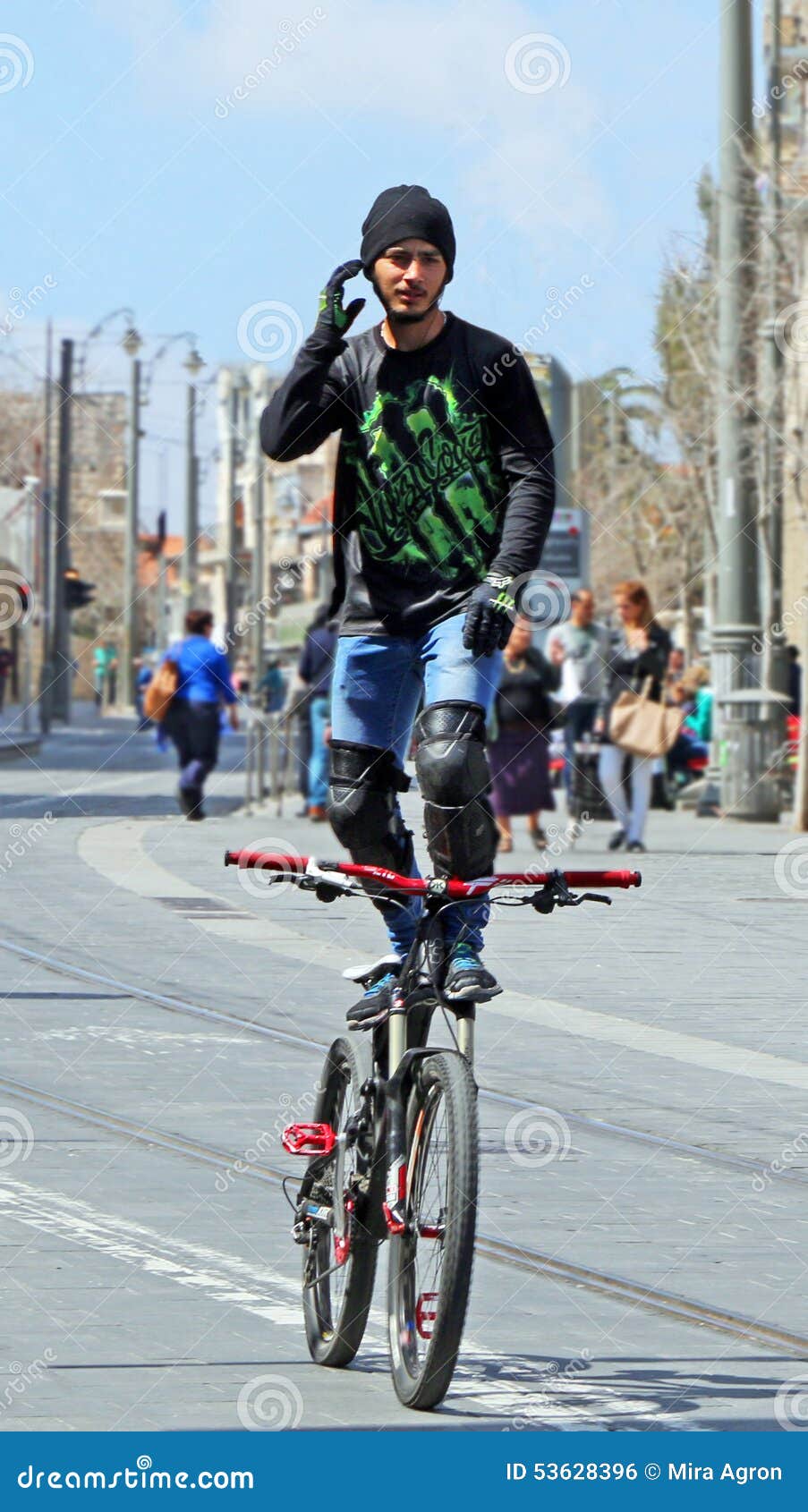
Back in those days, we didn't have cell phones.  It's a good thing, probably.  Then again, the NYPD doesn't enforce the ban on talking on your phone while driving.  Then again, it may not apply to cycling.

Image result for standing on bicycle
Add caption


I swear, I wasn't talking on a phone.  I was listening to an invisible sea shell!

23 September 2017

Would You Go To Summer School For That?

I am going to make what is possibly the most startling confession for an educator:  I wasn't the best of students.

I wasn't terrible, mind you:  I was one of those students who did just well enough: sort of like the Italian football squad in the opening round of the World Cup tournament.


Oh, I made dean's list a couple of times, but that was in spite of myself.  You see, I was (and still am) one of those kids who loves to read and write, but hates to do schoolwork.


I always figured that if I moved on to the next grade, if I went from being a sophomore to a junior or whatever without getting into too much trouble (which meant, at times, that I just didn't get caught--wink, wink) I was doing well enough.


Another rationale for my under-achievement was this:  I never had to go to summer school.  To most kids, that was like the death penalty.  And I survived.

But if they'd given out cool stuff for going to summer school, I just might've gone voluntarily.


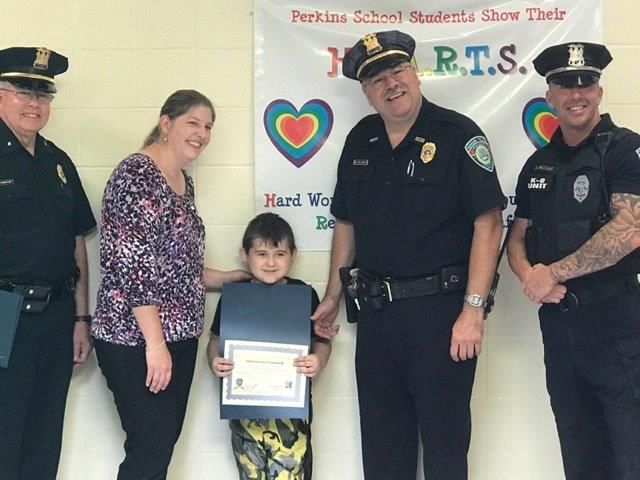
Apparently, a couple of folks up in the Finger Lakes region of central New York State realized there are other kids who feel the same way.  So they approached Newark Police Chief David Christler  to administer a fund, which they started, for "deserving young people who, for whatever reason, did not have a bike or performed service worthy of reward."

According to Christler, the couple realized that "bike ownership influenced their lives when they were young and now it seemed right for them to pass on their good fortune."  He added that establishing the fund was easy; the hard part was establishing criteria for deciding who should receive the bikes.

Newark PD pix
Jahmariyan Cornwell receives a certificate for a new bike for his attendance and particiaption at summers school. Neark (NY)  Police Chief Dave Christler is at the left; next to him is summer school principal Kari Hamelinck.  To Cornwell's left are Newark detective Gary VerStraete and K-9 Officer Dan Weegar.


School superintendent Matt Cook and summer school principal Kari Hamelinck decided, with input from teachers, that the bikes should be awarded on the basis of "attitude, citizenship and summer school attendance."  On those bases, one student from each summer school class--18 in all-- received a certificate redeemable at the local Wal-Mart for a new bike, helmet and lock.

OK, so it's Wal-Mart. Still, getting a bike when you didn't have one is something.  And, if it keeps kids in school--and performing better than they would have otherwise--it sounds good.

Hey, I might've even gone to summer school for that!

22 September 2017

To Fall!

Today the autumnal equinox arrives at 4:02 pm EDT.

I'll be on my bike by then.  In fact, I might have even finished my ride.

I haven't decided where I'm riding.  Then again, apart from the usual changes (Is that phrase an oxymoron?)--you know, the shorter days and the changing colors of the leaves--we never really know what a new season will bring, do we?

Equinox
From Treehugger

For that matter, you or I can take a ride we've taken dozens or even hundreds of times before.  We know the way; we know the terrain and the road conditions.  But we don't always know what lies ahead on any given day, on any given ride.

Out for a ride. On to a new season.

21 September 2017

Against The Wind, Into A Passion

In 1972 or thereabouts, he pedaled from Buffalo, New York to Erie, Pennsylvania.  "My butt has never been the same since then, honest to God," he says.

He doesn't mention what saddle he rode.  My guess is that it was broken-down, rather than broken-in.

More than likely, it's the saddle that came with the bike when he bought it. That is what most people ride, at least until they realize they can replace seats that are uncomfortable for them.  In this case, however, it may not have been possible for the Buffalo-to-Erie cyclist to swap out his bum-buster.

You see, that saddle came on a Columbia bicycle--but not one you might have ridden when you were a kid (or, perhaps, are still riding now!).  Rather, it's one of the Columbias made by Albert Pope's company in 1886.

Jim Sandoro bought that bike in 1970 at a flea market just outside of Cleveland.  A couple of years later, he took his fateful ride. "Like idiots, we didn't think about the wind," he recalls.  "In the old days, they used to pedal from Erie to Buffalo"--in the direction opposite from the one Sandoro rode--"because they knew better."  His ride into the wind, he says, took "16 grueling hours."

Jim Sandoro with a Maid of the Mist bicycle from his collection


Since I have never ridden a high-wheeler, I can only imagine what that ride was like.  The bike, however, helped to form a collection of vintage bicycles and rare bike memorabilia Sandoro and his wife, Mary Ann, have amassed over the past half-century.   They have concentrated their efforts on bikes and related items made from the 1860s through the 1920s, especially models related to their native Western New York State.

On Saturday, that collection will be displayed for the public for the first time in the Buffalo Transportation/ Pierce-Arrow Museum, which they founded and built.  The museum has been devoted mainly to automobiles and, more recently, the Frank Lloyd Wright Filling Station.  But now the Sandoro's collection, which has been augmented by bikes they purchased from the former Pealing History Museum in nearby Orchard Park, will take a prominent place in their museum.

And, if you plan to ride there, you might want to pay attention to the wind!


20 September 2017

A "Fancy Ladies" Bike Tour

Am I a "fancy lady"?

If I am, I can join others like me on a ride made for us.

Yes, it's called the "Fancy Ladies Bicycle Tour".  Best of all, it's being held in 50 different locations this Sunday.

There's just one problem, and it's a logistical one:  None of those locations are near me.  So it might be a bit difficult (not to mention expensive!) to book an airline ticket and hotel reservations.  Oh, and I have to be at work on Monday!


Oh, well.  The starting points for the "Fancy Ladies Bicycle Tour" are in a country I would gladly visit again:  Turkey.  I once spent nearly a month there.  Of all the countries I have visited, it's my favorite. (I don't count France as a country I've visited, as I've lived there.  So, for me, France is in a special category.)  It offers a great combination of artistic and cultural treasures with natural beauty.  The food is great. And the people are lovely:  I mean, they ones I met were warm and hospital and, very often, physically attractive!  My only regret was that I didn't get to do any bike riding when I was there.

The Tour has no admission fee.  The only requirements for the Fancy Ladies Bicycle Tour seem to be, in addition to being a woman, dressing up one's self and one's bike.  I think I can do those things.  

This is the Tour's fifth year.  The first version was held in 2013 in the coastal city of Izmir (formerly Smyrna) with the objective of promoting bike riding among women, while marking World Car-Free Day.  What's really interesting is that the Tour is not sponsored:  it formed and spread entirely by cyclists showing up for it.  Now, that's definitely my kind of ride!

19 September 2017

Could The Insurance Capital Help Cycling Bloom In The Rosebud City?

Bicycling is good for business.

Cities large and small are discovering how this is true, and not just for bike shop owners.  Obviously, we are good for coffee shops, bakeries and such.  But we--cyclists--use most of the same products and services as everybody else.  Thus, we will patronize the same sorts of businesses.

But we are also good for business, especially in urban downtown areas and on Main Street-type shopping strips in smaller towns, in the same way that pedestrians are.  Stores in such environs--whether they sell books or craft supplies or serve babkas or craft beer--are more likely to find customers among those who walk or pedal in front of them than from drivers who pass by because they can't find a parking spot.

That, I believe, is a reason why more cities here in the US are trying to make themselves "bike friendly"--or, at least, are doing the things they believe, rightly or wrongly, will make them so.  Chambers of Commerce or Business Improvement Districts will install bike racks (good) and nudge their cities into painting bicycle lanes on the streets (sometimes not so good).  They perceive that making their shopping areas more attractive and convenient for cyclists will do more to help business than squeezing more cars into already-crowded streets could.

Apparently, some folks in Hartford, Connecticut had the same idea.

Now, when most people think of Hartford, the insurance industry comes to mind.  It still is known as "The Insurance Capital of the World", with good reason.  Those with a sense of history might recall Connecticut's state capital was also a major industrial center.  In 1850, a native named Samuel Colt invented a precision manufacturing process that enabled the mass production of revolvers--which, of course, bore his name--with interchangeable parts.  His method would be adopted by a couple of guys named Richard Gatling and John Browning who made their own firearms, and the Weed Sewing Machine company, which dominated the market at the time.

Weed would also produce the first bicycles manufactured in the United States.  Albert Pope, another Hartford native, saw British high-wheeled velocipedes at the 1876 Philadelphia Centennial Exposition and bought the patent rights to produce them in the US.  Since he had no manufacturing facility, he contracted Weed, who would produce everything but the tires.  Soon, production of bicycles--Columbias-- overshadowed that of sewing machines, and Hartford became one of the leading centers of bicycle-making in the US.

Lest you think that the city's energies have been devoted entirely to commerce and industry, some very creative individuals in the arts have called Hartford home.  In fact, a couple of books you may have read--A Connecticut Yankee In King Arthur's Court and The Adventures of Huckleberry Finn were written in a house that is today a museum dedicated to their author. (I was there once, years ago, and thought it was interesting.)  And one of America's most innovative poets, Wallace Stevens, was an executive with the Hartford Accident and Indemnity Company!

Anyway, it seems that creative thinking lives on in Hartford. For years, the city's Business Improvement District has run a "safety ambassador" program.  The "ambassadors" patrol downtown streets, acting as security escorts, providing free help to stranded motorists and acting as additional sets of eyes and ears for the police.  In May, the BID added bicycle maintenance and repair to the work done by the "ambassadors" in order to encourage bicycle commuting and assuaging some of the fears associated with it, according Jordan Polon, the BID's executive director.

Eddie Zayas, a Hartford "safety ambassador",


Ambassadors give their phone numbers to people who ask for them.  Maureen Hart was one of those people. Just a few days after getting that number, she was riding home from a concert when she got a flat.  She called that number and became one of 42 cyclists who have received roadside assistance since the program started. 

"It's such a cool service," she said.  "I know people who live in Portland and that's a really bicycle-friendly city.  They don't have anything like this.  This is amazing."

Well, you can't have bicycle-friendly cities without bicycles.  And Hartford was making them long before most people ever heard of Portland.  Now the capital of the Nutmeg State looks ready to teach The City of Roses how to make it even easier to ride in their city.

(Here's another fun fact about Hartford:  It's also home to the oldest continuously-published daily newspaper in the US.  The Hartford Courant has been in print since 1764, making it 87 years older than the New York Times--and 12 years older than the United States itself!)