06 May 2014

The Wire(s)

In two earlier posts, I mentioned the Slingshot bicycle. You may have seen one:  It has a cable anchored by suspension coils where the down tube would normally be found.  At least, that's the kind of bike for which Slingshot is known.  Apparently, they're now making a line of bikes constructed entirely of chrome-molybdenum steel tubes, like a traditional frame sans lugs.


But I digress.  Slingshot is still best known for its "frame with a cable".  I had the opportunity to ride one owned by one of my old riding buddies.  I rather liked it, but I'm not sure I would want it as my only bike.


Although Slingshot is the best-known (and possibly the best) bike to use a tension cable as part of its frame structure, it's certainly not the first.  At least, the folks at Slingshot --who still build all of their frames, including the cable-less one, in Grand Rapids, Michigan--weren't the first to think of building a bike that way.


Here is a drawing of one patented in 1904, nearly eight decades before the first Slingshot was made. 


Of course, the shape is very different.  I think I like it, though I wonder what it would be like to ride.  You see, the purpose of those cables is not suspension, as it is on the Slingshot, but to make the frame collapsible.


Depending on how it rode, I might consider such a bike if someone made it.  I imagine that some other people--especially those who travel a lot--might, too.  And I can imagine the military hankering for a bike like that, especially in areas inaccessible by other vehicles.

05 May 2014

At The End Of The Day In The Middle Of Spring

What could have been better than this:  a late-afternoon ride on a perfect Spring day?

It's the sort of thing that can make you happy to, well, be.  Scrims of cloud swirled around the bright sun.  Breezes puffed petals from flowers that have bloomed for a few days and, at times, gusted and rippled the water around my ride.

My little adventure took me to the Coney Island pier.


From there, I pedaled along the ocean and New York Bay under the Verrazano-Narrows Bridge.


The only thing that wasn't almost perfect was this last photo.  But that was my fault.  I'm including it anyway because even though the saddle and part of the handlebars were cut off, Tosca still looks great, as she always does.


04 May 2014

Spell Check Special Ed

Once upon a loong time ago, I thought about becoming a medievalist.  I always found that period of history interesting, but I realized that I would have to learn about seven or eight more languages (of which about two or three are spoken by living people),  If nothing else, I might have finally understood a concept I was taught, but never quite understood, when I was in Catholic school:  that eternal life.  I probably would have needed it, and more, to learn everything I needed to know in order to become a medievalist.

Anyway, I was reminded of that when I saw this sign:


Could the person who made it have been a medievalist, or tried to become one?  Theese puppyes cuytes I do lyke wel.  

Hmm...How would The Canterbury Tales have been different if Chaucer had Spell Check?

While pondering that question, I came across this:


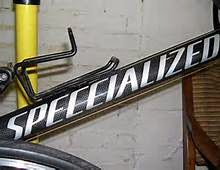
Maybe the bike couldn't decide whether it was a Specialized or a Bottechia?  Or, perhaps, a Boteycheya?

Now I'm thinking of one o my riding buddies from my off-road riding days.  He didn't add a "C: to his Specialized.  Instead, he removed the "iz",    

He took the meaning of "Special Ed" quite literally and wore it as a badge of honor.  Or honorye?

03 May 2014

Un Mirage, Aujourd'hui Et Hier

If you entered the world of cycling during the 1970's, as I did, you recall certain iconic bikes.  They're not necessarily the high-end ones:  You most likely would have been riding one of those if you had become a cyclist earlier or were wealthy.  I'm thinking, instead, of bikes like the Peugeot U-08, Raleigh Grand Prix and Super Course, Fuji S-10s and Nishiki Olympic and International.  They were the bikes on which many of us learned about cycling:  that is to say, when we went from being kids who banged around on bikes to adolescents and young adults who commuted, trained, raced, toured or were messengers astride two wheels.

Another bike of that genre was the Motobecane Mirage.  I was reminded of that yesterday, when I saw one parked.


Of course, a Mirage from my youth would not have looked like that:  For one thing, red on black, seemingly ubiquitous today, was not quite as common a color scheme.  Even more to the point, one of those old Mirages would not have built in China, or this way:


No, those old bikes would not have had their aluminum frame tubes joined by cobbly welds.  Instead, like most bikes of any quality made at that time, their steel tubes would have been fitted and brazed into lugs.

The result would have been something like this specimen from around 1981:

From Mr. Martin's Website

Like earlier Mirages, this one is constructed from high-carbon steel tubes and lugs.  Though it's one step above entry-level, it had workmanship, a finish and ride better than other bikes in its category. 

Motobecane is said to be the first European bike-maker to equip new bikes with Japanese drivetrain components like the SunTour derailleurs and Sakae Ringyo crankset you see on this bike.  Those components--especially the derailleurs--were significant improvements over the gear found on earlier iterations of the Mirage:


The derailleurs are Huret Allvit:  the same ones found on many entry-level European bikes during the Bike Boom era.  (Schwinn equipped several of its models with rebadged versions of the same derailleurs.) While as advanced when it was introduced in 1958 as the first personal computers were two decades later, they became anachronisms just as quickly.  So did the steel cottered crankse after Japanese companies like Sakae Ringyo (a.k.a. SR) came out with relatively low-priced cotterless cranksets around the same time SunTour introduced its VGT rear derailleur, of which many are still in use nearly two decades after SunTour stopped making derailleurs.

Now, some components on the new black Mirage I saw yesterday are certainly vast improvements over (though not as attractive as) the stuff on the green Mirage--and, some would argue, on the blue one. And even if the new machine is a good rider, somehow I will never be able to see it as a Mirage from my youth. (Pun intended!)

P.S.  I actually owned and rode a Mirage--which was my commuter/beater--for about two years.  It was like the green one in the photo, except that mine was black with purple seat tube and head panels.  I loved the way it looked, and rode.  Sadly, like several of my commuter/beaters, I crashed it.  Or, more precisely, I rode it into one of the deepest potholes in the history of paved roads and cracked the top and seat tubes just behind the head lugs.

02 May 2014

Daisy Bell

It's May.  Finally, the weather finally says "Spring is here!"  And, some would say, love is in the air.

With that in mind, I simply could not resist posting this recording of "Daisy Bell" (a.k.a. "Bicycle Built For Two"), as sung by Pat Phillips:

01 May 2014

The Syntax Of Traffic Regulation

Sometimes I have to wonder what, exactly, this city's Department of Transportation is trying to accomplish?  Are they trying to make this city more or less "bike friendly", whatever that means?  More specifically, are they trying to encourage or discourage bicycle commuting?  Or do they want to do both?

I mean, they decide they don't want us to use certain bridges or walkways--I think.  At least, that's the message--the literal one, anyway--I get from this sign:


So why am I so uncertain as to the DOT's intentions?  Well, for one thing, the sign was placed in a spot most cyclists (or pedestrians, for that matter) won't see:  in the corner of a retaining wall that takes a sharp turn away from the path of pedestrians and cyclists.  It almost makes me think someone in the DOT was ordered, but didn't want, to put up the sign.

What makes the intentions of the sign even less clear, though, is that the sign imposes another, seemingly unrelated, prohibition against taking pictures.

Or does it?  Take a look at the last line:


"Use of cameras prohibited and strictly enforced."  As I understand, "prohibited" means "not allowed" or "barred".  But I take "strictly enforced" to mean that people will be compelled or forced to use cameras. 

Now, I'll admit that my knowledge of some things is a bit rusty.  So maybe I've forgotten the part of some class in which the instructor explained how something can be forbidden and mandatory at the same time.

Or it may be that, as an acquaintance suggested, that I've been teaching so long that I know English grammar too well for my own good--or my own sanity, at any rate. Or, at least, I know so much that it interferes with my bike riding.

For the record, the issue in the sign is not one of grammar:  It's one of syntax.

Whatever that sign was trying to say, I may or may not have been in violation:  I took the photo with my cell phone, not a camera.

30 April 2014

Bike Season Budding Under Cherry Blossoms

Today's rain felt more like it was driven from November than something that fell from a late April sky.  And the temeperature reached only 8C (45F).

But the cold gray dampness might have made the cherry blossoms, which finally began to bloom during the past few days, all the more vibrant.  Their fresh pink flowers are always a sign, at least for me, that it really is spring.  And that, of course, usually means a nice atmosphere as well as backdrop for cycling.

And wouldn't you know it?  I came across this:


From Elm City Commuter


And this:

In an eBay listing


I hope that, in spite of the fact that I've done so much less cycling this year than I'd done by this time in other years, this cycle season, and I, are about to bloom.


Que votre route soit couverte de petales de fleurs de cerisier.

29 April 2014

If You Find It, Is It Still Abandoned?

Believe it or not, there was actually a time in my life when I wanted to be an archaeologist.  Of course, all I knew about the profession came from watching National Geographic shows; shortly thereafter, a similarly naive longing to be an oceanographer or marine biologist was fueled by seeing Jacques Cousteau's adventures on television.

As for the archaeology fantasy:  I had visions of finding people, animals and artifacts frozen in a particular moment when a storm or avalanche struck, smoke choked, a tide engulfed or an advancing glacier encased, them.

What if I were to find a bicycle abandoned or forgotten in a particular moment?  Would I find it in the remains of an ancient house, dump or street?  In an alley, perhaps?


28 April 2014

Monkey, Longhorn Or Ape Hanger

One of my favorite non-bike blogs is Old Picture of the Day.  Sometimes the images are worth looking at purely for aesthetic reasons; almost all of the others are interesting in some aspect of life, past or present, they reveal.

In each post, a (usually brief) comment accompanies the photo.  Those are worth reading because they convey "PJM"'s deep appreciation--and, sometimes, personal connections--to the photographs he collects and displays.

His post today included this photo, along with a reminisce about his own childhood bike, which was very similar to the one in the picture:


One thing I found interesting about the responses he got to his post is how they described the handlebars.  I have heard to bars like the ones in the photo referred to as "Longhorn" bars (even though I grew up in Brooklyn and New Jersey!)  and the bars on bikes like the Schwinn Sting Ray and Raleigh Chopper (the ones with "banana seats")as "Ape Hangers".  But one commenter heard them referred to as "monkey" bars".  What's really funny, to me, is that some of the adults I knew during the  '70's "Bike Boom" referred to the those funny-looking dropped handlebars on those newfangled ten-speeds as "monkey bars"--meaning, I presume, that only a monkey could ride them.


26 April 2014

Joined At The Lugs?

Before you know it, Spring will come...

Oh, right, it is Spring now.  I guess it's a month late:  We've got March winds, but it's April.  I guess we'll get the showers in May and the flowers in June.

And what about the weddings?  Will they be in July?

Not that I'm planning on having one.  For now, I'm still living by Carrie Bradshaw's maxim, "Friends don't let friends get married."  Sometimes people give the best advice before they break it!  

Anyway, I not only don't plan on getting married, I haven't been invited to a wedding.  Not that I'm complaining.

But if I have to go to a ceremony, I wouldn't mind being summoned to it by this:

From Kristen Archer


Apparently, the bride-to-be designed this invitation herself.  She even had a bicycle-themed bridal shower!

I can think of one couple in particular for whom the invitation would have been most appropriate:


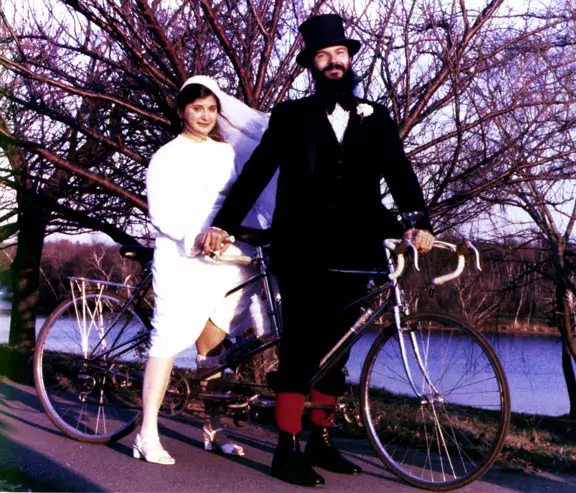
They are, of course, Harriet Fell and the much-missed Sheldon Brown.

25 April 2014

If You Can't Do Iditarod

Last month's running of Iditarod was said to be one of the most difficult and dangerous in the history of the annual race, maninly because a key section of the race was all but snowless.  So, instead of sliding along white trails, competitors rumbled and bumped along rocks and dry earth.

That was not a problem for Dan Burton of Saratoga Springs, Utah.  You see, he didn't compete in Iditarod.  However, made another journey that some of his famly members and friends thought was even more Idit-iotic than the race in Alaska.

In February, he became the first person to ride a bicyle from the coast of Antarctica to the South Pole.  Although large chunks of the continent's coastal ice shelf are breaking off and floating and melting away, Burton did not have to contend with rocky ground.  However, he had to pull himself out of a crevasse and be careful of all sorts of other hazards not easily seen in the ice and snow.

Dan Burton with his bike.


One thing that makes his journey truly remarkable is that he did it solo:  No team backed him up.  When his wheel needed repair, he fixed it by himself.  And he pulled all of his supplies--including the freeze-dried meals he cooked--in a sled behind his bike.

Speaking of meals:  Most of the time, he cooked in his tent, as it was more fuel-efficient.  And, yes, he slept in that tent every night of his trip.

In all, he says he covered 730 miles in 51 days of cycling, although he's not completely sure because he lost his GPS. Thirteen miles a day may not sound like much,  but it's quite a feat when one considers that he spent much of his time pedaling into headwinds and rode through temperatures of minus 30 degrees.  That's a bit worse than the coldest morning commute I ever had.


Let's hope the climate doesn't change so suddenly or dramatically that Burton is the only one to cycle across Antarctica to the South Pole.  I think he's happy with the distinction of being the first.


24 April 2014

Naked Bike Ride In Portsmouth

I have cycled up several Alpine and Pyrennean peaks, as well as mountains in Vermont, Pennsylvania, California, Nevada and upstate New York.  And I am not boasting when I say that I've done other things most people wouldn't try.  As a result, some people say that I have courage.

If I do, it has its limits.  You see, there's something I'm not quite ready to do yet:  a naked bike ride.


Naked bike rides are held all over the world.  However, one place I think I'd like to take such a ride is Portsmouth, England, which will host one on 24 May.

Portsmouth is on the south coast of England and is the only island city of the UK.  According to some surveys, it has the largest percentage of LGBT people of any city in the country.  And it's also considered, perhaps not coincidentally, as one of Albion's centers of environmental and "green" movements.


That last fact has a lot to do with the ride:  Its organizers want to call attention to unsustainable fossil fuel use as well as other practices that are ruinous to our planet.

I love the idea although I'm not sure, exactly, of what a naked bike ride has to do with environmentalism.  Maybe it has to do with riding in our natural state.  Then again, the riders paint their bodies and wear things we don't bring with us into this world. 

Anyway, I wish all the folks in Portsmouth a good ride!


N.B.:  The photos in this post are from last year's Naked Ride in Portsmouth.

23 April 2014

Embarking With A Koala

If you've been following this (or my other) blog for a while, you've probably noticed that I like to tell stories about myself.  You've also probably noticed that I like to tell stories about other people, and times and places other than my own, especially if those stories have been untold or forgotten.

That is one reason why I've written posts about (or in which I mention)  Beryl Berton, Nancy Burghart, Sue Novara, Rebecca Twigg, Jeannie Longo, Paola Pezzo and other prominent female cyclists.

And, yes, this post will be about another. But it will also touch upon a topic--a nation and culture, really--I've never mentioned:  Australia.  This omission does not come from any sort of bias; it has mainly to do with the fact that I've never been anywhere near the world's smallest continent or sixth-largest country, depending on how you look at it.

Nearly everything I know about it comes from reading and chance encounters with Australians in other parts of the world, including my own home town.  One of the few things I know is that the Aussie population--about a tenth of that of the US, even though the two countries are roughly the same size--includes a disproportionate number of long-distance cyclists.  That's not so surprising when you consider Australians' affinity for sports and outdoor activities and the fact that so much of the country is undeveloped.


One of those riders was someone named Billie Samuels.  I have been trying to find some information on her, to no avail. I guess I have to look in actual book (I think I can still do that) of Australian cycling history.

I learned of her only through stumbling over the photos I've included here.  Whoever she is, I want to know more because, hey, how could you not want to learn about someone who starts a ride from Sydney to Melbourne with a koala mascot on her handlebars?


(The photos in this post come from Vintage Everyday.

22 April 2014

Opening


We've all taken one of those rides in which we can feel our whole bodies loosening up and everything within us opening and expanding.  At least, I hope you've taken at least one such ride in your life.


I did, yesterday.  It was one of those clear, breezy and mild spring days that so many of us dream about during the short days and long months of winter.  And, naturally, I took another ride to Point Lookout.


It seemed as if the sea and sky were stretching even further than I ever imagined they could.  But something else happened that I don't recall having experienced before

.

i could almost feel my bike--Arielle--stretching her wings, as it were, and taking in the air and light.  The day seemed to liberate her as much as it did me.

  
It used to be (and perhaps it still is) that the highest compliment someone could pay a bike is that it felt like an extension of his or her body while riding it.  I felt something even better:  Arielle was an extension of me and seemed to be experiencing the same sensations I had.


And, as always, she looked great.


By the way, I want to make another plug for Ely Rodriguez's Ruth Works bags.  I think the Brevet bag you see on the handlebar is becoming my favorite bag of all time.

21 April 2014

Out Of Shape

Be careful of whose bike you fix...

All right.  So nobody told me that when I was working in bike shops.  But I could have said something like that yesterday.

You see, I went for a ride with the friend on whose Brompton I worked.  Of course, he rode said Brompton and showed me that while my mechanic's skills are still mostly intact, I am really out of shape.

My excuse is, of course, that I did so little riding this winter because of all of the ice we've had on the streets.  I suppose I could have gotten myself a trainer or rollers or something.  I actually used to ride rollers during the winter.  But I found that it's harder to keep myself motivated while riding indoors than it is when I'm in the open air.

Still, even with how few kilometers or miles or whatever I've ridden this year, it's still a shock to me that my condition is as it is.  I guess one reason why I didn't realize it until yesterday is that all--i.e., what little--riding I've done this year has been solo.  This is the first ride I've taken with anyone else.  


We weren't in Kansas. From 21 Bikes.


 The thing that really shocked me, though, is that he was riding faster than I was--and he smokes.   Mind you, he's not a chain-smoker.  But we did stop once so he could light up.  Of course, there was a time when racing cyclists were advised to smoke, as it supposedly "opened up the lungs". But I don't think anyone has made that argument during my lifetime. 

And, to top everything off, I deviated from my new eating habits when we stopped at a Korean barbecue restaurant.  I mean, the food was good.  And I tell myself that yesterday was a holiday, which is a time to let loose, at least a little.  Still...

Oh well. At least we rode--about 65 kilometers, after Easter service at the church where we met.  


19 April 2014

Working On A Friend's Brompton

Last night I did something I've never done before.  No, I didn't drive a Tesla (or any car at all) or buy a carbon fiber seat post rack.  And I didn't sleep with a Republican or an astrologer. (I've done both before, but not last night.)  And I didn't eat Jell-O.

What I did was something I never got to do when I was working in bike shops:  work on a Brompton.


You see, bike in my days of working at Michael's BIcycle Company and Highland Park Cyclery, Bromptons weren't yet being made.  And, by the time I was employed at Emey's and Open Road. the bikes were still all but unknown in the US.

I had promised a friend I would help him with his annual maintenance of his steed, which he purchased second-hand several years ago.  I knew that Bromptons had some proprietary parts and, of course the folding mechanisms (which I didn't have to work on).  But, really, it's not much different--at least mechanically--from other bikes. The front hub still had the same cups, cones and bearings; so does the headset.  And the Sturmey Archer 8-speed hub is like other multigear hubs I've maintained and adjusted.

The thing I found most different about the Brompton is its cabling. It takes the same sorts of gear and brake cables as other bikes, but there is a lot less room for error in cutting the cables and housings to the proper lenghts.  Also, the cables have to be routed in a particular way.  Otherwise, they would bind and prevent the bike from folding--or get caught in the folding mechanisms.

But, other than that, there was nothing particularly difficult or unusual about working on the bike.  Were I to get a folding bike, it's the one I'd want.

By the way, my friend's Brompton is finished in "Celeste" (a.k.a. Bianchi) green.

18 April 2014

Brazed-On Amnesia

When I first became serious about cycling--around the time that the early '70's Bike Boom was gathering steam--almost no bikes available in the US had brazed-on bosses for water bottle cages or shift levers/cable guides, let alone for racks. Most bikes didn't even have fitments for brake cables:  Most high--performance bikes of the time, like my Peugeot PX-10, had their rear brake cables clamped to the top tube.

Even the custom bike builders of the time didn't braze such fittings onto their frames.  All of the guidebooks of the time told us that brazing weakened the metal at the point at which it was brazed and therefore risked cracking or breakage.

A few years later, when I was working in a bike shop, I did see a couple of brazed-on shift lever bosses that broke off their frames.  But those were on cheaper bikes built from thin-walled tubing.   

Of course, at that time, I --like most novitiate American cyclists--did not know about the French constructeurs or British custom builders, who had been brazing bits onto their frames at least since the 1920's.  Actually, some of those builders--most notably Rene Herse--actually made racks, water bottle cages and such an integral part of the frames they built.

And, apparently, some not-so-elite pre-Bike Boom bikes had brazed-on bits, like this circa 1964 Schwinn Varsity I saw parked around the corner from my apartment:


Those levers, like the derailleurs on the bike, were made by Huret for Schwinn.  Those levers--like so many other French parts of the time--had style, if not engineering.  (Installing or removing cables--which you did often if you had a Huret Allvit derailleur like the one on the bike in the photo--was a project unto itself.)  As for the brazed-on bosses:  I think Schwinn was able to do them because the tubing on the frame was thicker than that of most other ten-speeds.

A couple of years later, the Varsity--as well as the Continental and Super Sport--would come equipped with massive stem-mounted shift levers.  And their top-of the line bike, the hand-made Paramount, would offer nary a brazed-on fitting.

17 April 2014

A Late Spring, But I'll Take It

Yesterday's ice melted; I got out for a while.  Though still cold for this time of year--and windy--it was a rather lovely day.

One thing I've noticed, though, is that everything seems to be budding and blooming later than it has in other years.  I'm not complaining, though, especially after seeing this tree:


or this patch near it:


16 April 2014

On The Rack: Titanium

In the wee hours of this morning, we had snow flurries and freezing rain.  I wasn't awake, so I know about them because of the weather report and the glaze I saw on the windshields of parked cars this morning.

There were also some ice patches on the street.  So I decided to delay going for a ride until the temperature warmed and the glaze melted.  In the meantime, I did a bit of web surfing and came across this:


Now, those of you familiar with Tubus racks won't find this image remarkable.  And it isn't, really, except for one thing:  the rack is made of titanium.  Someone's selling it, slightly used, for $200.

I've never owned or used a Tubus rack, but the ones I've seen look to be very well-made (though, I must say, I like Nitto's finishing and overall workmanship a bit more).  Still, I'm not sure of how I feel about a titanium rack.  I'm sure it's strong.  But titanium is flexier than steel tubes or thick aluminum alloy rods or tubes.  So, even though I believe a Tubus titanium rack won't break, I have to wonder whether it might shimmy more than an alloy or steel rack from Tubus, Nitto or even, say, Blackburn.

The original Carradice Bagman supports were offered in titanium for a couple of years. But they seem to have been discontinued before Carradice completely redesigned the Bagman supports a couple of years ago.  Apparently, some people reported their bags--especially the larger ones like the Nelson Longflap and Camper--bounced and swayed.  To be fair, the clamps on the original Bagman supports--both in the steel and titanium versions--weren't the strongest, so that could have been a source of some problems.

Anyway, I said earlier that I'm not sure how I'd feel about having a titanium rack.  Even if swaying and flexing weren't issues, I have to wonder what benefit such a rack offers, aside from weight savings.   How much of a difference would 50 to 100 grams off the rack would make if you're carrying 30 to 40 kilos with it--and you're riding wider, heavier tires than you'd ride on an unloaded bike.

Given what I've said, I'd still take a rack made of titanium that mounts on the seat stays and rear dropouts over one from carbon-fiber and designed to attach to the seat post.

15 April 2014

Environmentalism And Cycling

 
From Chronicles of the Voyager


My birth as a "serious" cyclist--that is to say, my interest in 
riding "long distances" (i.e., beyond my neighborhood) and better bikes--coincided, more or less, with the early '70's "Bike Boom".

Although some professors and other professionals rode their bikes to work, and there was a small but growing number of adult cyclists (with whom I rode), for anyone to continue pedaling when he or she was old enough to have a driver's license was still considered a bit geeky, vaguely counter-cultural and even subversive.

Then, there was a lot of talk about the environmental benefits of cycling.  Back then, scientists were saying that the world's oil, coal, natural gas and other fuels weren't going to last forever If we were lucky, they'd last another century, maybe two.  That was, of course, if we didn't make ourselves extinct with all of the pollution from burning those fuels.

Ironically, the first energy crisis that followed the Middle East Oil Embargo of 1973-74 all but put an end to the bike boom.  Sure, some of us continued to ride bikes, and even buy new ones.  But in spite of al of the attempts to link cycling with environmentalism. most people bought bikes for recreation or simply because it was fashionable to do so.  Once the price of petroleum spiked in the US (though it was still nowhere near what most Europeans or the Japanese paid), unemployment skyrocketed. A commuter or some other cyclist who uses his or her bike to help him or herself earn a living might buy a new bike, if it's necessary, and continue to buy parts and accessories or use the services of their local bike mechanics.  But those with no such commitment aren't going to spend their money, especially if they've lost their jobs.

As history progressed (which is just a somewhat pompously academic way of saying "as time moved on"), some new cyclists came into the fold and some of us continued to ride, although we might have morphed into different kinds of cyclists from the ones we were in the beginning.  

One thing I couldn't help to notice, however, is that by the 1980's, any mention of environmentalism or even energy conservation had disappeared from discussions about cycling.  Such a state of affairs continued into the '90's and even the early part of this century.  One reason is that the cost of gasoline fell in relation to the overall cost of living.  Another, I think, is that cycling increasingly became the province of upper-middle- to high-income men and was increasingly seen as part of a "lifestyle" in much the same way as buying an SUV was.

Over the past few years, I am noticing that talk of the environment has returned to discussions about cycling.  I hear it in my conversations with cyclists and read it in bicycle-related publications, even in mainstream media coverage about cycling.

One reason is, of course, that gasoline has become more expensive (though, once again, is still not nearly as expensive as it is in Europe or Japan).  That makes some people more aware of the finite-ness of our resources.  Also, I think more cyclists have seen their favorite riding places turned into malls, condominium developments or despoiled in other ways. Finally, I think another reason is that there are more female cyclists.  Perhaps I am thinking in terms of gender stereotypes, but it seems to me that places with strong environmental movements tend to be places in which women play a greater role in policy- and other decision-making processes.


14 April 2014

Shifting Is For Sissies ;-)

Today I did a ride I haven't done in a while:  Point Lookout.  It's also the longest ride--at 105 km--I've done so far this year.


I felt better than I thought I would, considering how much riding I've missed due to the long winter full of days of ice-glazed streets.  The ride out there was harder, which is actually a good thing.  It meant that I felt better in the second half of my ride than I did in my first.  It also meant that I was riding into the wind during the stretch from Forest Park to Rockaway Beach, and I had the same wind at my back on the way home.


And what a wind it was!  The National Weather Service said it would blow at 30-40 KPH with gusts to 60.  It certainly felt that way, coming and going.


Those ripples are not the normal tides of Jamaica Bay:  The water is being ruffled, like a bird's feathers, from the wind.

Actually, riding into the wind wasn't the most difficult part of the ride.  On my way back, after crossing the bridge from Atlantic Beach to Far Rockaway, I pedaled up to the  boardwalk.  After a few blocks, I had to exit and cycle the middle of the Rockaway Peninsula:  the wind off the ocean blew so strongly that I was having trouble remaining upright.  And I wasn't sure of how far, or how long, I could ride in a "track lean":


And, yes, I rode on Tosca.  As I pedaled into the gusts, I told myself, "Shifting is for sissies..."  ;-)


13 April 2014

A Message Like No Other

When you cycle in an urban area, you see more graffiti than the average person.  More important, you see it at closer range than someone riding a bus or cab, or driving by.

Even while seeing so closely, you don't remember a lot of it.  After all, so much of it, frankly, looks alike.  But every once in a while you see "tags" that stand out for their use of color, artistry or simply their overall size.  And, sometimes, you see a graffito that's a true work of art.  I am fortunate in having lived, for years, not very far from Five Pointz--whose days are. lamentably, numbered.

But this piece--on the side of a Barrow Street building, just west of Hudson Street in Greenwich Village, is like no other I've seen:


12 April 2014

Mounted

On my way home today, I passed a mounted police officer.  That got me to wondering how many horseback riders are cyclists, and vice-versa.

Of course, you can't do both at the same time. But I'm sure some have tried.  This may be the closest anyone has come to combining both activities:

From Woot!